









Key takeaways
- Financial constraints hinder waste management plans
- Shrinking field of buyers dampens recovered commodity prices
- Economic incentives remain underutilized
In a recent report, the European Court of Auditors (ECA) called progress toward recycling targets “too slow,” and offered several recommendations including how to make recycling markets more economically viable, while reiterating its support for economic mechanisms that help support recyclers.
“Many EU countries struggle to meet the targets for reusing and recycling municipal waste and still rely too heavily on landfill because of financial constraints and weaknesses in their waste management plans,” the ECA report said.
Among the suggestions in the report was that the European Commission help support recyclers by identifying the challenges facing circular products and secondary raw materials, with a target implementation date of Q4 2026.
“Recyclers are economic operators who require a viable business case,” the ECA said, noting that industry association Plastics Recyclers Europe recently warned of sector collapse in a letter to the Commission.
The ECA report also pointed out that although prices for recovered commodities were highest for aluminum and PET, similar to the US landscape, glass and paper values at times approached zero. In addition, waste treatment operators in four countries surveyed for the report – Greece, Poland, Portugal and Romania – pointed to challenges in selling plastic foil, for which recyclers may demand payment “for taking it off their hands,” or operators paid cement manufacturers to take it for use as fuel.
In Poland and Romania, surveyed operators noted a lack of recycling facilities buying recovered materials, with a number of facilities reducing capacity or closing. “This scarcity (i.e. low demand) contributes to low prices and means recyclables have to be transported over larger distances, generating transport-related emissions,” the report said, adding that one facility operator in the sample sold glass to a facility 370 miles away, while another sold paper to a site more than 350 miles away and aluminum to a plant over 565 miles away.
“If there are not enough recycling facilities, targets cannot be met,” the report authors said.
Economic incentives
Economic devices, such as recent French incentives, can help spur development and innovation. The ECA noted that the Commission has gradually strengthened EU requirements for economic instruments, including taxes for landfill, incineration and amount of waste generated; bottle deposit-return schemes; and extended producer responsibility programs.
“Citizens and businesses play a crucial role,” said Stef Blok, the ECA member responsible for the audit. “Fiscal incentives, as well as requiring citizens to pay for the volume or weight of waste they generate, can encourage them to separate and reduce waste.”
The report cited a 2025 review of member states’ waste prevention programs by the European Environment Agency (EEA), which found that 81% of identified measures relied on voluntary actions and concluded, “Despite the link between waste generation and economic growth, economic instruments (such as financial incentives) remain underused.”
However, information about program implementation is limited, due to the inconsistent nature of member-state self-evaluations and because the effectiveness of policy instruments is not sufficiently assessed, the EEA said.
On a national level, the auditors found implementation delays and cost overruns in waste management projects the EU helped to finance. They also noted that in the four audited countries “progress towards effective municipal waste is slow because of insufficient public funding and an inability to fully utilise economic instruments.”
And because landfill taxes vary so much between member states that waste may be exported for economic reasons, the auditors recommended a feasibility study on harmonizing landfill and incineration taxes across the EU.
EU waste management policy adapts over time
The ECA report noted that EU waste policy has shifted from a focus on landfill, starting in 1975, to incineration and later to recovery and preparation for reuse and recycling. This shift was also evident in current rules about major sources of funding for the less-developed member states and regions, the report said, adding that for 2021-2027 the rules exclude most investments in landfills and residual waste treatment sites, “reflecting the waste hierarchy’s emphasis on higher steps such as re-use and recycling.”
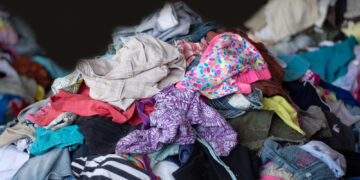
It was only in 2008 that the EU’s Waste Directive mandated separate collection for paper, metal, plastics and glass by 2015 and in 2018 a directive required that textiles be included starting in January 2025.
In more recent years, the Commission has pushed for waste considerations to be present from the start of the product life cycle, during the design phase. “This is a further major step towards waste reduction but it will take time before substantial results can be observed,” the auditors said.
This concept is reinforced by such institutions as Europe’s Recyclass and North America’s Association of Plastic Recyclers (APR). Both organizations maintain guidelines for packaging design that optimizes recyclability. APR owns Resource Recycling, Inc., publisher of Plastics Recycling Update.
Moreover, the auditors noted that “it remains difficult to establish whether certain member states’ struggles in meeting the targets are due to the number and/or ambition of the targets, a lack of effective action by member states, or possibly a combination of both.”