




Resource Recycling
  • The Latest
  • Analysis
    • All
    • Certification Scorecard
    • Industry Announcements
    • Opinion
    What the NAND flash crunch means for remarketing, refurbishment and residual values

    Telamon acquires ITAD consultancy Retire-IT

    Certification Scorecard — Week of July 6, 2026

    Tech giant pens detailed ‘plastic-free packaging’ guide

    What Google’s latest report means for ITAD

    Unpacking the Starbucks cup data

    Unpacking the Starbucks cup data

    Amazon cutting out more flexible packaging

    Amazon’s AWS hardware reuse is measured

    MP Materials breaks ground on rare earth magnet campus in North Texas

    ERI confirms ITAD shift toward minerals

  • Conferences
    • Resource Recycling Conference
    • Plastics Recycling Conference
    • E-Scrap: The Longevity Conference
    • Textiles Recovery Summit
  • Publications
    • E-Scrap News
    • Plastics Recycling Update
    • Policy Now
    • Resource Recycling
    • Other Topics
      • All Topics
      • Brand Owners
      • Critical Minerals
      • Glass
      • Grant Watch / RFPs
      • Markets
      • Organics
      • Packaging
      • Research
      • Technology
      • Textiles
Subscribe
No Result
View All Result
Resource Recycling
  • The Latest
  • Analysis
    • All
    • Certification Scorecard
    • Industry Announcements
    • Opinion
    What the NAND flash crunch means for remarketing, refurbishment and residual values

    Telamon acquires ITAD consultancy Retire-IT

    Certification Scorecard — Week of July 6, 2026

    Tech giant pens detailed ‘plastic-free packaging’ guide

    What Google’s latest report means for ITAD

    Unpacking the Starbucks cup data

    Unpacking the Starbucks cup data

    Amazon cutting out more flexible packaging

    Amazon’s AWS hardware reuse is measured

    MP Materials breaks ground on rare earth magnet campus in North Texas

    ERI confirms ITAD shift toward minerals

  • Conferences
    • Resource Recycling Conference
    • Plastics Recycling Conference
    • E-Scrap: The Longevity Conference
    • Textiles Recovery Summit
  • Publications
    • E-Scrap News
    • Plastics Recycling Update
    • Policy Now
    • Resource Recycling
    • Other Topics
      • All Topics
      • Brand Owners
      • Critical Minerals
      • Glass
      • Grant Watch / RFPs
      • Markets
      • Organics
      • Packaging
      • Research
      • Technology
      • Textiles
Subscribe
No Result
View All Result
Resource Recycling
No Result
View All Result
Home Recycling

Wisconsin recycling aid shrinks over 10-year period

Antoinette SmithbyAntoinette Smith
January 14, 2025
in Recycling
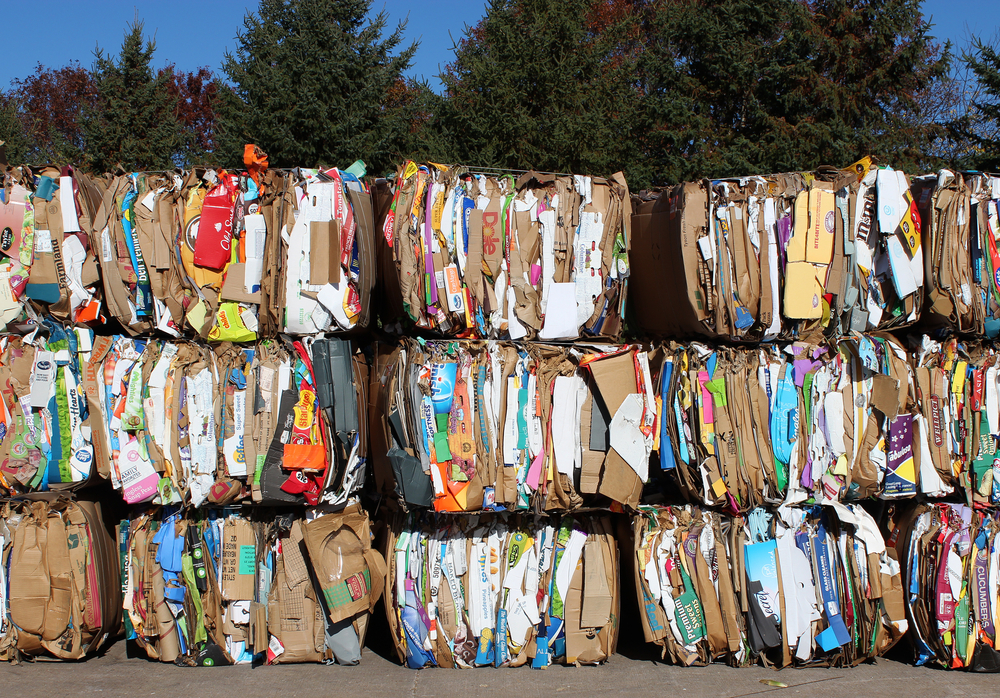
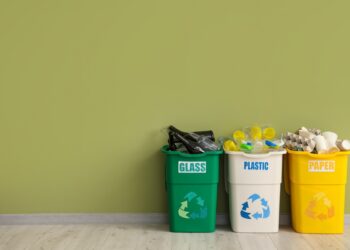
A new report indicates that local recycling budgets have tightened over the past 10 years amid changes in collection volumes, flat grant amounts and volatile commodity pricing. | Digital Reflections/Shutterstock

The portion of recycling costs covered by state aid has decreased, while costs have edged higher and OCC recycling has more than doubled, according to a new report from a state policy research group.

The report from the Wisconsin Policy Forum cited the ever-increasing share of online shopping for the increase in OCC recycling, even as recycling of other paper has fallen by 36%. The shifting composition of recycling collection volumes also reflects such behavioral changes as eschewing print newspapers in favor of online content and printing fewer documents for home and work. 

OCC represents about 55-60% of the material passing through a MRF, even though its market value is among the lowest of recoverable commodities. Municipalities collected an average of 136 pounds of recyclable materials per capita in 2022, lower by 8 pounds or about 5.6% from 2013 levels, the report said.

And although operating costs for municipal recycling have grown by only 0.6% per year between 2013 and 2021, state grants represent a declining share of costs for such services. 

In 2009, state-based aid covered more than 30% of recycling costs. But state recycling grants have been around $19 million to $20 million per year since 2011, when large budget cuts took effect and dropped the portion of covered recycling costs to around 22%. That share has steadily dropped to the current 16%. 

The report cites the reduced collection volumes, as well as pricing volatility for recycled materials, for a decrease in resources used to cover these costs, which exacerbates the limitations imposed by strict state rules on local government revenue. 

“This leaves local residents paying more for services through increased property taxes or fees for service,” the report stated. “If state leaders want to ensure continued high-quality recycling services and limit the growth of local taxes and fees, they could consider increasing state recycling aids to again cover a larger portion of the costs.”

The report offered further recommendations including improving educational efforts to encourage recycling and increasing pickup frequency or cart size. 

The organization’s leadership represents local governments, utility companies, educational institutions, health care systems, numerous banks and Wisconsin-headquartered companies such as Menasha, parent company of Orbis.  

The cost of recycling also differed depending on whether it was handled by a county or a municipality. Cities and villages tend to use their own staff or contracted private firms to collect recycling and pay for services with taxes, state aid or fees. “This puts downward pressure on costs, as local leaders try to keep taxes and fees on residents from increasing,” the report said. 

In contrast, counties perform less collection work and more frequently operate landfills and recycling centers, the report said, and because they can charge landfill use fees, they are less constrained by revenue limits. This has allowed their recycling spending to rise more rapidly.

Nevertheless, recycling remains popular in the state – 94% of residents say they recycle and feel it’s worthwhile, according to a Wisconsin Department of Natural Resources survey. Regional officials from WM echoed this sentiment last year, also noting a lower contamination rate at the Germantown MRF compared to nearby regions in the Upper Midwest. 

Confusion, shifting industry practices may lessen volumes

One reason for lower volumes could be related to the increase in OCC recycling, the report said, as OCC is bulkier than paper, takes up more room in recycling carts and so is a less efficient use of space. 

In the 10-year period studied, collected aluminum containers dropped by 1,800 tons, or 16.4%. The report noted that aluminum containers are the most valuable recyclable commodity. Among the possible reasons for the drop in aluminum volumes are societal and generational shifts. In a state renowned for its robust beer culture, the report noted that younger people tend to drink less beer, which typically is packaged in aluminum cans. 

Growing public distrust of recycling systems and confusion surrounding what to recycle also could contribute to the lower volumes, according to surveys conducted by the state Department of Natural Resources and cited by the report. And industry practices have changed, with the report noting that a PET water bottle in 2024 weighs about 40% less and is easier to crush than one from 10 years ago. 

Flexible packaging has replaced some recyclable plastic or cardboard food packaging, according to the report. However, although lightweighting may result in lower tonnage of recyclable materials, “it often represents a reduction in total material consumed and discarded, so it may still provide environmental benefits,” the authors wrote. 

Even so, glass containers increased during the period, by 9,900 tons or 10.8%, and plastic rose by 3,400 tons or 11.5%. 

Price volatility hits bottom lines

Between 2013 and 2019, revenue from recycled commodity sales dropped by 27.8%, the report found, amid a steep drop in demand due to China’s ban on recycled material imports, known as the National Sword policy. However, increasing values for mixed paper have nearly doubled since 2021, helping commodity pricing improve. According to RecyclingMarkets.net data, in third-quarter 2024 mixed paper was at $54.33 per ton, compared to $28.00 per ton in Q3 2020. 

Income from commodity sales can contribute up to 20% of operating costs, the report said, citing data from the state Department of Revenue, highlighting the risk of relying on them heavily. 

“Those governments have three main sources to cover recycling service costs: local revenues like property taxes or customer fees, state aid, and proceeds from the sale of recyclable materials,” the authors wrote. “If one source weakens, another one must pick up the slack.”
 

Tags: DataPaper Fiber
TweetShare
Antoinette Smith

Antoinette Smith

Antoinette Smith has been at Resource Recycling Inc., since June 2024, after several years of covering commodity plastics and supply chains, with a special focus on economic impacts. She can be contacted at antoinette@resource-recycling.com.

Related Posts

Unpacking the Starbucks cup data

Unpacking the Starbucks cup data

byAntoinette Smith
July 8, 2026

Upon close examination, data casting doubt on the coffee giant's recycling claims raises more questions than it answers.

Tiger Group offers OCC pulp mill equipment sale

Tiger Group offers OCC pulp mill equipment sale

byTiger Group
July 1, 2026

Sale by Tiger and partner Can-Am Machinery features pulping, drying, baling and other assets from a fiber-processing and pulp-production plant...

Smurfit Westrock climate goals evolving post-merger 

Smurfit Westrock climate goals evolving post-merger 

byAntoinette Smith
June 26, 2026

In its first integrated sustainability report, Smurfit Westrock announced new targets but continues to iron out other key details.

Tzvika Shahaf of Blancco

Blancco names new SVP of product strategy

byDavid Daoud
June 17, 2026

At the same time the data erasure landscape is undergoing a major shift.

Group updates on UBC-sorting robot’s success

Plastic bale pricing falls while paper, UBCs firm

byRecyclingMarkets.net Staff
June 15, 2026

PET bales remained steady at low levels, while HDPE and PP grades fell; paper and aluminum cans saw pricing gains.

Various PET thermoform containers.

Thermoform recovery soars, PCR content falls

byAntoinette Smith
June 10, 2026

In its first standalone PET thermoform market analysis, NAPCOR examined production, recycling, PCR use and policy in North America.

Load More
Next Post

Colorado communities prepare for recycling access project

More Posts

Oregon’s Recycling Modernization Act faces injunction

Oregon’s EPR program posts first-year results

July 6, 2026
Two recycled-content bills gain approval in California

California agriculture seeks SB 54 repeal

July 7, 2026
Unpacking the Starbucks cup data

Unpacking the Starbucks cup data

July 8, 2026
In Our Opinion: Coalitions: The EPR Differentiator

Inside NAW’s constitutional case against packaging EPR

July 6, 2026
EPR fees are a market signal. Here’s what they’re telling you.

Building the infrastructure behind EPR

July 6, 2026
SB 54 draft rules generate debate on rates, review

California increases PET market payments

July 7, 2026
SCS launches chem recycling standard

SCS launches chem recycling standard

July 1, 2026
Utah highway project to reuse pavement

Utah highway project to reuse pavement

July 2, 2026
MP Materials breaks ground on rare earth magnet campus in North Texas

ERI confirms ITAD shift toward minerals

July 3, 2026
Aduro, AstroTurf look at recycling feedstock 

Aduro, AstroTurf look at recycling feedstock 

June 30, 2026
Load More

About & Publications

About Us

Staff

Archive

Magazine

Work With Us

Advertise
Jobs
Contact
Terms and Privacy

Newsletter

Get the latest recycling news and analysis delivered to your inbox every week. Stay ahead on industry trends, policy updates, and insights from programs, processors, and innovators.

Subscribe

Welcome Back!

Login to your account below

Forgotten Password?

Retrieve your password

Please enter your username or email address to reset your password.

Log In

Add New Playlist

No Result
View All Result
  • The Latest
  • Analysis
  • Recycling
  • E-Scrap
  • Plastics
  • Policy Now
  • Conferences
    • E-Scrap Conference
    • Plastics Recycling Conference
    • Resource Recycling Conference
    • Textiles Recovery Summit
  • Magazine
  • About Us
  • Advertise
  • Archive
  • Jobs
  • Staff
Subscribe
This website uses cookies. By continuing to use this website you are giving consent to cookies being used. Visit our Privacy and Cookie Policy.