Resource Recycling
  • The Latest
  • Analysis
    • All
    • Certification Scorecard
    • Industry Announcements
    • Opinion
    Our top stories from June 2022

    e-Stewards adds RGX as enterprise partner

    MP Materials breaks ground on rare earth magnet campus in North Texas

    How critical mineral alliances aim to shape the future of e-scrap metals

    Certification Scorecard — Week of May 18, 2026

    Aurubis: Thefts involved scrap sample manipulation

    Metals and electronics recyclers report growth

    Plastic packaging

    Why SB 54 source reduction planning is becoming the industry’s most challenging EPR test

    Recycler cites market pressure in short-term closure

    AI, data anxiety push enterprises to destroy working devices: report

  • Conferences
    • Resource Recycling Conference
    • Plastics Recycling Conference
    • E-Scrap: The Longevity Conference
    • Textiles Recovery Summit
  • Publications
    • E-Scrap News
    • Plastics Recycling Update
    • Policy Now
    • Resource Recycling
    • Other Topics
      • Brand Owners
      • Critical Minerals
      • Glass
      • Grant Watch
      • Markets
      • Organics
      • Packaging
      • Research
      • Technology
      • Textiles
      • All Topics
Subscribe
No Result
View All Result
Resource Recycling
  • The Latest
  • Analysis
    • All
    • Certification Scorecard
    • Industry Announcements
    • Opinion
    Our top stories from June 2022

    e-Stewards adds RGX as enterprise partner

    MP Materials breaks ground on rare earth magnet campus in North Texas

    How critical mineral alliances aim to shape the future of e-scrap metals

    Certification Scorecard — Week of May 18, 2026

    Aurubis: Thefts involved scrap sample manipulation

    Metals and electronics recyclers report growth

    Plastic packaging

    Why SB 54 source reduction planning is becoming the industry’s most challenging EPR test

    Recycler cites market pressure in short-term closure

    AI, data anxiety push enterprises to destroy working devices: report

  • Conferences
    • Resource Recycling Conference
    • Plastics Recycling Conference
    • E-Scrap: The Longevity Conference
    • Textiles Recovery Summit
  • Publications
    • E-Scrap News
    • Plastics Recycling Update
    • Policy Now
    • Resource Recycling
    • Other Topics
      • Brand Owners
      • Critical Minerals
      • Glass
      • Grant Watch
      • Markets
      • Organics
      • Packaging
      • Research
      • Technology
      • Textiles
      • All Topics
Subscribe
No Result
View All Result
Resource Recycling
No Result
View All Result
Home Recycling

Notes from the Field: Engineering UBC solutions

byLaura Levesque, Recycle Colorado
February 9, 2021
in Recycling

When students from the Colorado School of Mines offer fresh perspectives on solving complicated recycling challenges, we listen.

Last semester, Recycle Colorado, the statewide nonprofit for the recycling industry, had the pleasure of working with 10 students on the problem of separating plastic labels from aluminum cans. It is often difficult to tell if your favorite canned beverage has a plastic label. These plastic coverings (while great for branding) cause sorting difficulties at our recycling centers and damage equipment at the aluminum mills.

Laura Levesque

Sophomores and juniors applied their studies in engineering physics and metallurgical and material engineering to address this real-world beverage can recycling challenge. I coached these students on the overall problem and shared a variety of perspectives from Recycle Colorado stakeholders who participated in previous roundtable discussions.

The fun part about connecting with these students was their enthusiasm to address real-world problems. They not only addressed the issue from an engineering perspective but also on a personal level. They raised awareness among their peers and family to remove plastic labels before recycling the cans – a whole other kind of education.

Technology for UBC sorting and label removal

The results of both teams’ projects are compelling.

One team, calling themselves “Vincent Can Go,” combined the technologies of an optical eye, which detects PET, with an electromagnetic and dual-energy X-ray transmission sensor (DE-XRT) to detect aluminum. The DE-XRT system might be better known for luggage inspections at airports, but the technology can also detect metallic elements such as aluminum. The DE-XRT unit is just slightly larger than a Monopoly box, making it feasible to add to a sortation line. The combination of the PET optical eye with the DE-XRT sensor enables a system to determine if a material is a combination of plastic on top of aluminum, thus allowing this layered material to be separated. Their simulation model showed that 2 volts was optimal for the speed necessary to properly sort the material, resulting in 90-95% accuracy. The Vincent Can Go team found a successful way to sort the plastic/aluminum combination, the first step needed for a recycling solution.

Where one team’s part of the solution leaves off, the other team picks up. The “Restore 41″ team engineered a multi-step solution to remove plastic from aluminum cans. This team’s design starts with wire brushing the cans. This process is designed to pierce the outer plastic covering, making it more vulnerable for removal.

Next, the cans are put into a large drum containing an acetone bath, which weakens the plastic. While in the drum, an agitator blade rotates the cans, ensuring even exposure to the acetone.

The third and final step is high-intensity water spraying. With the plastic already loose, the spraying process further removes the plastic covering. This team’s testing prototype showed a 4 out of 5 success rate with the plastic getting partially removed. The hypothesis is that all the plastic could be removed with the appropriate industrial equipment.

This team noted the following: “Firstly, the removal procedure should take place after cans are crushed because the sharp corners facilitate far greater destruction of the labels. Second, the brush-spray combination is extremely effective on shrink-wrapped cans, and less so on adhesive-based (labeled) cans.”

The desired end result is a plastic-free can that can be sent to the aluminum mill and ultimately made into new aluminum cans, thus perpetuating the circularity of aluminum.
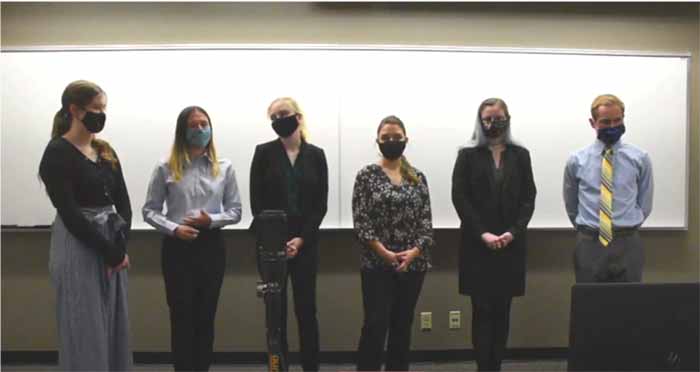
Students present on their aluminum can recycling technologies on Oct. 7, 2020 at the Colorado School of Mines. | Courtesy of Recycle Colorado

Project’s practical limitations

While the ingenuity of these two teams show promise for future innovation, the MRFs note the practicality of adding these components to existing operations would be extremely difficult. Retrofitting sort lines with limited footprints is challenging and costly.

Additionally, introducing a chemical process such as an acetone bath would require special permitting for hazardous chemical materials, ventilation, new training, safety precautions, and more. Perhaps the process proposed by the Restore 41 team, including the chemical bath, would need to be housed in a separate facility. Nonetheless, we have two unique engineering solutions thanks to the efforts of these teams.

In the time of COVID-19, the research and expanse of testing achieved by the students was commendable. Sadly, they were unable to visit a MRF to better familiarize themselves with existing operations and parameter constraints. Undeterred, these students created their own home-built “sortation” lines with a limited budget. For example, to simulate the agitation process of the acetone drum bath, they created a clear plastic drum affixed to a bicycle pedal. Additionally, their 3D modeling and creation of a combo optical eye with DE-XRT system was quite impressive.
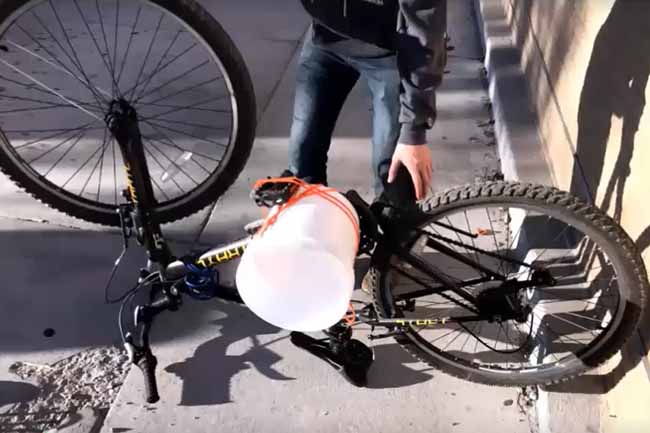
A team of students developing equipment to remove plastic labels from UBCs used bike pedals to turn a plastic drum. The apparatus allowed them to wash cans in an acetone bath, which weakens the plastic for later removal.

Address state and national goals

All innovations need time to take shape and become enveloped in standardized operations. The creative problem-solving of these two academic teams lends itself to further exploration. We welcome their promise of ingenuity as Colorado embraces clean tech in its pursuit of waste diversion goals and circular economies.

Their efforts also seek to achieve national goals. Kristin Kim Haynes, executive director at Recycle Colorado, reminds us that aluminum can be recycled indefinitely, which makes it an extremely valuable material to recover from the waste stream for both the environment and the economy, yet we are currently experiencing a national aluminum shortage. It looks like we’re missing out on some serious opportunities when we can’t recover the aluminum in our own country due to what it’s wrapped or coated with. Our collaborations with industry leaders such as Ball Corp., MolsonCoors and Swire Coca-Cola – companies that support innovative exploration from institutions like the Colorado School of Mines – are exciting and invaluable.


Laura Levesque is the programs director at Recycle Colorado, a statewide nonprofit organization that works on projects related to infrastructure and end markets for material recovery, reuse and manufacturing.

Plastics Recycling Conference

Tags: Container DepositsCritical MineralsLocal ProgramsTechnology
TweetShare
Laura Levesque, Recycle Colorado

Laura Levesque, Recycle Colorado

Related Posts

Data to verify recycling for Indy 500

Data to verify recycling for Indy 500

byAntoinette Smith
May 22, 2026

A verification platform from Circular Solutions will provide independent verification for the world's largest single-day sporting event on May 24.

WM, Circular Materials announce new Canadian facility

byStefanie Valentic
May 21, 2026

Hauler WM will open a new preconditioning recycling facility (PCF) in Edmonton in early 2027, bringing advanced optical sorting to...

MP Materials breaks ground on rare earth magnet campus in North Texas

How critical mineral alliances aim to shape the future of e-scrap metals

byDavid Daoud
May 21, 2026

The Minerals Integrity & Resilience Alliance (MIRA) is part of a broader effort to strengthen transparency and resilience across critical...

Aurubis: Thefts involved scrap sample manipulation

Metals and electronics recyclers report growth

byDavid Daoud
May 20, 2026

Aurubis, Umicore and Sims show that downstream multimetal and electronics-related recovery businesses are, at least for now, operating in a...

Aurubis smelter pipe system and chimney.

Aurubis sends positive signal for metals recovery markets

byDavid Daoud
May 18, 2026

The company’s performance is often seen as a bellwether for downstream appetite for complex electronic scrap and industrial recycling feedstock.

Publishing and events firm buys Waste Dive parent for $389M

Foxway Circular UK wins King’s Award for refurb licensing platform

byDavid Daoud
May 14, 2026

The prestigious business award recognizes the company's SMART cloud platform.

Load More
Next Post

Survey shows US landfill tip fees decreased last year

More Posts

Bottle bill backers see opportunity for action

PET collapse exposes gaps in US recycling infrastructure

May 15, 2026
Revised CA budget includes $200m for recycling

Revised CA budget includes $200m for recycling

May 20, 2026
Federal PACK Act aims to preempt ‘patchwork’ of state laws

House advances Recycling Infrastructure and Accessibility Act

May 21, 2026
Plastic packaging

Why SB 54 source reduction planning is becoming the industry’s most challenging EPR test

May 19, 2026

Before the Bin: America’s textile waste problem starts in your closet

May 19, 2026
Aurubis: Thefts involved scrap sample manipulation

Metals and electronics recyclers report growth

May 20, 2026
Niagara acquires rPlanet Earth assets in California

Niagara acquires rPlanet Earth assets in California

May 15, 2026
Industry descends on DC to fight for PET

Industry descends on DC to fight for PET

May 13, 2026
Recycler cites market pressure in short-term closure

AI, data anxiety push enterprises to destroy working devices: report

May 19, 2026
Extruder pushes out natural HDPE pellets at KW Plastics in Troy, Alabama.

Rare look inside the world’s largest plastics recycler

May 13, 2026
Load More

About & Publications

About Us

Staff

Archive

Magazine

Work With Us

Advertise
Jobs
Contact
Terms and Privacy

Newsletter

Get the latest recycling news and analysis delivered to your inbox every week. Stay ahead on industry trends, policy updates, and insights from programs, processors, and innovators.

Subscribe

Welcome Back!

Login to your account below

Forgotten Password?

Retrieve your password

Please enter your username or email address to reset your password.

Log In

Add New Playlist

No Result
View All Result
  • The Latest
  • Analysis
  • Recycling
  • E-Scrap
  • Plastics
  • Policy Now
  • Conferences
    • E-Scrap Conference
    • Plastics Recycling Conference
    • Resource Recycling Conference
    • Textiles Recovery Summit
  • Magazine
  • About Us
  • Advertise
  • Archive
  • Jobs
  • Staff
Subscribe
This website uses cookies. By continuing to use this website you are giving consent to cookies being used. Visit our Privacy and Cookie Policy.