


Resource Recycling
  • The Latest
  • Analysis
    • All
    • Certification Scorecard
    • Industry Announcements
    • Opinion

    Certification Scorecard – Week of March 16, 2026

    Groups identify recovered plastics users in the Northeast

    Bale pricing for recycled plastics diverges

    Why global ITAD is stranded in the Gulf

    Why global ITAD is stranded in the Gulf

    Certification scorecard for the week of March 9, 2026

    Diversion Dynamics: Secondhand exports slow down fast fashion

    Certification scorecard for the week of March 2, 2026

    Industry announcements for January 2026

    Industry Announcements for March 2026

    HP receives ocean plastics certification

    HP Inc. earnings point to memory inflation challenge

    Certification scorecard for the week of Feb. 23, 2026

  • Conferences
  • Publications

    Other Topics

    Textiles
    Organics
    Packaging
    Glass
    Brand Owners

    Metals
    Technology
    Research
    Markets
    Grant Watch

    All Topics

Subscribe
No Result
View All Result
Resource Recycling
  • The Latest
  • Analysis
    • All
    • Certification Scorecard
    • Industry Announcements
    • Opinion

    Certification Scorecard – Week of March 16, 2026

    Groups identify recovered plastics users in the Northeast

    Bale pricing for recycled plastics diverges

    Why global ITAD is stranded in the Gulf

    Why global ITAD is stranded in the Gulf

    Certification scorecard for the week of March 9, 2026

    Diversion Dynamics: Secondhand exports slow down fast fashion

    Certification scorecard for the week of March 2, 2026

    Industry announcements for January 2026

    Industry Announcements for March 2026

    HP receives ocean plastics certification

    HP Inc. earnings point to memory inflation challenge

    Certification scorecard for the week of Feb. 23, 2026

  • Conferences
  • Publications

    Other Topics

    Textiles
    Organics
    Packaging
    Glass
    Brand Owners

    Metals
    Technology
    Research
    Markets
    Grant Watch

    All Topics

Subscribe
No Result
View All Result
Resource Recycling
No Result
View All Result
Home Resource Recycling Magazine

First Person Perspective: It’s time to upend the cycle of ‘infinite consumption’

byKelley Dennings
January 25, 2021
in Resource Recycling Magazine
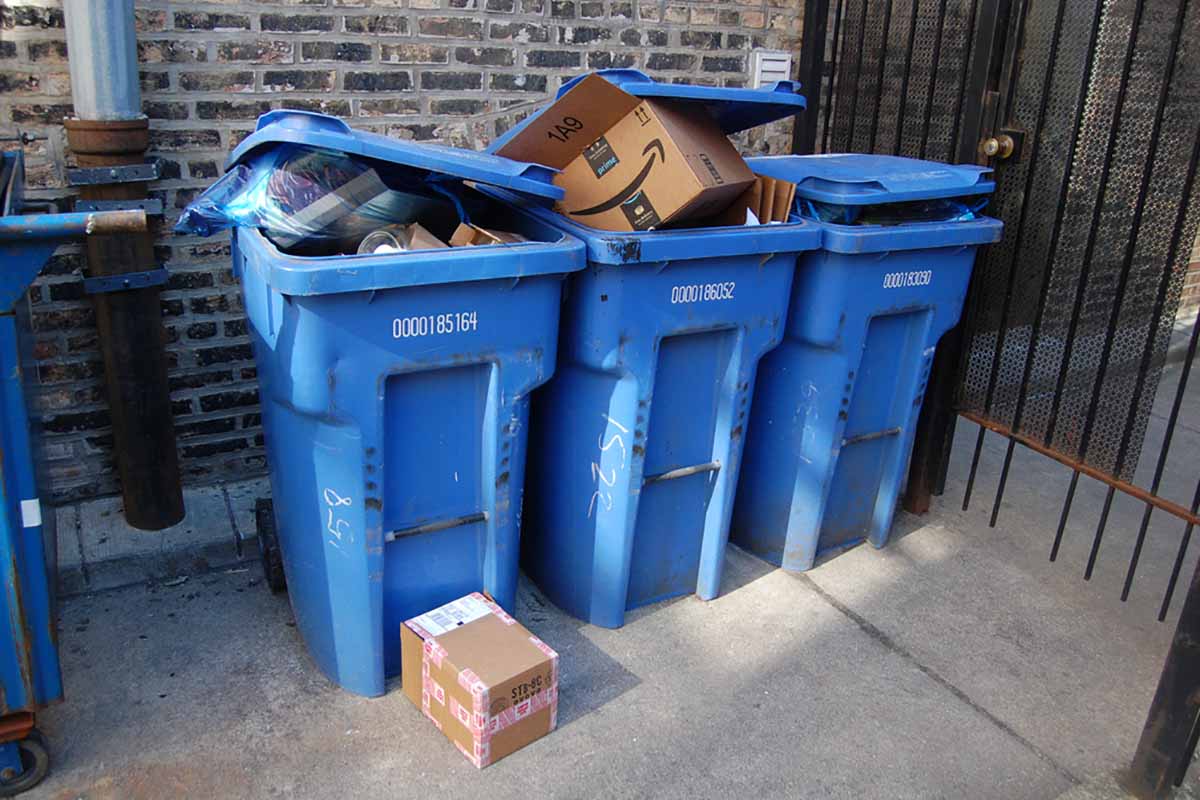
Data from the Environmental Protection Agency shows that waste generation per person has nearly doubled since 1960.

America Recycles Day was once again marked by recycling operators, government entities and others last month. It’s a campaign I’ve supported in various capacities since its national inception in 1997.

But while I support recycling and composting (and think it should be celebrated), I also believe we need to move our efforts up the waste hierarchy and turn the spotlight on waste prevention and reuse.

As a society, we focus too much on recycling and not nearly enough on our culture of infinite consumption, which feeds our recycling centers – and fills our landfills and incinerators – with materials extracted from the earth. Extracting resources just to make stuff we turn around and throw away or recycle has devastating consequences for the planet.

The focus on recycling also creates a culture of guilt-free consumption, allowing people to feel they can consume more and more as long as they think what they’re consuming can be recycled.

We can’t simply recycle more. We need to consume consciously.

Global implications

Data from the Environmental Protection Agency shows that waste generation per person has nearly doubled since 1960. Our discarded stuff not only fills up landfills and feeds incinerators, but producing it uses water, creates pollution and generates greenhouse gas emissions, all of which harm wildlife and habitat. Infinite consumption, even if what we’re consuming is recycled, cannot be the path forward for planetary resilience.

The Center for Biological Diversity, where I work on consumption issues, is a national nonprofit conservation organization dedicated to the protection of endangered species and wild places. We recently released the results of a national survey exploring these issues (the report is called “Contraception and Consumption in the Age of Extinction: U.S. Survey Results”).

The survey found that three out of four respondents think the United States is doing too little to protect natural resources like water, air, wildlife and land. Seventy-four percent of respondents think the average American consumes too many natural resources, and three out of four say they are willing to reduce their personal consumption by buying only what they need.

While the vast majority believe society has a moral responsibility to prevent wildlife extinctions and they acknowledge a connection between consumption patterns and environmental impact, nearly half of all respondents said they think they consume fewer resources than the average American.

In other words, those surveyed realize we have a consumption problem in America, but they don’t think their personal actions are the problem.

I am calling on those celebrating America Recycles Day to broaden their outlook for the health of people and the planet. Let’s create systems to support the 82% of Americans willing to reduce their personal consumption. Let’s build cultural and business models based on a foundation of waste prevention and reuse – not just recycling. Let’s make sure we support a living-wage workforce and provide job training to help transition workers from waste management to waste prevention and reuse roles.

Smart from economic perspective

The solutions to make all of this a reality already exist.

When food establishments switch from single-use to reusable cups, containers and packaging systems, they can save money.

Community-based reuse systems create good jobs and aren’t at the mercy of global supply chains that could fall apart in times of crisis. Local chambers of commerce and business development offices should support robust thrift, rental and bulk store opportunities.

Customers today are looking for supply-chain resilience and renewed value propositions. They want to know what to do with their products when they break. Supporting right-to-repair policies, along with encouraging products to be designed for increased durability, is important.

Meanwhile, however, the fossil fuel industry is aggressively expanding plastic production, which is being driven by an oversupply of cheap, fracked natural gas in the U.S. The biggest thing we can do to reduce plastic pollution and support the frontline communities bearing the health and environmental impacts of fossil fuel development and plastic production is to make less plastic.

We must support the Break Free from Plastic Pollution Prevention Act, which seeks to put a temporary pause on new plastic facilities until the EPA updates and creates important regulations for those facilities. That bill also includes other waste prevention policies such as extended producer responsibility and single-use plastic bans.

The health and well-being of humans is intrinsically linked to the health and well-being of nature. We owe it to the 76% of Americans who think the U.S. is doing too little to protect natural resources to create thoughtful waste prevention and reuse policies and campaigns.

Let’s turn the tide. Let’s commit to moving up the waste management hierarchy and supporting waste prevention and reuse to decrease resource extraction, conserve land, save energy and water and decrease greenhouse gas emissions that contribute to global climate change.

Kelley Dennings is a campaigner with the Center for Biological Diversity. She has worked for local and state government recycling departments, along with a national nonprofit, where she used the America Recycles Day campaign to instigate action.

This article appeared in the December 2020 issue of Resource Recycling. Subscribe today for access to all print content.

TweetShare
Kelley Dennings

Kelley Dennings

Related Posts

Envela reports stronger Q3 ITAD revenues

Top 5 reasons for the rise of US e-scrap recycling

byDavid Daoud
March 23, 2026

Global shifts are driving a rise in processing material domestically, though challenges remain.

WEF tackles plastic pollution in developing nations

Safety in focus: Rising fire risks complicate safety gains

byPaul Lane
March 23, 2026

Waste and recycling industry workers face numerous health and safety risks on the job. Studies indicate a lack of regulation...

New Providence carts underpin recycling campaign

New Providence carts underpin recycling campaign

byBrian Clark Howard
March 23, 2026

With grant assistance, the Rhode Island capital is providing about 55,000 new collection carts to help boost its recycling rate,...

In My Opinion: Bring consumer trust to refurb markets

Record $6.4B in trade-ins as older phones drive market

byScott Snowden
March 23, 2026

Device protection and services firm Assurant showed that iPhones were traded in at an average 3.8 years and Androids reached...

Australia battery recycling sector could reach A$6.9bn by 2050

Australia battery recycling sector could reach A$6.9bn by 2050

byScott Snowden
March 20, 2026

The country's battery recycling industry already contributes A$2.1 billion today, according to a new industry-funded report that calls for extended...

Former USAID laptops find second life in classrooms

Former USAID laptops find second life in classrooms

byScott Snowden
March 20, 2026

Nearly 300 laptops donated by former USAID staff are being refurbished and shipped to schools and nonprofits overseas through a...

Load More
Next Post

Facility Focus: Revolution

More Posts

Groups identify recovered plastics users in the Northeast

Bale pricing for recycled plastics diverges

March 17, 2026
Chinese processing group details goals for US visit

AMP lays out vision of next-generation, AI-driven MRFs

July 24, 2024
War-driven fuel costs compound recycling woes

War-driven fuel costs compound recycling woes

March 16, 2026
Why global ITAD is stranded in the Gulf

Why global ITAD is stranded in the Gulf

March 16, 2026
Assurant sees 60% rise in Q2 trade-in values

Old electronics seen as key to US minerals supply chain

March 18, 2026
Celebrate Global Recycling Day 2026

Celebrate Global Recycling Day 2026

March 18, 2026
Apple accused of hampering battery replacement

Apple’s MacBook Neo: iFixit’s best MacBook score in 14 years, but the residual value ceiling is real

March 17, 2026
ExxonMobil files suit against California AG for defamation

Legal issues continue for canceled Pennsylvania project 

March 13, 2026
Oregon state capitol building with state flag and blue sky.

Oregon opens comment on updated REM plan

March 16, 2026
Traceability tools add recycled material trust

Industry coalition seeks injunction against California’s SB 343

March 19, 2026
Load More

About & Publications

About Us

Staff

Archive

Magazine

Work With Us

Advertise
Jobs
Contact
Terms and Privacy

Newsletter

Get the latest recycling news and analysis delivered to your inbox every week. Stay ahead on industry trends, policy updates, and insights from programs, processors, and innovators.

Subscribe

Welcome Back!

Login to your account below

Forgotten Password?

Retrieve your password

Please enter your username or email address to reset your password.

Log In

Add New Playlist

No Result
View All Result
  • The Latest
  • Analysis
  • Recycling
  • E-Scrap
  • Plastics
  • Policy Now
  • Conferences
    • E-Scrap Conference
    • Plastics Recycling Conference
    • Resource Recycling Conference
    • Textiles Recovery Summit
  • Magazine
  • About Us
  • Advertise
  • Archive
  • Jobs
  • Staff
Subscribe
This website uses cookies. By continuing to use this website you are giving consent to cookies being used. Visit our Privacy and Cookie Policy.