










Resource Recycling
  • The Latest
  • Analysis
    • All
    • Certification Scorecard
    • Industry Announcements
    • Opinion
    The electronics recycling industry is undergoing a transformation from labor-intensive manual operations to highly automated, AI-driven facilities that use advanced robotics, cleaner chemistry and digital tracking systems to extract critical materials.

    The cyber-physical MRF: AI and robotics reshape e-waste recovery

    Certification scorecard for the week of Feb. 9, 2026

    Meta-Corning deal signals IT hardware retirement wave

    Meta-Corning deal signals IT hardware retirement wave

    Malaysia clamps down on illegal e-waste imports amid probes

    Malaysia clamps down on illegal e-waste imports amid probes

    URT builds alliance to remake electronics plastics at scale

    ICYMI: Top 5 e-scrap stories from January 2026

    The electronics recycling industry is undergoing a transformation from labor-intensive manual operations to highly automated, AI-driven facilities that use advanced robotics, cleaner chemistry and digital tracking systems to extract critical materials.

    Certification scorecard for the week of Feb. 2, 2026

    Auditors warn EU may fall short on critical metals

    Auditors warn EU may fall short on critical metals

    Industry announcements for January 2026

    Industry announcements for February 2026

    ICYMI: Top 5 recycling stories from January 2026

  • Conferences
  • Publications

    Other Topics

    Textiles
    Organics
    Packaging
    Glass
    Brand Owners

    Metals
    Technology
    Research
    Markets
    Grant Watch

    All Topics

Subscribe
No Result
View All Result
Resource Recycling
  • The Latest
  • Analysis
    • All
    • Certification Scorecard
    • Industry Announcements
    • Opinion
    The electronics recycling industry is undergoing a transformation from labor-intensive manual operations to highly automated, AI-driven facilities that use advanced robotics, cleaner chemistry and digital tracking systems to extract critical materials.

    The cyber-physical MRF: AI and robotics reshape e-waste recovery

    Certification scorecard for the week of Feb. 9, 2026

    Meta-Corning deal signals IT hardware retirement wave

    Meta-Corning deal signals IT hardware retirement wave

    Malaysia clamps down on illegal e-waste imports amid probes

    Malaysia clamps down on illegal e-waste imports amid probes

    URT builds alliance to remake electronics plastics at scale

    ICYMI: Top 5 e-scrap stories from January 2026

    The electronics recycling industry is undergoing a transformation from labor-intensive manual operations to highly automated, AI-driven facilities that use advanced robotics, cleaner chemistry and digital tracking systems to extract critical materials.

    Certification scorecard for the week of Feb. 2, 2026

    Auditors warn EU may fall short on critical metals

    Auditors warn EU may fall short on critical metals

    Industry announcements for January 2026

    Industry announcements for February 2026

    ICYMI: Top 5 recycling stories from January 2026

  • Conferences
  • Publications

    Other Topics

    Textiles
    Organics
    Packaging
    Glass
    Brand Owners

    Metals
    Technology
    Research
    Markets
    Grant Watch

    All Topics

Subscribe
No Result
View All Result
Resource Recycling
No Result
View All Result
Home Recycling

Israeli business says it wants the material MRFs reject

Colin StaubbyColin Staub
October 15, 2019
in Recycling
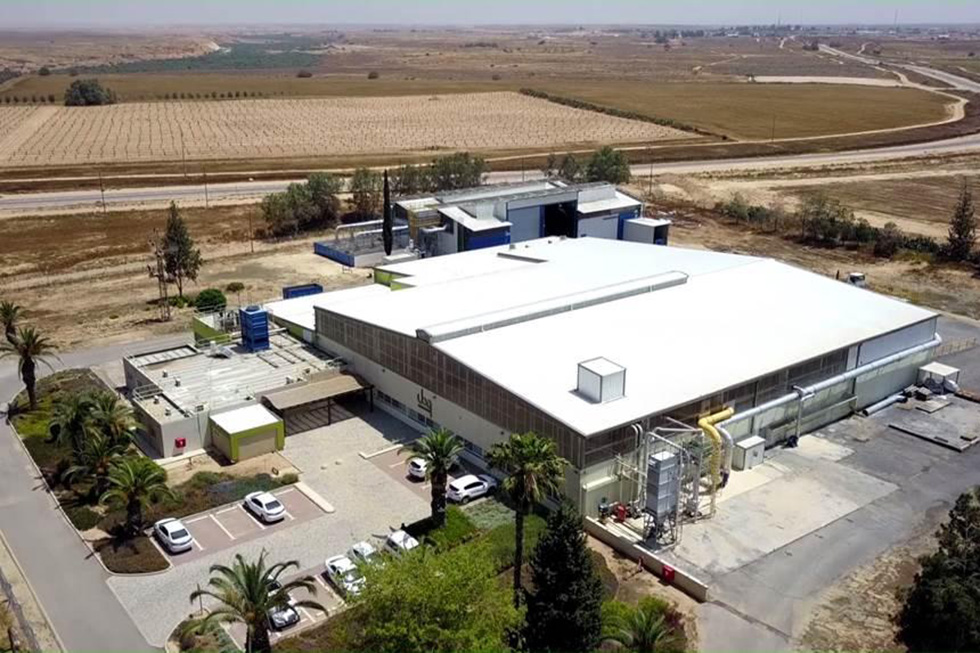
UBQ currently operates in Israel but is eyeing Virginia as a possible location for a large-scale facility. | Courtesy of UBQ Materials

A nascent company that makes a composite material from the non-recycled waste stream is looking to site a processing plant in the U.S.

UBQ Materials, based in Israel, has developed a process to convert municipal solid waste into a composite that is used in place of traditional plastic. The material is sold to companies manufacturing plastic boxes, shopping carts, pallets, pipes, panels and more.

One of the company’s end markets was recently highlighted when UBQ provided 2,000 recycling bins made of its composite material to the Central Virginia Waste Management Authority.

In an interview with Resource Recycling, a leader at UBQ said that after seven years of trials, the company at the beginning of 2019 launched commercial operations and began expanding its team and plant capacity.

UBQ has a goal of starting up the large-scale facility at the end of 2020, and it’s eyeing Virginia as a possible location for the plant.

Outlet for non-recycled materials

UBQ currently operates a commercial facility in Israel, producing and selling the composite material domestically and abroad. That site has a capacity of 5,000 tons per year, according to the company.

The company works to bring together two segments of the non-recycled household waste stream: organic materials (which for UBQ means food waste and paper) and mixed plastics (flexible film, multi-layer products, certain types of rigid containers and more).

UBQ’s process essentially breaks down the two streams of material to their core components, then bonds the streams together to create a composite material.

The organics are broken down into cellulose, fibers, lignins and sugars. “We combine these materials to create a bonding matrix,” said Tato Bigio, co-founder and CEO of UBQ Materials. The plastics are broken down and “melt into the matrix,” becoming one with the organic stream as a new composite material.
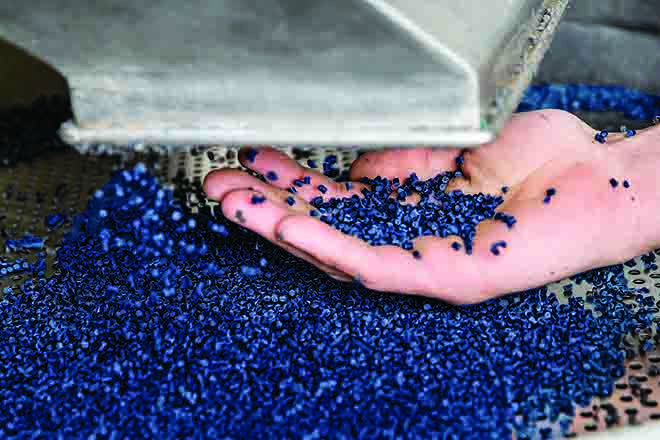
“Just like concrete is a composite made from cement, water and gravel, or fiberglass is made from plastics and glass, ours is also a composite material made from a number of materials that, when you combine together, they become a better material,” Bigio said.

The “breaking down” part of the process uses temperatures below 400 degrees Fahrenheit, Bigio explained, “which is considered a very low temperature to process material.” The traditional plastics industry often operates at higher temperatures, he noted.

The process doesn’t involve any combustion and doesn’t use a lot of water, Bigio added, because the waste stream already contains ample liquid. The process also doesn’t leave any residue – 100% of the feedstock is used in the process, according to Bigio.

Complement to traditional recycling industry

UBQ’s process does not aim to replace source-separated recycling. In fact, the company prefers to handle the disposal stream from communities that have recycling programs in place.

“In places where they separate the waste, it is much easier for UBQ to control the stream,” Bigio said.

Although every community is slightly different, Bigio said waste streams are generally similar across the spectrum and that the company’s process will be able to accommodate small variances.

“When you take the mixed household waste, you will always find a similar composition of between 70 to 80% organics and 20 to 30% plastics,” Bigio explained.

But for recycling programs, UBQ offers a particularly valuable offer: The company will be looking to take contaminated material that is rejected by MRFs, using that stream as the feedstock for its own process. UBQ may charge to take the material, but that fee would be much less than a landfill fee, Bigio said.

“We will improve your business model, while we, UBQ, will treat everything you don’t want; it’s a win-win,” Bigio said. “We are complementing the recycling industry. We are not interfering in any way or shape.”

 

2020 Resource Recycling Conference

Tags: Hard-to-Recycle MaterialsOrganicsPaper FiberPlastics
TweetShare
Colin Staub

Colin Staub

Colin Staub was a reporter and associate editor at Resource Recycling until August 2025.

Related Posts

NERC: Blended average prices fell 40% in third quarter

HDPE, PP bales rise as paper fiber and cans stabilize

byRecyclingMarkets.net Staff
February 12, 2026

National average prices of post-consumer material bales were flat to higher on the month.

Texas sues over dumped wind turbine blades

Texas sues over dumped wind turbine blades

byScott Snowden
February 10, 2026

The state attorney general sued Global Fiberglass Solutions over alleged illegal storage and disposal of all turbine blades at two...

Packaging Corp. to buy Greif containerboard segment

Export trends offset containerboard production decline

byStefanie Valentic
February 6, 2026

AF&PA reported a 4% decline in containerboard production for 2025, while packaging paper shipments rose 2% in December and boxboard...

Solarcycle starts up Georgia recycling plant

Solarcycle starts up Georgia recycling plant

byScott Snowden
January 30, 2026

Solarcycle has begun operating its Cedartown solar panel recycling facility, clarifying the status of a long-planned project that was previously...

International Paper creates two new, separate entities

byStefanie Valentic
January 29, 2026

International Paper is splitting its DS Smith and EMEA portfolio between two separate entities following multiple mill closures and strategic...

Wisconsin food waste amounts to 1,033 pounds per resident each year

byStefanie Valentic
January 28, 2026

Wisconsin's nearly 6 million residents discard 1,033 pounds of food per person annually, creating the state's largest waste stream and...

Load More
Next Post

Recycled HDPE prices soar, but PET and metals see declines

More Posts

Oregon’s Recycling Modernization Act faces injunction

Court partially blocks Oregon EPR law, dismisses bulk of lawsuit

February 10, 2026
Chinese processing group details goals for US visit

AMP lays out vision of next-generation, AI-driven MRFs

July 24, 2024
Malaysia clamps down on illegal e-waste imports amid probes

Malaysia clamps down on illegal e-waste imports amid probes

February 6, 2026

REUSE Act heads to US House for consideration

February 9, 2026

APR, industry create proactive guidance for PET caps

February 12, 2026

ecoATM recycled 7.5M phones in 2025 as payouts hit $1.5B

February 10, 2026
Meta-Corning deal signals IT hardware retirement wave

Meta-Corning deal signals IT hardware retirement wave

February 9, 2026
Texas sues over dumped wind turbine blades

Texas sues over dumped wind turbine blades

February 10, 2026

Alpek talks PET overcapacity, soft demand

February 11, 2026
The electronics recycling industry is undergoing a transformation from labor-intensive manual operations to highly automated, AI-driven facilities that use advanced robotics, cleaner chemistry and digital tracking systems to extract critical materials.

The cyber-physical MRF: AI and robotics reshape e-waste recovery

February 12, 2026
Load More

About & Publications

About Us

Staff

Archive

Magazine

Work With Us

Advertise
Jobs
Contact
Terms and Privacy

Newsletter

Get the latest recycling news and analysis delivered to your inbox every week. Stay ahead on industry trends, policy updates, and insights from programs, processors, and innovators.

Subscribe

Welcome Back!

Login to your account below

Forgotten Password?

Retrieve your password

Please enter your username or email address to reset your password.

Log In

Add New Playlist

No Result
View All Result
  • The Latest
  • Analysis
  • Recycling
  • E-Scrap
  • Plastics
  • Policy Now
  • Conferences
    • E-Scrap Conference
    • Plastics Recycling Conference
    • Resource Recycling Conference
    • Textiles Recovery Summit
  • Magazine
  • About Us
  • Advertise
  • Archive
  • Jobs
  • Staff
Subscribe
This website uses cookies. By continuing to use this website you are giving consent to cookies being used. Visit our Privacy and Cookie Policy.