




Resource Recycling
  • The Latest
  • Analysis
    • All
    • Certification Scorecard
    • Industry Announcements
    • Opinion
    HP receives ocean plastics certification

    HP Inc. earnings point to memory inflation challenge

    Certification scorecard for the week of Feb. 23, 2026

    Umicore highlights strength in recycling, catalysis

    Apto, Tusaar partner on rare earths recovery

    Apto, Tusaar partner on rare earths recovery

    Certification scorecard for the week of Feb. 16, 2026

    Sims Lifecycle leverages hyperscale decommissioning

    Sims Lifecycle leverages hyperscale decommissioning

    The electronics recycling industry is undergoing a transformation from labor-intensive manual operations to highly automated, AI-driven facilities that use advanced robotics, cleaner chemistry and digital tracking systems to extract critical materials.

    The cyber-physical MRF: AI and robotics reshape e-waste recovery

    Certification scorecard for the week of Feb. 9, 2026

    Meta-Corning deal signals IT hardware retirement wave

    Meta-Corning deal signals IT hardware retirement wave

  • Conferences
  • Publications

    Other Topics

    Textiles
    Organics
    Packaging
    Glass
    Brand Owners

    Metals
    Technology
    Research
    Markets
    Grant Watch

    All Topics

Subscribe
No Result
View All Result
Resource Recycling
  • The Latest
  • Analysis
    • All
    • Certification Scorecard
    • Industry Announcements
    • Opinion
    HP receives ocean plastics certification

    HP Inc. earnings point to memory inflation challenge

    Certification scorecard for the week of Feb. 23, 2026

    Umicore highlights strength in recycling, catalysis

    Apto, Tusaar partner on rare earths recovery

    Apto, Tusaar partner on rare earths recovery

    Certification scorecard for the week of Feb. 16, 2026

    Sims Lifecycle leverages hyperscale decommissioning

    Sims Lifecycle leverages hyperscale decommissioning

    The electronics recycling industry is undergoing a transformation from labor-intensive manual operations to highly automated, AI-driven facilities that use advanced robotics, cleaner chemistry and digital tracking systems to extract critical materials.

    The cyber-physical MRF: AI and robotics reshape e-waste recovery

    Certification scorecard for the week of Feb. 9, 2026

    Meta-Corning deal signals IT hardware retirement wave

    Meta-Corning deal signals IT hardware retirement wave

  • Conferences
  • Publications

    Other Topics

    Textiles
    Organics
    Packaging
    Glass
    Brand Owners

    Metals
    Technology
    Research
    Markets
    Grant Watch

    All Topics

Subscribe
No Result
View All Result
Resource Recycling
No Result
View All Result
Home Recycling

States struggle to keep growing their diversion rates

Colin StaubbyColin Staub
December 4, 2018
in Recycling

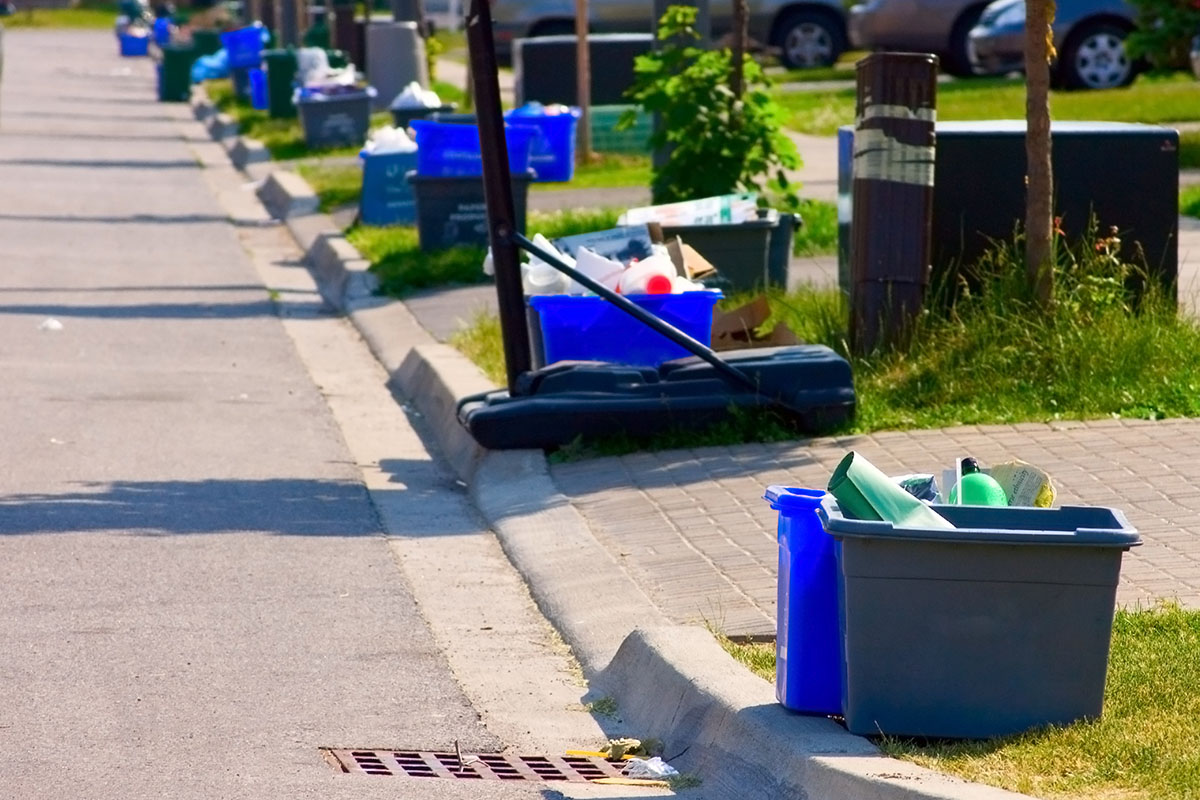
Oregon and Colorado have very different recycling landscapes but are seeing a similar trend: stagnating recycling numbers.

Recently released progress reports explain some of the factors holding diversion back in those regions and others, and they offer tips on where the states can focus energy to boost their recycling rates.

The reports, drafted as part of a push from the U.S. Public Interest Research Group (PIRG),  were released in conjunction with America Recycles Day last month.

‘Headed in the wrong direction’

The second edition of the State of Recycling in Colorado report offered a mix of critique on recycling efforts around the Centennial State and praise for certain programs that are making strides.

A collaboration between recycling company Eco-Cycle and the Colorado Public Interest Research Group (CoPIRG), the report is also endorsed by state recycling organization Recycle Colorado (formerly called the Colorado Association for Recycling, or CAFR). The first report was released a year ago.

Colorado first set a statewide recycling goal in 2016, aiming to hit 28 percent diversion by 2021, from a baseline of 12 percent. The state’s diversion stayed at 12 percent over the past year as the disposal tonnage rose to a record 9.3 million tons, according to the report. The analysis noted “Colorado is headed in the wrong direction” on diversion.

“Unfortunately, right now, Colorado doesn’t look like a good investment for (recycling) businesses because of our low landfill prices, too few communities with comprehensive recycling programs, and limited statewide assistance to attract businesses and develop local markets for recyclables,” the report stated.

The report offers some actions local programs can take to bolster their recycling results. For example, most Colorado recycling programs require customers to request the service, rather than providing it automatically, as is done in many leading programs in the country. Data collection is identified as another area for improvement.

As for statewide actions, appointing a recycling coordinator in the governor’s office would signal to stakeholders that the state’s leadership is “serious about turning around its dismal recycling rate and creating a circular economy,” the report stated.

According to the report, the administration should also launch a recycling market development initiative offering tax breaks and other financial assistance, create a task force to research more funding tools for waste diversion initiatives, and more. At least one of those ideas is already taking shape: The Colorado Department of Public Health and Environment recently began accepting applications for a program called Colorado NextCycle, which will provide grants, coaching and data to help improve end market business proposals for recycled materials.

Not all the news in Colorado recycling is negative. The city of Loveland has the highest diversion rate in the state, at 61 percent. Resource Recycling previously profiled the city in a Community Spotlight feature, noting that officials cite the pay-as-you-throw (PAYT) service and billing model as a critical component of the program’s success.

Longmont, Colo. also received special mention for its year-over-year improvement. The city’s 2018 rate was 40 percent, up 5 percentage points from a year earlier. The increase was driven in part by adding optional curbside collection for food scraps and yard debris composting.

Investment needed to reverse trend

In Oregon, a separate recycling report highlighted similar issues despite a very different recycling climate.

Although Oregon’s statewide diversion rate is three times that of Colorado, the Beaver State has experienced a decline from 41 percent to 37 percent over the past four years, according to the report from the U.S. PIRG and Environment Oregon, an advocacy group.

The report found that every major county saw its recycling rate slip downward from 2012 through 2016. The tri-county area that encompasses Portland, Ore., the state’s largest city, had its recycling rate drop from 56 percent in 2012 to 48 percent in 2016. Two counties elsewhere in the state saw their recycling rates slip by 14 percentage points over the four-year period.

“This downward trend will likely continue without serious investment and programmatic change,” according to the report. It also highlights China’s scrap import ban and increased restrictions, noting that the loss of China as a destination for many recovered materials caused both landfilling and a pileup at recycling facilities around the state.

Still, like the Colorado evaluation, the Oregon report points to existing successful recycling initiatives creating a strong foundation to build upon. Oregon maintains a strong container deposit program; most recycling programs in the state are set up on a PAYT system; and legislation requires curbside recycling be provided to commercial and multi-family properties, in addition to single-family residences, in cities of more than 4,000 residents.

With these initiatives already in place, the state can focus on several key next steps, according to the report. Those include reducing single-use plastics such as bags and expanded polystyrene containers, increasing landfill tipping fees to disincentivize landfilling, offering greater state financial support for programs and recycling facilities, continuing outreach, building stronger collaboration between municipal programs, and increasing residential organics collection.

Quantifying recycling rates

Other U.S. PIRG reports covered Arizona, California, Illinois, Minnesota, New Mexico, Texas and Wisconsin. Similar themes, such as promoting PAYT, expanding organics collection access and improving multi-family and commercial recycling, reverberated through most of the reports.

Some reports also included a recycling rate for that state, with the exceptions of Arizona, Illinois and Wisconsin, which omitted that figure “due to a lack of reporting in certain jurisdictions.” However, those reports inferred that, “based on low recycling rates in major municipalities and similar trends elsewhere,” their statewide rates are lower than the national average of about 34 percent.

The states that calculated a rate are as follows:

California: 44 percent
Colorado: 12 percent
Minnesota: 43.6 percent
New Mexico: 19 percent
Oregon: 37 percent
Texas: 23 percent

Photo credit: Sorin Alb/Shutterstock
 

2019 Resource Recycling Conference

Tags: DataLocal Programs
TweetShare
Colin Staub

Colin Staub

Colin Staub was a reporter and associate editor at Resource Recycling until August 2025.

Related Posts

Recycling education needs consistency, simplicity 

byBrian Clark Howard
February 25, 2026

Several members of Circular Action Alliance team shared insights during a workshop at the 2026 Resource Recycling Conference in San...

Nebraska grant recipients include electronics, battery programs

byAntoinette Smith
February 19, 2026

The grants will help fund collection of used electronics in the state, which last year passed a battery EPR law.

Nebraska awards $7m in recycling grants

byAntoinette Smith
February 18, 2026

The grants will help fund waste and litter reduction projects, recycling programs, and costs to collect scrap tires, HHW, electronic...

Wisconsin proposes E-Cycle target revisions

Wisconsin proposes E-Cycle target revisions

byScott Snowden
February 17, 2026

The state proposed updates clarifying target calculations, waiver standards and adding select battery devices to eligible collections, with public comment...

UN trade data, tools aim to shape plastics treaty talks

UN trade data, tools aim to shape plastics treaty talks

byAntoinette Smith
February 17, 2026

UN agencies aim to use the harmonized trade data and a statistical framework to improve outcomes for the global negotiations,...

Greenchip launches fund for community impact and trust

byScott Snowden
February 5, 2026

The Greenchip Legacy Foundation formalizing the company's community work while reinforcing its 2026 focus on domestic processing, compliance and transparency...

Load More
Next Post

Coca-Cola puts $500,000 into regional recycling system

More Posts

WM opens new $90m MRF in south Florida 

WM opens new $90m MRF in south Florida 

February 23, 2026
PET bales stacked for recycling.

Evergreen closing RPET plants in Ohio, New York

February 24, 2026
Battery fire risk isn’t going away. Insurance is responding

Battery fire risk isn’t going away. Insurance is responding

February 24, 2026
Study links tagging tactics to lower contamination rates

Arizona, Reynolds reach settlement on Hefty bag lawsuit

February 23, 2026
Chinese processing group details goals for US visit

AMP lays out vision of next-generation, AI-driven MRFs

July 24, 2024
How will 2026 unfold for plastics recycling?

How will 2026 unfold for plastics recycling?

February 19, 2026
Recycled plastic lumber firms report diverging results

Trex CEO to retire after 23-year run

February 25, 2026
Minnesota publishes prelim EPR assessment

Minnesota publishes prelim EPR assessment

February 20, 2026
Polyolefins producer provides PCR updates

Economic downturn forces LyondellBasell to trim sustainability goals

February 23, 2026
State policy is redefining plastics recycling in the US

State policy is redefining plastics recycling in the US

February 19, 2026
Load More

About & Publications

About Us

Staff

Archive

Magazine

Work With Us

Advertise
Jobs
Contact
Terms and Privacy

Newsletter

Get the latest recycling news and analysis delivered to your inbox every week. Stay ahead on industry trends, policy updates, and insights from programs, processors, and innovators.

Subscribe

Welcome Back!

Login to your account below

Forgotten Password?

Retrieve your password

Please enter your username or email address to reset your password.

Log In

Add New Playlist

No Result
View All Result
  • The Latest
  • Analysis
  • Recycling
  • E-Scrap
  • Plastics
  • Policy Now
  • Conferences
    • E-Scrap Conference
    • Plastics Recycling Conference
    • Resource Recycling Conference
    • Textiles Recovery Summit
  • Magazine
  • About Us
  • Advertise
  • Archive
  • Jobs
  • Staff
Subscribe
This website uses cookies. By continuing to use this website you are giving consent to cookies being used. Visit our Privacy and Cookie Policy.