










Washington recently became the second state to select Interchange 360 as the producer responsibility organization (PRO) administering an alternative collection program (ACP) under the state’s new packaging EPR law.
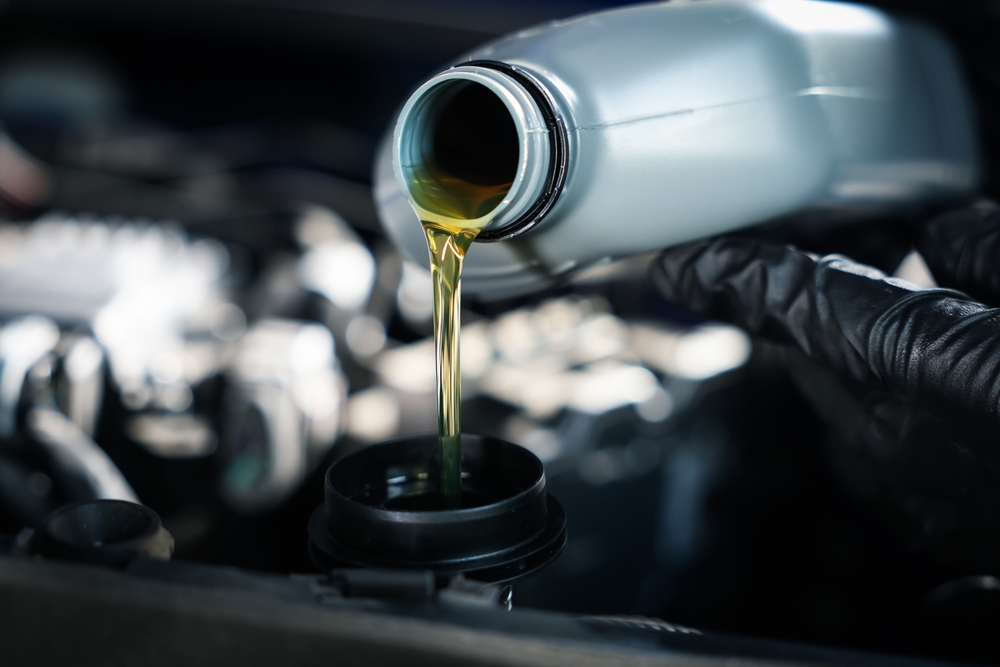
As in Colorado, the Washington law allows for independent PROs in addition to the primary entity, announced in March to be Circular Action Alliance. Interchange 360 consists of the Lubricants Packaging Management Association (LPMA), representing producers of packaging for petroleum and automotive products.
The founding brands are BP Lubricants USA, parent company of Castrol; Chevron USA; ExxonMobil; Pennzoil-Quaker State, which is owned by Shell; and VGP Holdings, parent company of Valvoline.
An independent PRO manages specialized collection and recycling systems, rather than a single-PRO approach.
“It is so important for states to identify a model that works and to provide producers with a choice,” David Lawes, CEO of LPMA powered by Interchange 360, told Resource Recycling. “That has always been top of mind for some states, but if you deviate from the principles of extended producer responsibility – producer responsibility, flexibility, results-based – you’re going to have a problem.
“If you don’t focus on environmental results, it’s simply a cost reimbursement with no environmental target.”
Ultimately, LPMA hopes to be listed into all seven state EPR programs that are in varying stages of implementation, Lawes said. In Maine, the group is working toward becoming a compliance option through the alternative collection program. Maryland also seems to be on track for becoming an independent complementary program to the PRO, he said.
“Where we have not gotten traction is in California, Oregon and Minnesota,” he added.
The Oregon and Minnesota laws do not allow for alternative collection programs, instead concentrating authority with a single PRO. In addition to Colorado and Washington, Maine and Maryland offer some flexibility to potentially permit independent entities to provide specialized materials management.
In California, AB 1325 was introduced in early 2025 to repeal the California Oil Enhancement Program and replace it with a new EPR program for used oil and other automotive fluids. However, the bill died in committee in January 2026.
“We think in California that the petroleum packaging was not really the target when the law was put in place, but we were wrapped up in it,” Lawes said.
He emphasized that an independent, targeted PRO complements CAA’s broader work. “Success for us with petroleum-related packaging looks like less contamination for the Circular Action Alliance program, and ideally better cost management for all.”
Although LPMA’s remit does not overlap significantly with CAA’s, the two groups will have to coordinate to ensure that all included materials wind up in the correct program.
“They’ve got a big job to do. We’ve got a small job to do. Together, we’ll do it better,” he said.
Colorado program gains steam
In Colorado LPMA recently began collecting material, separate from the curbside program, and will expand to depots and retail collection points, Lawes said. “Putting stuff in the right spot is such an important first step to making sure that this material can be recycled and doesn’t have contamination.”
The group is engaging with CAA to make sure public communications avoid confusion, he said, adding praise for CAA’s clear guidance on placing materials for recycling.
Colorado requires that the PRO and any independent program pay oversight costs, and LPMA is working with the state to apply fees proportionally to each organization’s remit.
For the incentive structure, LPMA created four geography-based rates for the state, to reflect the realities of logistical hurdles and costs. In addition, the group will continue monitoring market dynamics to account for changes in fuel costs, for example.
“We’ve learned this lesson,” he said. “There has to be flexibility in it in order to meet our outcomes. If we are too rigid, no one’s going to collect it.”
Rather than introducing a contract-based model, LPMA is leveraging existing infrastructure to streamline collection. For example, the group is working to add packaging collection to existing motor oil collection in the state. “We’ll get one of our registered processors‘ transporters to pick it up and recycle it,” he said.
And while the group is working toward building up its collection network, Lawes said developing processing capacity is very important. He added that the “bounty system” incentive funds are live.
And while Colorado currently contains no recycling options for this material, “we want to develop some in-state infrastructure,” he said. “That takes volume, it takes time.”
Legal challenges
In March the Independent Lubricant Manufacturers Association (ILMA) filed suit over how Colorado is implementing its EPR law, calling EPR laws “a costly patchwork of state regulations” that pose “an existential threat to the industry, with fees often exceeding profit margins.”
Among the concerns raised in the lawsuit is that LPMA “is led by four large, multinational oil companies that compete directly with independent lubricant manufacturers,” ILMA said in a statement.
“The state has effectively turned over key regulatory authority to two private organizations,” ILMA said, naming LPMA and CAA.
The suit asks the court to prevent Colorado from enforcing the program for ILMA members under its current structure, and to confirm that companies cannot be forced to participate in private recycling programs as they are currently designed.
In its monthly policy digest, the Sustainable Packaging Coalition wrote of the “new era of legislative litigation,” including pending actions concerning Oregon’s EPR law, that “litigation is a standard industry response to new regulations, not evidence of a rollback. Industries have seen similar legal actions stall but not stop bottle bills, electronics recycling mandates, and emissions standards.”
Lawes said in a written statement, “We are empathetic to the challenges and costs that producers face in complying with EPR laws. Colorado built choice into the statute. LPMA is one compliant path; other individual plans are permitted. Our focus at LPMA remains on implementing our approved IPP for petroleum and petroleum related packaging in Colorado.”