












Resource Recycling
  • The Latest
  • Analysis
    • All
    • Certification Scorecard
    • Industry Announcements
    • Opinion

    Certification scorecard for Dec. 18-30, 2025

    Certification scorecard for Dec. 18, 2025

    Industry announcements for the week of Dec. 15

    Certification scorecard for December 10, 2025

    Industry Announcements for Week of December 8

    Certification Scorecard for December 3, 2025

    Industry Announcements for Week of December 1

    News from Dynamic Lifecycle Innovations, Precision E-Cycle

    News from Northeast Recycling Council, Plastipak and more

  • Conferences
  • Publications

    Other Topics

    Textiles
    Organics
    Packaging
    Glass
    Brand Owners

    Metals
    Technology
    Research
    Markets
    Grant Watch

    All Topics

Subscribe
No Result
View All Result
Resource Recycling
  • The Latest
  • Analysis
    • All
    • Certification Scorecard
    • Industry Announcements
    • Opinion

    Certification scorecard for Dec. 18-30, 2025

    Certification scorecard for Dec. 18, 2025

    Industry announcements for the week of Dec. 15

    Certification scorecard for December 10, 2025

    Industry Announcements for Week of December 8

    Certification Scorecard for December 3, 2025

    Industry Announcements for Week of December 1

    News from Dynamic Lifecycle Innovations, Precision E-Cycle

    News from Northeast Recycling Council, Plastipak and more

  • Conferences
  • Publications

    Other Topics

    Textiles
    Organics
    Packaging
    Glass
    Brand Owners

    Metals
    Technology
    Research
    Markets
    Grant Watch

    All Topics

Subscribe
No Result
View All Result
Resource Recycling
No Result
View All Result
Home Plastics

Group encourages public-private partnership in plastics

Antoinette SmithbyAntoinette Smith
October 16, 2024
in Plastics
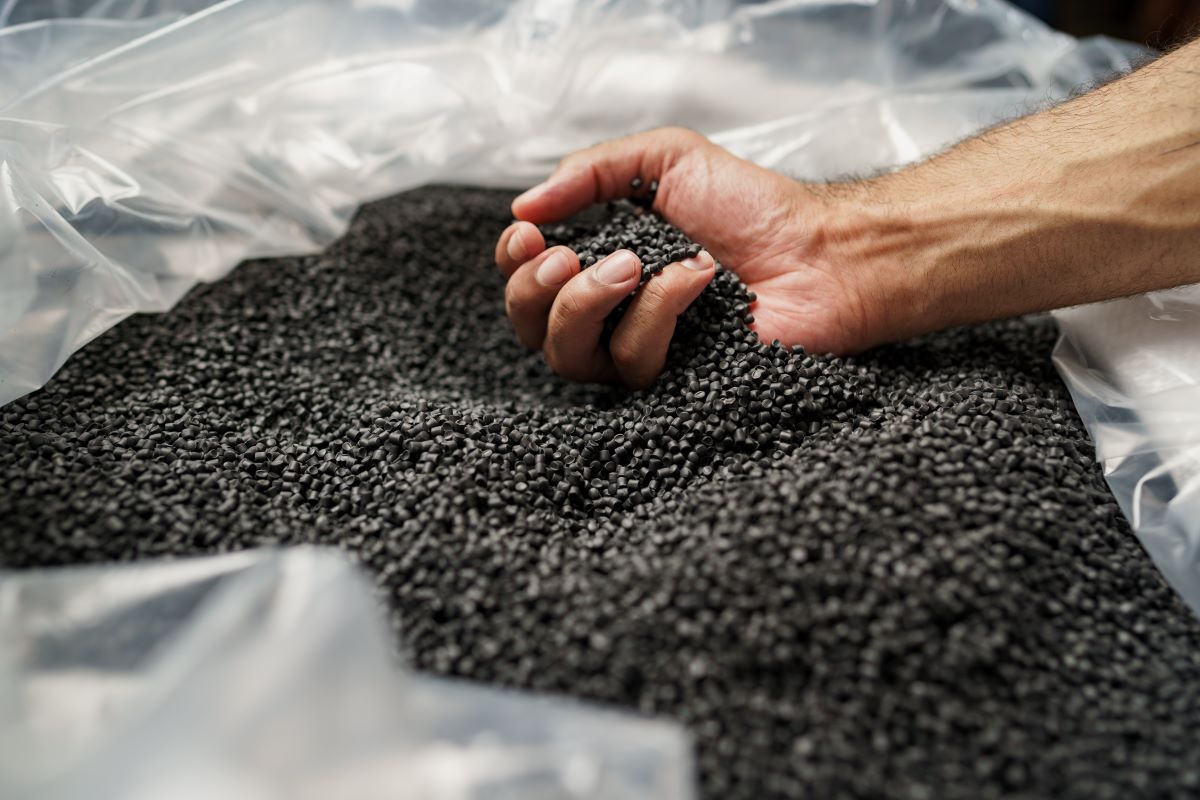
Researchers from varied backgrounds published a paper that aims to facilitate conversations between various stakeholders in plastics recycling. | FabrikaSimf/Shutterstock

A group of researchers hopes to foster discussion and cooperation throughout the plastics value chain with their recent paper in the scientific journal Nature. 

The paper seeks to bring together diverse communities, from plastics designers to MRF operators to traders, co-author Kara Lavender Law told Plastics Recycling Update. Opening the lines of communication could help increase understanding of how materials are mechanically processed and which ones are most valuable from a commodity standpoint, she said.  

“It’s not necessarily creating new knowledge, it’s finding ways to connect it,” she said.

The group’s paper offers guidance for plastics manufacturers to engage in cross-sector collaboration to address the issue of additives in the recycling process. 

An oceanographer with an interest in keeping plastics out of the water, Lavender Law said that although plastic pollution has become a huge topic in the public consciousness and in the policy realm, “a lot of the discussions end up necessarily being quite high-level.”

The group wanted to explain what realistic and practical steps could be taken today rather than in theory or at an indistinct future time, she said. Bringing in different perspectives and sets of expertise, “people that don’t normally talk to each other,” was a first step in putting together a useful tool. For example, chemical engineers don’t necessarily recognize the environmental concerns of their developments in the lab.

The four co-authors include Lavender Law, a research professor at the Sea Education Association; Margaret Sobkowicz, a professor of plastics engineering at the University of Massachusetts, Lowell, who provided an intimate knowledge on plastics composition and properties; Michael Shaver, a polymer chemist at the University of Manchester in the UK who has focused his work on improving mechanical recycling; and Mark Hahn, from the Woods Hole Oceanographic Institution, who has an extensive background in environmental toxicology. 

Lavender Law also spoke about the paper with the Association of Plastic Recyclers, which owns Resource Recycling, in a recent episode of its Recycled Content podcast.

Bridging the gap between industry, research

At the start, the group identified its audience: people in the decision tree of making materials, including resin producers, packaging manufacturers and even brand owners. 

Next, they determined their focus: addressing chemical additives in plastics that can leak out and wind up in recycled materials.

The composition of packaging plastics begins with the chemical companies, but at the intermediate stage converters contribute additives to meet performance requirements specific to each end use. At its core, the academic paper shows that the resin process gains complexity as it moves through the value chain, “and you lose track of what’s going on,” Lavender Law said.

Naturally, the way a MRF operator views a specific piece of packaging is very different from the way the brand owner looks at it. For example, for decades Sprite was bottled in distinctive green PET to meet Coca-Cola’s marketing objectives. But the post-consumer green PET was less valuable than clear, and Coca-Cola eventually decided the value of recovering clear bottles was more important than serving as brand identification.  

“The marketing department is not thinking about what happens at the MRF,” she said. And it may be more important for the brand owner to see the whole life cycle rather than stopping at the point the product hits the store shelf.

“A lot of people in the environmental sector are pointing fingers,” she said, because branded packaging is easily identifiable in plastics pollution –  for example, singling out discarded Pepsi bottles in waterways, leading to lawsuits to gain accountability.

The key is to recognize the complex supply chain and to have information flowing in both directions to optimize recyclability and to reduce potential health impacts and losses to the environment, she added.

The ultimate result would be that higher-quality material ends up in recycling streams, which – from both a legislative and an end-user perspective – could help encourage integration into products requiring virgin-quality resin. 

Increasing packaging transparency

The paper aims to help plastics manufacturers make more informed decisions about the quantity and nature of additives. One way is to ask what additives are genuinely needed, how those additives move and interact through the plastics life cycle including recycling, and whether the additives are safe for humans and the environment, the co-authors wrote.

They also provide an extensive list of resources for evaluating chemical hazards, such as the global eChemPortal and the Toxicity Forecaster from the U.S. Environmental Protection Agency.

Disclosing the components of plastic packaging – including additives – being used at each stage of manufacture is essential to unlocking more sustainable practices, the authors wrote.

“This disclosure can promote better supply-chain collaboration by reducing duplicative additives; inform procurement, helping to avoid additives of concern for specific use cases or those that may conflict with each other; and ensure that the right additives are used for necessary functions,” they wrote.

Although producers may fear undermining competitiveness by revealing any level of proprietary formulations, the authors argued that substantial disclosure “already occurs for food-contact and biomedical materials without undercutting commercial outcomes.”

The authors envision a packaging label that provides an overview of such components as recycled resin content, virgin resin content, additives and more. Such a label would disclose “plastic bottle composition to supply chain partners and, ideally, consumers,” they wrote. 

“We’re all academics, so this is our natural habitat,” Lavender Law said of the paper’s publication. She added that like most scientific journals, Nature is subscription-based with a limited audience. 

Tags: Brand OwnersResearch
TweetShare
Antoinette Smith

Antoinette Smith

Antoinette Smith started working for Resource Recycling in June 2024 after spending several years covering commodity plastics and supply chains, with a special focus on economic impacts. She can be contacted at [email protected].

Related Posts

Robot pilot targets legacy parts to help supply defense

Robot pilot targets legacy parts to help supply defense

byScott Snowden
December 29, 2025

Although chip availability has improved since the worst shortages earlier in the decade, Tuurny says demand for legacy electronics remains...

Chemical bonds

Alberta catalyst discovery targets hydrogen and plastics

byScott Snowden
December 10, 2025

A chance discovery inside a University of Alberta laboratory has developed into a Canadian cleantech project that aims to reshape...

Global recycling patent trends may reflect legislative push

Global recycling patent trends may reflect legislative push

byAntoinette Smith
November 25, 2025

Patent applications for chemical recycling technologies have reached a record high globally with government initiatives among the factors driving innovation,...

Ellen MacArthur Foundation sets 2030 plastics agenda

Ellen MacArthur Foundation sets 2030 plastics agenda

byKeith Loria
November 4, 2025

Despite noting positive action, the foundation warns that the pace of change still falls far short of what’s needed, with...

Study maps barriers to firms’ supply chain climate goals

byAntoinette Smith
October 14, 2025

Publicly articulating clear sustainability goals helps ensure company follow-through, according to an annual supply chain study from the Massachusetts Institute...

Retailers launch CA campaign to ditch single-use bags

Retailers launch CA campaign to ditch single-use bags

byScott Snowden
July 30, 2025

A coalition of major retailers and local stores has launched a campaign across more than 1,000 Southern California locations this...

Load More
Next Post

In My Opinion: Understanding packaging EPR producer fees

More Posts

Oregon’s Recycling Modernization Act faces injunction

Oregon’s Recycling Modernization Act faces injunction

December 2, 2025
EU auditors support incentives to keep recycling viable

EU auditors support incentives to keep recycling viable

December 2, 2025
Policy Now | November 2025 – Cities move forward on recycling policy as federal activity stalls

Top Resource Recycling stories from November 2025 

December 2, 2025
Women in Circularity: Shweta Srikanth

Women in Circularity: Shweta Srikanth

December 2, 2025
Beauty packaging NGO looks to expand

Beauty packaging NGO looks to expand

December 2, 2025
EU flag

Top Plastics Recycling Update stories from November 2025

December 2, 2025
Colorado

Colorado NGO, recycler partner on innovation

December 2, 2025
Analysis: Lenovo enters circular IT, ITAD territory

Analysis: Lenovo enters circular IT, ITAD territory

December 3, 2025
NYC Commercial Waste Zones

IWS acquires Filco to expand in NYC commercial waste zones

December 3, 2025
Tariffs jolt electronics trade, policy moves forward

Tariffs jolt electronics trade, policy moves forward

December 3, 2025
Load More

About & Publications

About Us

Staff

Archive

Magazine

Work With Us

Advertise
Jobs
Contact
Terms and Privacy

Newsletter

Get the latest recycling news and analysis delivered to your inbox every week. Stay ahead on industry trends, policy updates, and insights from programs, processors, and innovators.

Subscribe

Welcome Back!

Login to your account below

Forgotten Password?

Retrieve your password

Please enter your username or email address to reset your password.

Log In

Add New Playlist

No Result
View All Result
  • The Latest
  • Analysis
  • Recycling
  • E-Scrap
  • Plastics
  • Conferences
    • E-Scrap Conference
    • Plastics Recycling Conference
    • Resource Recycling Conference
    • Textiles Recovery Summit
  • Magazine
  • About Us
  • Advertise
  • Archive
  • Jobs
  • Staff
Subscribe
This website uses cookies. By continuing to use this website you are giving consent to cookies being used. Visit our Privacy and Cookie Policy.