





Resource Recycling
  • The Latest
  • Analysis
    • All
    • Certification Scorecard
    • Industry Announcements
    • Opinion
    MP Materials breaks ground on rare earth magnet campus in North Texas

    ERI confirms ITAD shift toward minerals

    Certification Scorecard — Week of June 29, 2026

    Certification Scorecard — Week of June 22, 2026

    Top stories from March 2025

    3 factors force e-scrap processing onshore

    Data center boom sets up ITAD growth

    Certification Scorecard — Week of June 15, 2026

  • Conferences
    • Resource Recycling Conference
    • Plastics Recycling Conference
    • E-Scrap: The Longevity Conference
    • Textiles Recovery Summit
  • Publications
    • E-Scrap News
    • Plastics Recycling Update
    • Policy Now
    • Resource Recycling
    • Other Topics
      • All Topics
      • Brand Owners
      • Critical Minerals
      • Glass
      • Grant Watch / RFPs
      • Markets
      • Organics
      • Packaging
      • Research
      • Technology
      • Textiles
Subscribe
No Result
View All Result
Resource Recycling
  • The Latest
  • Analysis
    • All
    • Certification Scorecard
    • Industry Announcements
    • Opinion
    MP Materials breaks ground on rare earth magnet campus in North Texas

    ERI confirms ITAD shift toward minerals

    Certification Scorecard — Week of June 29, 2026

    Certification Scorecard — Week of June 22, 2026

    Top stories from March 2025

    3 factors force e-scrap processing onshore

    Data center boom sets up ITAD growth

    Certification Scorecard — Week of June 15, 2026

  • Conferences
    • Resource Recycling Conference
    • Plastics Recycling Conference
    • E-Scrap: The Longevity Conference
    • Textiles Recovery Summit
  • Publications
    • E-Scrap News
    • Plastics Recycling Update
    • Policy Now
    • Resource Recycling
    • Other Topics
      • All Topics
      • Brand Owners
      • Critical Minerals
      • Glass
      • Grant Watch / RFPs
      • Markets
      • Organics
      • Packaging
      • Research
      • Technology
      • Textiles
Subscribe
No Result
View All Result
Resource Recycling
No Result
View All Result
Home Analysis Opinion

In My Opinion: EPR takeaways from OECD meeting

byScott Cassel, CEO and Founder, Product Stewardship Institute
November 8, 2022
in Opinion
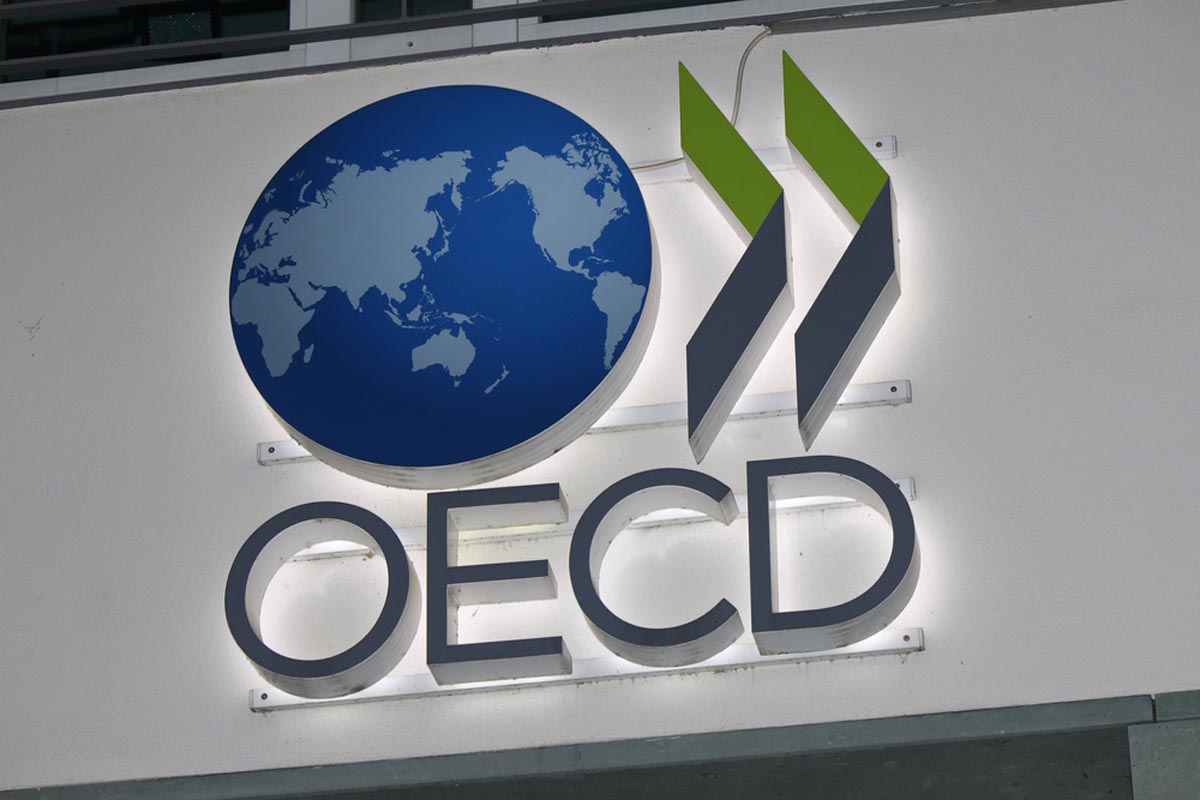
The founder of the Product Stewardship Institute recently advised the Organization for Economic Cooperation and Development (OECD) on plastic pollution reduction policies. | 360b/Shutterstock

In September, I was invited to join a stakeholder consultation meeting organized by the Organization for Economic Cooperation and Development (OECD) in Washington D.C. The objective was to assess the performance of the U.S. EPA in addressing the environmental – and, especially environmental justice – impacts of plastic, which pollutes our coasts and oceans worldwide. Participants were also asked to recommend initiatives that the EPA could take to further reduce impacts.

I found myself in a unique position. On the one hand, I wanted to make sure that extended producer responsibility (EPR), being a critical approach to solving the problem, was included. On the other, I also wanted to support additional source-reducing strategies such as the single-use plastic bans that were championed by others in the room, including national nonprofits Surfrider and Ocean Conservancy. 

With 38 member countries, the OECD works to establish international standards to help solve social, environmental and economic problems. The Product Stewardship Institute (PSI) has worked extensively with the organization. For example, I had previously contributed to OECD EPR guidance documents and presented on U.S EPR activity at an OECD event in Tokyo in 2011. This year, we were recommended by OECD and invited to participate in the consultation meeting at the request of EPA.

At the meeting, I presented on how state packaging EPR laws will reduce plastic pollution, especially when considered with other legislative measures such as post-consumer recycled  content mandates and enhanced deposit return systems. Over the past two years, packaging EPR laws influenced by PSI’s model EPR legislation were enacted in Maine, Oregon, Colorado and California. In 2023, at least nine state bills are expected to be introduced or re-introduced.

Scott Cassel

I also pointed out that the nation’s fragmented recycling infrastructure and policies, lack of a consistent materials management policy and limited technical capabilities challenge the implementation of statewide packaging EPR policies. Although waste management is delegated to the states, there is a critical need for greater state harmonization and/or a national solution that could be found in a federal bill, such as the Break Free From Plastic Act, which may be re-introduced in 2023 (PSI’s model also informed that bill’s EPR component). 

While it is unclear what authority the EPA has to promote policy that is not directly enacted by Congress, I emphasized that the agency does have the ability to provide guidance and technical support on issues such as packaging labeling; a standard definition of recycling; and goals for source reduction, reuse, recycling and post-consumer recycled content. I also suggested that EPA could support national efforts driven by state and local governments.

This is a real, potentially game-changing possibility and my own experience bears this out. Beginning in 2003, PSI worked with EPA to facilitate a multi-stakeholder dialogue – which included industry, government, recycled paint manufacturers, retailers and painting contractors – and develop a state legislative model for paint EPR. In 2009, Oregon used that model to enact the country’s first EPR law. 

Since then, PSI has helped enact paint EPR laws built on the same model in 10 states and Washington, D.C. Paint EPR programs have collected more than 51 million gallons of paint, recycled over 72% of all latex paint collected, saved governments and taxpayers nearly $300 million and established more than 2,000 collection sites, over 70% of which are at voluntary retail locations.

I strongly believe that with EPA’s help we could replicate the model established for paint and that this would help solve the plastic pollution problem. All stakeholders could work together to create a national packaging EPR strategy that also emphasizes source-reduction strategies such as reuse, which are widely promoted by environmental nonprofits, including those that attended the meeting.

We at PSI look forward to reading the OECD report generated from the meeting, which will be discussed at a joint meeting of the OECD Working Party on Environmental Performance (WPEP) in 2023.


Scott Cassel has over 35 years of experience tackling waste management issues in the public, private and nonprofit sectors. In 2000, he founded the Product Stewardship Institute, a policy advocate and consulting nonprofit that pioneered product stewardship in the United States and has helped enact 130 extended producer responsibility (EPR) laws across 16 product categories in 33 states. 

The views and opinions expressed are those of the author and do not imply endorsement by Resource Recycling, Inc. If you have a subject you wish to cover in an op-ed, please send a short proposal to news@resource-recycling.com for consideration.

A version of this story appeared in Resource Recycling on November 1.
Tags: EPR
TweetShare
Scott Cassel, CEO and Founder, Product Stewardship Institute

Scott Cassel, CEO and Founder, Product Stewardship Institute

Related Posts

RIT researchers develop AI-based textile recycling system

CA expects first textile EPR deadline

byStefanie Valentic
June 30, 2026

California's first textile EPR registration deadline arrives July 1 amid lawsuits challenging the nonprofit status of Landbell USA, the selected...

EPR deadlines approach as lawsuits loom

byStefanie Valentic
June 23, 2026

Packaging producers in Washington and Maryland have until July 1 to register with a producer responsibility organization (PRO), demonstrating how...

CAA seeks industry input on EPR fees

CAA seeks industry input on EPR fees

byAntoinette Smith
June 16, 2026

A new producer steering committee will help involve stakeholders more directly in the fee-setting process as packaging EPR law is...

A call to action: End markets and EPR

A call to action: End markets and EPR

byKatherine Doerr, Goldfinch Environmental
June 16, 2026

State-level EPR schemes must mandate rather than simply incentivizing the use of recycled content, consultant Kat Doerr argues.

Revised CA budget includes $200m for recycling

CAA files California program plan for SB 54

byStefanie Valentic
June 15, 2026

CAA has delivered its California program plan as litigation over the underlying regulations continues and smaller producers scramble to meet...

Australia battery recycling sector could reach A$6.9bn by 2050

Colorado and California bills take aim at battery recycling gaps

byStefanie Valentic
June 12, 2026

Colorado's EV battery EPR law and California's SB 501 together represent a push to bring the full battery supply chain...

Load More
Next Post

Ascend buys majority stake in Circular Polymers

More Posts

Groups call for end to e-scrap imports to Philippines

Groups call for end to e-scrap imports to Philippines

June 30, 2026
SCS launches chem recycling standard

SCS launches chem recycling standard

July 1, 2026
Lithium-ion battery recycler to build New York facility

Earthworks acquires metals sorting tech

July 1, 2026
RIT researchers develop AI-based textile recycling system

CA expects first textile EPR deadline

June 30, 2026
Industry announcements for January 2026

Industry announcements for June 2026

June 1, 2026
Rod McDaniel

Westward expansion continues for S3 Recycling

July 2, 2026
Smurfit Westrock climate goals evolving post-merger 

Smurfit Westrock climate goals evolving post-merger 

June 26, 2026
Aduro, AstroTurf look at recycling feedstock 

Aduro, AstroTurf look at recycling feedstock 

June 30, 2026
Women in Circularity: Susie Vincent

Women in Circularity: Susie Vincent

June 29, 2026
Illinois chemical recycling plant moving forward

Alaska governor vetoes polystyrene foam foodware ban

June 26, 2026
Load More

About & Publications

About Us

Staff

Archive

Magazine

Work With Us

Advertise
Jobs
Contact
Terms and Privacy

Newsletter

Get the latest recycling news and analysis delivered to your inbox every week. Stay ahead on industry trends, policy updates, and insights from programs, processors, and innovators.

Subscribe

Welcome Back!

Login to your account below

Forgotten Password?

Retrieve your password

Please enter your username or email address to reset your password.

Log In

Add New Playlist

No Result
View All Result
  • The Latest
  • Analysis
  • Recycling
  • E-Scrap
  • Plastics
  • Policy Now
  • Conferences
    • E-Scrap Conference
    • Plastics Recycling Conference
    • Resource Recycling Conference
    • Textiles Recovery Summit
  • Magazine
  • About Us
  • Advertise
  • Archive
  • Jobs
  • Staff
Subscribe
This website uses cookies. By continuing to use this website you are giving consent to cookies being used. Visit our Privacy and Cookie Policy.