This article appeared in the 2025 issue of E-Scrap News. Subscribe today for access to all print content.
What ERP system you need depends on whether you’re wiping hard drives, fixing up phones, or melting down metals.
If you run a business in IT asset disposition (ITAD) or electronics recycling, you already know things are moving fast. More and more devices are coming your way thanks to Windows 10’s end-of-life. Customers are demanding stronger data security and proof that you’re meeting environmental standards. And the logistics of moving devices in and out? Messy doesn’t even begin to describe it.
That’s why a growing number of companies are turning to something called an ERP system. Don’t let the acronym throw you off – ERP stands for Enterprise Resource Planning. Manual tools and generic platforms may keep operations afloat for a time, but they create blind spots, slow audits, and undermine client trust. In a market defined by compliance and accountability, inaction is not neutral – it’s a liability.
What exactly is an ERP system?
Imagine running your whole business with one big, smart dashboard. At its core, an ERP system is a centralized platform that connects all the moving parts. Your finance operations, inventory, logistics, compliance, and customer management in one system. Instead of juggling multiple spreadsheets, siloed databases, and manual workflows, an ERP provides a single source of truth.
The main pieces of a typical ERP include:
- Financials & Accounting – Billing, payments and seeing if jobs are profitable
- Inventory & Asset Tracking – Knowing where every device is, what condition it’s in, and what happens next
- Compliance & Reporting – Generating the paperwork you need for audits or certifications without digging through files
- Customer & Vendor Management – CRM functions to keep track relationships and agreements
- Workflow Automation – Standardized processes for approvals, quality checks, and escalations. Basically, making sure steps get done in the right order, every time
For ITAD companies, that last point, Workflow Automation, is huge. It ensures every laptop, server or hard drive goes through the right security, resale or recycling steps without relying on memory or manual checklists.
Different needs, same challenge
Not every business in this space works the same way, which means not every ERP system should either. ITAD, refurbishment, scrap and recycling all have their own challenges. Some distinctions include:
- IT Asset Disposition (ITAD): Here the priority is protecting customer data and squeezing the most value out of equipment before it’s recycled. An ERP needs to track every laptop or server by serial number, prove data was wiped securely, and give you the reports to back it up. It should also support repair and testing workflows so you can resell gear and not just scrap it.
- Refurbishment: These companies are in the business of giving electronics a second life. Their ERP or inventory system has to follow each device through cleaning, testing, repair and grading. On top of that, it needs to connect to multiple sales channels so inventory stays accurate no matter where items are sold.
- Scrap Operations: For scrap-focused businesses, the name of the game is efficiency. ERP or scrap management tools track the type and amount of scrap coming in, automate the sorting and disposal steps, and make sure recycling is documented properly. This keeps costs down and ensures environmental compliance.
- Broader Recycling (including batteries): This side gets really complex. ERPs here need to handle tricky material flows, stay up to date with new laws (like digital waste tracking or stricter battery recycling rules), and provide data that helps operators price materials correctly and avoid processing bottlenecks.
The bottom line? ERP systems can help every segment of the industry, but what you need depends on whether you’re wiping hard drives, fixing up phones or melting down metals. The smart move is to find a system that matches your world instead of trying to bend your business to fit a generic tool.
Guide for system selection and implementation
Step 1: Define the Essentials vs. the Extras
Not all ERP features are created equal. Start by separating the “must-haves” from the “nice-to-haves.” One tip: Focus on the must-haves first. Extras can be layered in as your maturity increases.
Must-Have Features for ITAD & E-Scrap:
- In-Process Tracking – The ability to scan, grade and track each device through its full lifecycle, with complete chain-of-custody.
- Compliance Management – Support for standards like ISO, R2v3, e-Stewards, GDPR, SOC 2 and state-level regulations.
- Data Security Integration – Audit-ready logs, certificates of destruction and links to secure data erasure processes.
- Financial Integration – Clear connections between operational activity, costs and revenue.
- Scalability – Confidence the system can handle more devices and locations as your business grows.
Nice-to-Have Features (great for later):
- AI-driven grading or resale price recommendations
- Customer self-service dashboards with real-time visibility
- Advanced forecasting and business intelligence tools
- Built-in logistics scheduling
Step 2: Choose the Right Type of System
ERP systems generally fall into two categories:
- Plug-and-Play ERPs – Quick to install, often with pre-built modules. These are best suited for smaller operations but may lack the depth and flexibility ITAD and recycling businesses require.
- Customizable ERPs – Platforms like NetSuite or Odoo that can be tailored to your processes, such as serialized asset tracking, compliance workflows and resale channels. These require more effort upfront but deliver a better long-term fit.
One tip: Weigh speed versus fit. If you need to get running quickly, plug-and-play might work. But if you’re planning for scale and complexity, a customizable option usually pays off.
Step 3: Understand the Costs (and ROI)
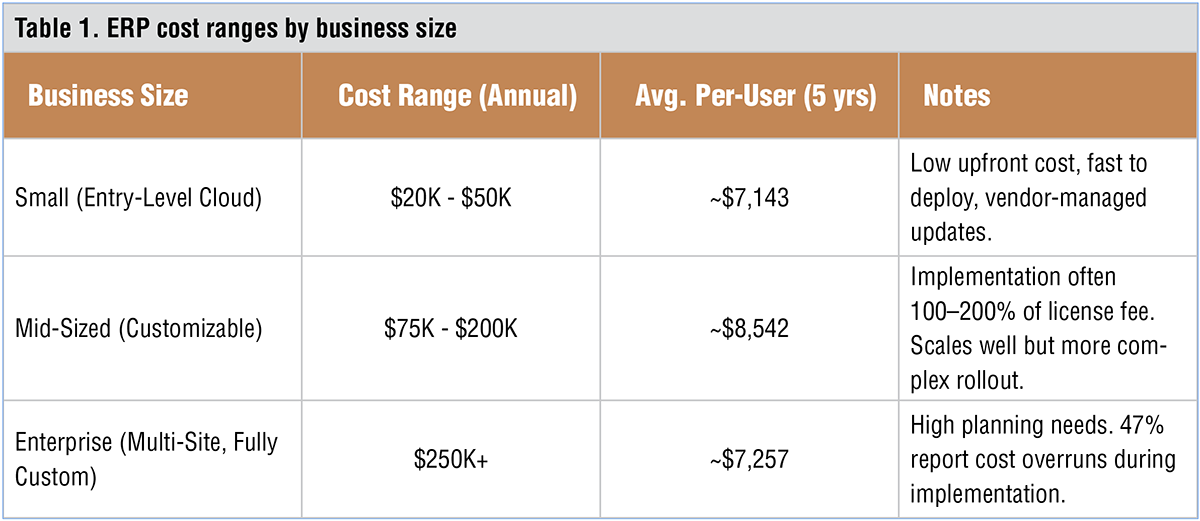
ERP pricing isn’t just about the sticker price. Costs vary widely depending on your organization’s size, complexity and the deployment model you choose — and they include both direct costs (licenses, implementation) and indirect costs (training, integrations, change management). Typical ERP costs can range as shown in Table 1.
While these numbers may feel steep, the returns are measurable – Faster audits and compliance reporting; Higher resale recovery; Fewer errors and lost devices; and Increased throughput within the first year. When evaluating your total ROI don’t look only at upfront cost – factor in the contracts won, risks avoided, and efficiency gains that ERPs unlock.
Step 4: Plan the Transition from Spreadsheets
Moving from Excel to ERP is a big shift. Treat migration as an upgrade, not an interruption. When staff see how it makes daily work easier, adoption skyrockets. Four tips to make it smoother include:
- Clean Your Data First – Standardize naming, remove duplicates and fix errors before migration.
- Start Small – Roll out core business critical modules first, then add the nice to haves later.
- Bring Your Team Along – Involve employees early. People adopt systems faster when they’ve had a say in design and testing.
- Use Experts – Lean on consultants or partners who know ITAD and recycling challenges inside out.
Why this matters
Looking ahead, the challenges are only going to get bigger. New laws are expanding around e-scrap and batteries. If you can’t provide compliance data quickly, you risk fines or reputational damage. Two other realities: AI is coming fast – grading, pricing and disassembly tools depend on ERPs capturing and analyzing data in new ways. Also, critical materials like rare earth metals will matter more, which means device-level tracking is no longer optional.
In short, the ITAD and e-scrap industries aren’t just about how many devices you process anymore. They’re about how smartly you manage compliance, data, and costs across the reverse supply chain. ERP platforms, especially ones tailored to your industry, are the difference between barely keeping up and pulling ahead.
Want to learn more? Join us on October 27, 2025 at the “Smarter ITAD & E-Reuse Businesses: Advancements in ERP Systems” workshop (1:00-2:30 pm) at the 2025 E-Scrap Conference (e-scrapconference.com), where we’ll dive deeper into how ERP is transforming ITAD, refurbishment, and recycling operations.
Cedric Carter is the Founder and Managing Partner of Ethos Business Solutions, a consulting firm specializing in NetSuite and Odoo ERP solutions across a wide range of industries, including ITAD, manufacturing, distribution, and retail. With deep expertise in ERP implementations, process optimization, and custom development, Cedric works with organizations to transform operations, ensure compliance, and achieve scalable growth.