




Resource Recycling
  • The Latest
  • Analysis
    • All
    • Certification Scorecard
    • Industry Announcements
    • Opinion
    smart glasses

    ITAD’s big wearables challenge

    Partnership ups quality control on device-sales platform

    Certification scorecard — week of Oct. 5

    Industry announcements for January 2026

    Industry announcements for October 2026

    Paladin acquires R&L Recycling, enters European ITAD market

    Following the money in hardware circularity

    SK Tes on track to meet 2030 ITAD goal

    SK tes’ sustainability report offers window into ITAD

    Our top stories from February 2023

    ADS flexes new recycling capacity against resin spikes

  • Conferences
    • Resource Recycling Conference
    • Plastics Recycling Conference
    • E-Scrap: The Longevity Conference
    • Textiles Recovery Summit
  • Publications
    • E-Scrap News
    • Plastics Recycling Update
    • Policy Now
    • Resource Recycling
    • Other Topics
      • All Topics
      • Brand Owners
      • Critical Minerals
      • Glass
      • Grant Watch / RFPs
      • Markets
      • Organics
      • Packaging
      • Research
      • Technology
      • Textiles
Subscribe
No Result
View All Result
Resource Recycling
  • The Latest
  • Analysis
    • All
    • Certification Scorecard
    • Industry Announcements
    • Opinion
    smart glasses

    ITAD’s big wearables challenge

    Partnership ups quality control on device-sales platform

    Certification scorecard — week of Oct. 5

    Industry announcements for January 2026

    Industry announcements for October 2026

    Paladin acquires R&L Recycling, enters European ITAD market

    Following the money in hardware circularity

    SK Tes on track to meet 2030 ITAD goal

    SK tes’ sustainability report offers window into ITAD

    Our top stories from February 2023

    ADS flexes new recycling capacity against resin spikes

  • Conferences
    • Resource Recycling Conference
    • Plastics Recycling Conference
    • E-Scrap: The Longevity Conference
    • Textiles Recovery Summit
  • Publications
    • E-Scrap News
    • Plastics Recycling Update
    • Policy Now
    • Resource Recycling
    • Other Topics
      • All Topics
      • Brand Owners
      • Critical Minerals
      • Glass
      • Grant Watch / RFPs
      • Markets
      • Organics
      • Packaging
      • Research
      • Technology
      • Textiles
Subscribe
No Result
View All Result
Resource Recycling
No Result
View All Result
Home E-Scrap News Magazine

First Person Perspective: Latin America is ripe for ITAD expansion, but proceed with a plan

byLuis Yepez
December 18, 2019
in E-Scrap News Magazine
First Person Perspective: Latin America is ripe for ITAD expansion, but proceed with a plan

The secondary IT markets in Asia and Europe have for years been the primary focus of North American reverse logistics companies seeking to expand their service footprint.

Established and stable, those markets have offered fertile grounds for growth, leaving companies with little incentive to look across the southern U.S. border into Latin America.

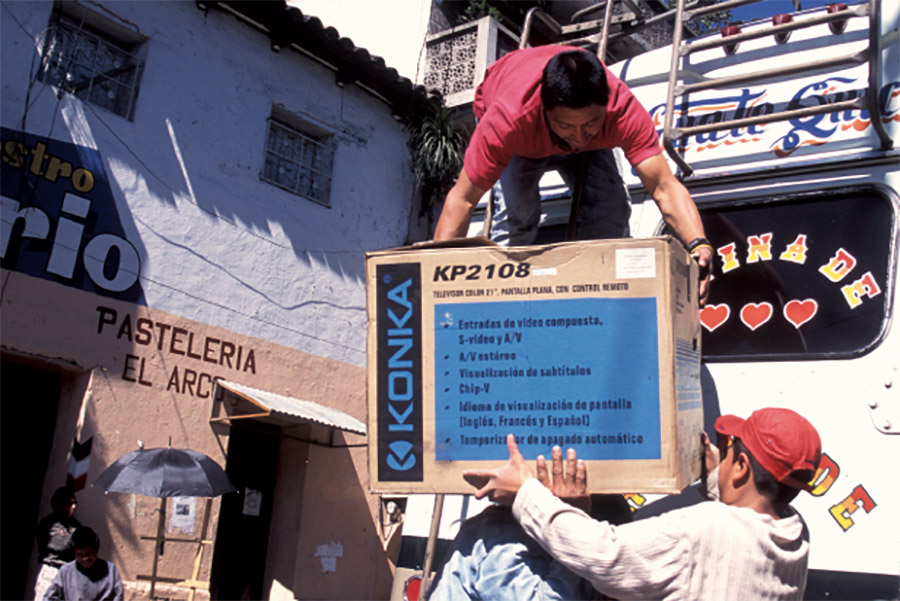
But that dynamic is rapidly changing. As the use of consumer electronics has exploded, so has the need for multinational companies to part with large volumes of obsolete equipment in an environmentally responsible manner in all regions of the world. Need is, in other words, driving the expansion of global remarketing in the all-important geography of Latin America.

So, what does it take to be successful in this relatively overlooked region? It all comes down to deep market knowledge and an unwavering focus on process and procedure.

Overcoming a web of barriers

There is no question remarketing assets in Latin America brings a host of complexities. A lack of understanding of the language and culture can alone present significant obstacles.

The web of regulatory frameworks also adds layers of complexity that can be difficult to decipher for newcomers. Take the transportation, storage and recycling of batteries, for example; each country features its own set of rules. The same goes for labor laws, background checks, asset handling requirements and more.

In addition, different forces fuel market demand in different countries, down to the local level, underscoring the need to create multiple location-specific remarketing strategies. Add a wide range of political structures – from liberal to conservative, from organized to chaotic – and it is not surprising organizations with little or no experience in navigating such market conditions have been apprehensive to dive in.

Still, as a growing number of North American organizations can attest, buoyant secondary markets in Latin America offer unprecedented opportunity to manage growing volumes of end-of-life assets in a swift, environmentally compliant and financially sensible manner – when you leverage the right expertise. The economic opportunities for all Latin Americans, regardless of income, continue to expand, permitting the consumer electronic market to grow.

I’ve seen this growth firsthand during my travels throughout the region over the past 30 years. As technological advancements including cloud computing and the internet of things (IoT) have penetrated into the far corners of countries such as Peru and Colombia, demand for asset management has grown. The market expansion is driven by the inevitable need to replace malfunctioning devices and the desire among businesses and consumers to upgrade to newer and better technologies.

A sound strategy is step number one

I often caution that an off-the-cuff approach to remarketing and responsible recycling in Latin America is doomed to fail.

For those that seek to establish themselves without the help of a knowledgeable third-party provider in the region, I highly recommend a gradual approach.

Gain a full understanding of the legal and environmental requirements in a single country and use that as the baseline for your expansion. Make yourself the resident expert before you proceed. Verify and validate key differences between countries. Can you use the same solution for recycling, or are you facing a brand-new set of regulations?

In essence, your entire business model must be built around the limitations and benefits of each market.

More than anything, strict adherence to international regulatory standards is of utmost importance. ISO- and R2-certified processing centers offer proof of an organization that, at every turn, complies with the highest standards for data destruction, environmentally responsible recycling, and worker health and safety. Such certifications cannot be attained by paying lip service to process and procedure. You have to live it, every day.

In a complex political and regulatory environment, the certifications take on even more significance, lending an internationally recognized level of process and procedure to your operations.

Latin America’s secondary markets are worth exploring. Find out if it’s a good fit for your organization, and then proceed in a systematic and measured manner. Those who do their research and work in alignment with recognized standards can expect to see revenues rise as they expand to the south.

Luis Yepez is the chief operating officer at Mainstream Global, an ITAD service provider based in Lawrence, Mass. with additional owned and operated ISO/R2-certified processing centers in Argentina, Brazil, Chile, Colombia and Peru. Another location is coming soon to Mexico. He can be contacted at luis.yepez@mainstream-global.com.

This article originally appeared in the Fall 2019 issue of E-Scrap News. Subscribe today for access to all print content.
TweetShare
Luis Yepez

Luis Yepez

Related Posts

Panelists discuss construction waste reuse at the NERC conference in New Jersey October 7, 2026.

Ramping up reuse of construction materials

byBrian Clark Howard
October 8, 2026

Construction and demolition produces a lot of waste, but reuse can make a big dent in that, panelists at the...

Women in Circularity at the E-Scrap Conference

Women in Circularity at the E-Scrap Conference

byMaryEllen Etienne
October 8, 2026

Editor’s note: Join the free Women in Circularity Roundtable Breakfast at our 2026 E-Scrap Conference, Oct. 26-28 in New Orleans....

smart glasses

ITAD’s big wearables challenge

byDavid Daoud
October 8, 2026

Wearable technology is a fast-growing sector, but is the asset disposition industry ready to handle it?

University at Buffalo Professor John Atkinson (right) speaks at the NERC conference in New Jersey.

Improving recycling access for underserved communities

byBrian Clark Howard
October 7, 2026

Panelists at the NERC conference in New Jersey talked about solutions to recycling access, from grants to research to technology...

Partnership ups quality control on device-sales platform

Certification scorecard — week of Oct. 5

byPaul Lane
October 7, 2026

The following facilities have achieved, renewed or otherwise regained industry certifications.

Trade-in firm reports higher values for used phones

Device trade-ins increase amid newest iPhone release

byPaul Lane
October 7, 2026

Some in the second-hand marketplace won’t see the full impact until well after the Duo foldable phone releases later this...

Load More
Next Post
Beyond the smoke, a circular economy

Beyond the smoke, a circular economy

2026 Buyers’ Guide

Equipment, services and technology suppliers serving the recycling industry.

Browse the Guide

More Posts

GM launches recycled EV battery line

GM launches recycled EV battery line

October 5, 2026

SC Johnson CEO: Recycling needs policy fix

October 5, 2026
APR, PROs appeal to Ottawa for help

APR, PROs appeal to Ottawa for help

October 6, 2026
plastic bale

Underreported sales may cost bottle bill states up to 40%

October 5, 2026
Our top stories from February 2023

ADS flexes new recycling capacity against resin spikes

October 1, 2026
Women in Circularity: Sanyukta Saptasagar

Women in Circularity: Sanyukta Saptasagar

September 29, 2026

How EPR and policy is reshaping WM’s facilities

October 5, 2026
How to perform chip harvesting

How to perform chip harvesting

October 1, 2026
Usefull reusable dining container at SEEC cafe at the University of Colorado Boulder.

CU Boulder launches dining reuse program

October 5, 2026
Domestic e-plastics recovery picks up pace 

Domestic e-plastics recovery picks up pace 

September 30, 2026
Load More

About & Publications

About Us

Staff

Archive

Magazines

Work With Us

Advertise
Jobs
Contact
Terms and Privacy

Newsletters

Get the latest recycling news and analysis delivered to your inbox every week. Stay ahead on industry trends, policy updates, and insights from programs, processors, and innovators.

Subscribe

Welcome Back!

Login to your account below

Forgotten Password?

Retrieve your password

Please enter your username or email address to reset your password.

Log In

Add New Playlist

No Result
View All Result
  • The Latest
  • Analysis
  • Recycling
  • E-Scrap
  • Plastics
  • Policy Now
  • Conferences
    • E-Scrap Conference
    • Plastics Recycling Conference
    • Resource Recycling Conference
    • Textiles Recovery Summit
  • Magazines
  • About Us
  • Advertise
  • Archive
  • Jobs
  • Staff
Subscribe
This website uses cookies. By continuing to use this website you are giving consent to cookies being used. Visit our Privacy and Cookie Policy.