












This article originally appeared in the Spring 2019 issue of E-Scrap News. Subscribe today for access to all print content.
I never envisioned myself owning a business.
As a relative introvert, I studied computer programming in college in the early 1990s and landed a job with great pay and job security before I even graduated. A few years in, my job relocated me to Houston where my wife and I bought our first house. I was content and life was good, but then I had a chance encounter with an acquaintance who was making a good living buying and selling computer equipment.
I was immediately hooked. Within a year, I had quit my job and started a fledgling “ITAD” company in our spare bedroom. I thought it would be easy and that I would be fantastically successful. I couldn’t have been more wrong.
After my first year, the numbers showed I would have made more working at McDonald’s than as the president and CEO of my newly founded company of one. I assumed, incorrectly, that my technical skills alone would pave the way to a successful business.
However, with persistence and plenty of lessons learned, my company, called TechnoCycle, made headway. I certainly questioned the sanity of my decision at times, but the business gradually evolved over its 22 years, and today our 50-person team processes 250,000 assets and 3 million pounds of e-scrap annually in our 50,000-square-foot facility.
What led to the growth? Our methodology for operational excellence is adapted from three principles gleaned from Jim Collins’ book “Good to Great”:
- First, build a great team of the right people.
- Then continuously improve the business processes.
- Finally, scale and automate with technology.
We’ve proven time and again the validity of these points and continuously work to develop each area in our company. The order is significant, and leap-frogging over a step will not be sustainable, so avoid the temptation. What follows are some high-level takeaways on each principle that have benefitted our company – and can likely strengthen others.
Building the right team
Step one is ensuring the key positions in the company are filled by the right people. In his book, Collins creates a useful metaphor by comparing the business to a bus and noting the people on the bus are your employees, with the seats they occupy representing their respective roles.
It’s OK for some non-critical individuals to be sitting in seats that might not be the perfect fit for them – there’s normally some type of transition occurring somewhere in the business. But when it comes to your key personnel, they have to be seated correctly. After all, they’ll be the ones that will sustain the business improvements once made.
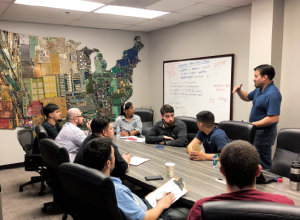
I’ll be honest: I’ve avoided releasing people who I knew were “in the wrong seat” and should have never been on the bus in the first place. I also resented Collins for telling me that I had to do it – wasn’t there another way? I knew I was intentionally avoiding some hard discussions, hoping and wishing the people would fix themselves. Unfortunately, hopes and wishes will not solve the problem and the longer they stay, the worse the issues will get.
A bad fit generally means that a person is either: 1) unable to meet their job expectations, 2) not in line with the company culture, or 3) both. The repercussions are significant if the position in question is part of management. When a leader does not meet performance expectations, everyone else needs to pick up their slack, which causes resentment. And when a leader is a poor culture fit, the company gets fractured, causing dissension.
As the business owner, you must resolve to address these issues quickly for the welfare of the company, your leadership team, and your sanity. Letting an employee go may be unpleasant, but it’s necessary for the company to move forward. (Also, if you know all of this and find that you are still unwilling to act, then you must ask yourself whether you yourself are in the right seat.)
One of the best ways I’ve found to fill key company positions is to promote from within. Promoting from within gives you the luxury of examining an employee’s character and capabilities over the course of months and years, rather than the few hours of interviews and reference checks that you get with a new hire. At present, 10 of our 12 company leadership positions are held by individuals promoted and developed from within. These individuals are the backbone of our company and ensure we maintain excellence in our operations.
Investing in your people
To further ensure that we get the “right people on the bus,” we onboard all new employees through a minimum 90-day trial period with a temporary agency in order to get a long look at each. The candidates are background-checked, drug-screened and insured when they arrive at our doorstep. We start them at a wage that is higher than average to attract and retain better candidates for the trial period. We sit down with these candidates in the first few days and provide an orientation about our company policies and expectations.
During the trial period we’re looking for people who can: 1) show up every day on time ready to work, 2) work well with others, 3) align with our company core values, and 4) demonstrate that they’re an “ACE” (a person with great attitude, character and enthusiasm). It’s not unusual for a candidate to initially need some coaching in one or more of these areas. If we guide them and see adjustments, then we continue. If we don’t see development, we’ll quickly find a replacement. Many of our existing leaders were “diamonds in the rough” and were on-boarded through this process.
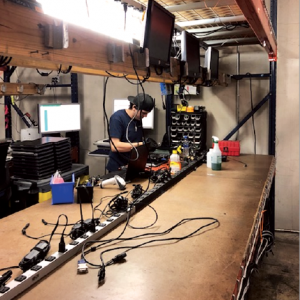
Candidates hired after their trial period are “on the bus,” meaning they’re people we want to retain and develop. We focus on retention through benefits, a healthy corporate culture and offering motivated workers a career path that includes training and compensation. Our benefits include vacation and subsidized health care because we know that these contribute toward long-term retention.
Additionally, we meet for 30 minutes every Friday morning to discuss company culture, provide departmental reporting and perform group training. And we measure individual worker performance over time for merit-based pay increases, internal promotion opportunities and bonuses.
A final note about turnover. Most often, employees who leave the company are quitting their leadership, not their jobs. It’s worth spending time to perform an exit interview and understand why a person is choosing to leave and if there’s a problem you don’t know about. It’s estimated that the departure of an employee making $14 per hour “costs” the company about $4,000 when you consider the invested training and replacement cost.
Rather than viewing employees as disposable, we should view them as our company’s greatest resource.
A process-improvement methodology
Once you have your key people in the right seats, then you’re ready to begin the work of building efficient processes. We utilize a lean-based process improvement methodology that mirrors Paul Akers’ “2-Second Lean” system. Akers’ approach moves the responsibility of process improvement from a few key individuals to the entire organization.
To use another metaphor, if our company was a bucket and waste was represented by dozens of holes leaking water, then I want to see 50 sets of trained hands reaching to plug the holes rather than a select few. We drive the point that it’s every person’s responsibility to work on process improvements.
In order to achieve a trained company-wide workforce, we collectively spend 45 minutes at the start of every day (except Friday) to review lean concepts and then dismiss everyone to their respective areas to work “on the business.” This time commitment amounts to an approximate $18,000 monthly investment on training our employees in the so-called 5S steps, which underpin the lean model.
The 5S steps, which everyone in our organization must commit to memory, include:
- Sort: Declutter and minimize, which increases working space.
- Set In Order: Organize and optimize tool placement by usage frequency. Assign fixed locations.
- Shine: Take pride by keeping your areas clean and tools maintained.
- Standardize: Establish procedures for maintaining steps 1-3, including visual controls and checklists.
- Sustain: Make the improvements part of the culture.
The “2-Second Improvement” philosophy, meanwhile, encourages us to seek each day to find process improvements and inefficiencies (wastes). The reality is that we are surrounded by many types of waste, but it’s often invisible to the employees and organization at first glance. A 2-second improvement could be as simple as culling the pile of pens in my desk drawer to the base essentials (inventory waste) or reducing an extra touch with our UPS processing, saving an estimated 16 man-hours per month (transport waste).
It’s true there can be significant upfront cost to move toward lean in a meaningful way, but think of it as an investment that will snowball into cumulative time savings and waste reduction over the months and years to come.
Smart use of technology
While technology is an essential element for company growth, it must be used by capable personnel and integrate well within your company’s processes. Merely throwing technology at a problem and hoping for a solution (without considering people and processes) will only lead to frustration. It is true, however, that any ITAD looking to grow will need to leverage innovative systems and equipment.
In the early days I could keep all the key pieces of information on the business in my head because I was literally the entire company. Fast-forward 20 years, and we need a different system that can help us manage data around the 250,000 assets we process yearly. We need to know each asset’s source, configuration, data services, upgrades/repairs, location and final disposition (resale or recycle).
There are two technologies available today that can be asset organization game-changers for an ITAD. The first is an enterprise resource planning (ERP) software system that consolidates all your major ITAD administrative functions into a single system and database. Typical functions managed by ERPs include customer relationship management (CRM), logistics, asset inventory, asset modifications through tech, data erasure compliance, downstream compliance, financial transactions, mass balance, commission and revenue share calculations, and more.
Popular platforms in the ITAD ERP product category include Makor ERP, IQ Reseller and RazorERP. If you think you’re ready for an ERP system, I would recommend talking with all the with different vendors to understand the strengths and weaknesses of each platform. Be thorough, as switching platforms will be expensive. When you’re ready to pull the trigger, be sure to invest the necessary planning and implementation time to install the system properly because it will become an integral part of your company operations.
The second technology that can help ITADs are automation tools that streamline various tasks performed in an ITAD environment. Common functions provided by these tools include system testing, system audits, asset data erasure and OS imaging. Benefits include reduced processing times, greater process integrity, increased data reliability, and logging of critical information such as erasure results.
An additional benefit is that some of these can feed the results of their actions into an ERP system, reducing the time needed for data entry.
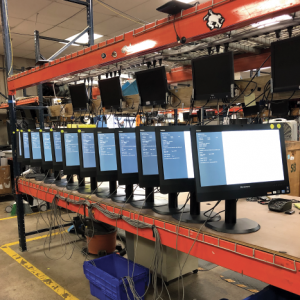
Companies in the ITAD tool category include Blancco, BitRazer, DestructData, Extreme Protocol, Lsoft, SoftThinks, White Canyon and our own software, called the Holmes ITAD System. As with the ERP systems, it’s worth checking the capabilities of each product and matching it to the needs that you have in your environment.
Excellence: More important now than ever
Our customers tell us they receive phone calls from ITAD competitors daily. It’s a reminder that we must be on our best game all the time. Late arrivals, inventory mistakes, poor customer service and other operational problems are reasons why our customers might just give the competition a listening ear.
So we must make every effort to ensure our operations live up to our customers’ expectations and can handle the complexity of properly processing the thousands of diverse IT products moving into our plant.
Our methodology to develop operational excellence and remain ahead of competitors includes onboarding the right people and placing them in the right roles, creating a culture that retains and develops employees, teaching employees to be lean/5S problem-solvers in the business, and investing in technology when appropriate.
I wish you all the best as you strive to develop operational excellence in your own companies.
Mike Buckles is president at Houston-based TechnoCycle. He can be contacted at [email protected].