




Resource Recycling
  • The Latest
  • Analysis
    • All
    • Certification Scorecard
    • Industry Announcements
    • Opinion
    Why global ITAD is stranded in the Gulf

    Why global ITAD is stranded in the Gulf

    Certification scorecard for the week of March 9, 2026

    Diversion Dynamics: Secondhand exports slow down fast fashion

    Certification scorecard for the week of March 2, 2026

    Industry announcements for January 2026

    Industry Announcements for March 2026

    HP receives ocean plastics certification

    HP Inc. earnings point to memory inflation challenge

    Certification scorecard for the week of Feb. 23, 2026

    Umicore highlights strength in recycling, catalysis

    Apto, Tusaar partner on rare earths recovery

    Apto, Tusaar partner on rare earths recovery

  • Conferences
  • Publications

    Other Topics

    Textiles
    Organics
    Packaging
    Glass
    Brand Owners

    Metals
    Technology
    Research
    Markets
    Grant Watch

    All Topics

Subscribe
No Result
View All Result
Resource Recycling
  • The Latest
  • Analysis
    • All
    • Certification Scorecard
    • Industry Announcements
    • Opinion
    Why global ITAD is stranded in the Gulf

    Why global ITAD is stranded in the Gulf

    Certification scorecard for the week of March 9, 2026

    Diversion Dynamics: Secondhand exports slow down fast fashion

    Certification scorecard for the week of March 2, 2026

    Industry announcements for January 2026

    Industry Announcements for March 2026

    HP receives ocean plastics certification

    HP Inc. earnings point to memory inflation challenge

    Certification scorecard for the week of Feb. 23, 2026

    Umicore highlights strength in recycling, catalysis

    Apto, Tusaar partner on rare earths recovery

    Apto, Tusaar partner on rare earths recovery

  • Conferences
  • Publications

    Other Topics

    Textiles
    Organics
    Packaging
    Glass
    Brand Owners

    Metals
    Technology
    Research
    Markets
    Grant Watch

    All Topics

Subscribe
No Result
View All Result
Resource Recycling
No Result
View All Result
Home Plastics

Industry looks to defend federal recycling program

Colin StaubbyColin Staub
June 6, 2017
in Plastics

Recycling organizations will try to sell Congress on the economic and environmental benefits of the U.S. EPA’s Waste Minimization and Recycling program, which is cut in President Trump’s proposed budget.

An initial budget document released in March made clear that EPA would be targeted by the new administration for cuts. But the official proposal released last month, titled “A New Foundation for American Greatness,” included appropriations reports containing much more detail about how those cuts would pencil out for specific programs.

A brief note links the cut to a wider back-to-basics directional focus the Trump administration has established for EPA.

“State and local entities or industry groups may elect to continue work to reuse and recycle materials,” the appropriations report states, adding that EPA “will focus on core environmental work.”

The proposal actually cuts more than was previously anticipated by EPA watchdog group the Environmental Protection Network. The group earlier cited internal budget documents suggesting Waste Minimization and Recycling, an $8.8 million recycling program, would be cut by 20 percent, not eliminated altogether.

From here, both the House of Representatives and Senate will pass budget resolutions that set limits for spending but do not get into program specifics. Appropriations committees and subcommittees of each chamber will delve into program funding and come up with budget bills, which go back before each full chamber for floor votes. Once both the House and Senate have passed their own budget bills and have worked through the differences between the two in a conference committee, the final budget goes to the president for a decision.

Ideally, that all happens before Oct. 1, when the new fiscal year begins.

Specifics spur action

With more detail on which programs are in danger of losing funding, the lobbying will begin.

Billy Johnson, chief lobbyist for the Institute of Scrap Recycling Industries (ISRI), said the Waste Minimization and Recycling program performs important work for the recycling industry as well as companies that use recycled materials.

ISRI’s goal will be to “make (lawmakers) aware that these programs are really not very much money but they have a terrific impact on manufacturing as well as environmental protection,” Johnson said. “I think they’ll be very willing to listen to that.”

Lobbyists will point not only to the environmental benefits, but to the economic impact of recycling, including job creation, municipal savings from avoided tip fees and the recycled material returning into the market to generate further commercial activities.

“I don’t think that they are connecting the dots, and I think that’s our job, is to try to help them connect them,” Johnson said. “I think when they do, they’re going to say, ‘Oh yeah, we need to be helping there.'”

Johnson noted that the budget will certainly not move forward as written, since “all presidents’ budgets are dead on arrival.” Still, if the Waste Minimization and Recycling program were to be completely eliminated, Johnson said MRFs and curbside programs would be hurt the most. The majority of post-industrial recycling would not feel an impact, he said, but aluminum, paper and plastic would take a hit because EPA supports municipal collection programs.

“Some of those programs are, I wouldn’t say ‘propped up,’ they’re just helped by it,” he explained.

Allies in office

Few politicians have specifically addressed the recycling-related implications. Johnson said there are members of Congress who “definitely understand how important recycling is for steel, aluminum and paper and will be making that push.”

The Congressional Recycling Caucus was formed in 2006 with support from ISRI. In a statement to Resource Recycling, U.S. Rep. John Shimkus, R-Ill., co-chair of the House recycling caucus, noted EPA’s recycling efforts among those that should be prioritized.

“While the administration is absolutely right to request an overall decrease in funding for EPA, it is our responsibility on Capitol Hill to ensure that specific programs are funded at levels consistent with authorizations,” Shimkus said. “As we work through the budget process, Congress should prioritize programs – particularly site remediation, technical assistance, and recycling programs – that not only improve our environment but that also generate economic benefits.”

Sen. John Boozman, R-Ark., co-chair on the Senate side, declined to speak to specific cuts because the budget is still only a proposal. In a statement, he noted this is only the beginning of the process, adding that “Congress has the power of the purse.”

Other ranking members of the recycling caucus did not return inquiries.

Shifting to states

Although the budget is likely to undergo many changes, the initial proposal is notable for signaling the administration’s priorities. Scott Pruitt, who took over as head of the EPA in February, has emphasized shifting environmental regulatory responsibility away from the federal level.

An overview of the EPA budget proposal explains that “responsibility for funding local environmental efforts and programs is returned to state and local entities, while federal funding supports priority national work.” That could put some states in a financial bind.

“They’re going to have to do a lot of what the government’s paying for,” Johnson said. “A lot of states have relied on the EPA to do a lot of the environmental protection work for them.”

Under that approach, state regulations could also become more disparate, which means more flexibility, Johnson said, but also more inconsistency.

“If you’re in Arkansas they could enforce the same law or regulation very differently than they do in Texas, or Missouri or California,” Johnson said. “The regions provide a lot of overlay to keep things more or less consistent between those states and the regions.”

 

Ettlinger 

Tags: Industry GroupsLegislation
TweetShare
Colin Staub

Colin Staub

Colin Staub was a reporter and associate editor at Resource Recycling until August 2025.

Related Posts

Oregon state capitol building with state flag and blue sky.

Oregon opens comment on updated REM plan

byStefanie Valentic
March 16, 2026

The revised responsible end market plan from Circular Action Alliance aims to accelerate EPR implementation with a nationally scalable end-market...

EPS foam recycling grants open for applications

byAntoinette Smith
March 11, 2026

The Foodservice Packaging Institute’s Foam Recycling Coalition will award grants of up to $50,000 to expand US recycling access for...

Trade flow shifts, volatility require varied responses

Trade flow shifts, volatility require varied responses

byAntoinette Smith
March 9, 2026

Both long- and short-term solutions including policy, localization can help support the industry, panelists said during the 2026 Plastics Recycling...

Common goal of responsible end markets: transparency 

Common goal of responsible end markets: transparency 

byAntoinette Smith
March 5, 2026

Panelists from state government, Circular Action Alliance and a reclaimer explored the particulars of REMs at the 2026 Plastics Recycling...

Emerging US EPR programs spark harmonization talks

Washington designates CAA to lead EPR implementation

byStefanie Valentic
March 4, 2026

The state is the sixth to name Circular Action Alliance as the producer responsibility organization for its packaging EPR law.

Fireside Chat at PRC features CAA chief

Fireside Chat at PRC features CAA chief

byAntoinette Smith
March 4, 2026

The CEOs of the Association of Plastic Recyclers and Circular Action Alliance held a candid, spirited discussion at the 2026...

Load More
Next Post

Our top stories from May 2017

More Posts

Chinese processing group details goals for US visit

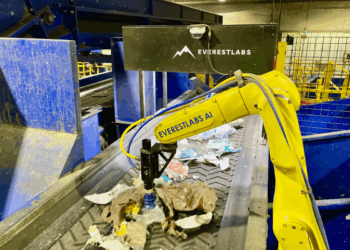
AMP lays out vision of next-generation, AI-driven MRFs

July 24, 2024
ERI sues Revivn alleging raid on staff and trade secrets

ERI sues Revivn alleging raid on staff and trade secrets

March 10, 2026
E-scrap export pause urged to keep rare earth scrap in US

E-scrap export pause urged to keep rare earth scrap in US

March 11, 2026
How rising fuel and memory prices are impacting ITAD’s margins

How rising fuel and memory prices are impacting ITAD’s margins

March 10, 2026
Ex-Glencore chief starts Valor to refine critical metals

Ex-Glencore chief starts Valor to refine critical metals

September 18, 2025
Northeast recycled commodity values hit 5-year lows

Northeast recycled commodity values hit 5-year lows

March 6, 2026

AI servers reshape ITAD sector, recyclers brace for new wave

March 9, 2026
Greenway now takes e-scrap from Midwest businesses

Greenway now takes e-scrap from Midwest businesses

March 11, 2026
Landfill

Oregon DEQ issues $3.1 million fine to Republic Services subsidiary

March 12, 2026
Common goal of responsible end markets: transparency 

Common goal of responsible end markets: transparency 

March 5, 2026
Load More

About & Publications

About Us

Staff

Archive

Magazine

Work With Us

Advertise
Jobs
Contact
Terms and Privacy

Newsletter

Get the latest recycling news and analysis delivered to your inbox every week. Stay ahead on industry trends, policy updates, and insights from programs, processors, and innovators.

Subscribe

Welcome Back!

Login to your account below

Forgotten Password?

Retrieve your password

Please enter your username or email address to reset your password.

Log In

Add New Playlist

No Result
View All Result
  • The Latest
  • Analysis
  • Recycling
  • E-Scrap
  • Plastics
  • Policy Now
  • Conferences
    • E-Scrap Conference
    • Plastics Recycling Conference
    • Resource Recycling Conference
    • Textiles Recovery Summit
  • Magazine
  • About Us
  • Advertise
  • Archive
  • Jobs
  • Staff
Subscribe
This website uses cookies. By continuing to use this website you are giving consent to cookies being used. Visit our Privacy and Cookie Policy.