
Resource Recycling
  • The Latest
  • Analysis
    • All
    • Certification Scorecard
    • Industry Announcements
    • Opinion
    The electronics recycling industry is undergoing a transformation from labor-intensive manual operations to highly automated, AI-driven facilities that use advanced robotics, cleaner chemistry and digital tracking systems to extract critical materials.

    The cyber-physical MRF: AI and robotics reshape e-waste recovery

    Certification scorecard for the week of Feb. 9, 2026

    Meta-Corning deal signals IT hardware retirement wave

    Meta-Corning deal signals IT hardware retirement wave

    Malaysia clamps down on illegal e-waste imports amid probes

    Malaysia clamps down on illegal e-waste imports amid probes

    URT builds alliance to remake electronics plastics at scale

    ICYMI: Top 5 e-scrap stories from January 2026

    The electronics recycling industry is undergoing a transformation from labor-intensive manual operations to highly automated, AI-driven facilities that use advanced robotics, cleaner chemistry and digital tracking systems to extract critical materials.

    Certification scorecard for the week of Feb. 2, 2026

    Auditors warn EU may fall short on critical metals

    Auditors warn EU may fall short on critical metals

    Industry announcements for January 2026

    Industry announcements for February 2026

    ICYMI: Top 5 recycling stories from January 2026

  • Conferences
  • Publications

    Other Topics

    Textiles
    Organics
    Packaging
    Glass
    Brand Owners

    Metals
    Technology
    Research
    Markets
    Grant Watch

    All Topics

Subscribe
No Result
View All Result
Resource Recycling
  • The Latest
  • Analysis
    • All
    • Certification Scorecard
    • Industry Announcements
    • Opinion
    The electronics recycling industry is undergoing a transformation from labor-intensive manual operations to highly automated, AI-driven facilities that use advanced robotics, cleaner chemistry and digital tracking systems to extract critical materials.

    The cyber-physical MRF: AI and robotics reshape e-waste recovery

    Certification scorecard for the week of Feb. 9, 2026

    Meta-Corning deal signals IT hardware retirement wave

    Meta-Corning deal signals IT hardware retirement wave

    Malaysia clamps down on illegal e-waste imports amid probes

    Malaysia clamps down on illegal e-waste imports amid probes

    URT builds alliance to remake electronics plastics at scale

    ICYMI: Top 5 e-scrap stories from January 2026

    The electronics recycling industry is undergoing a transformation from labor-intensive manual operations to highly automated, AI-driven facilities that use advanced robotics, cleaner chemistry and digital tracking systems to extract critical materials.

    Certification scorecard for the week of Feb. 2, 2026

    Auditors warn EU may fall short on critical metals

    Auditors warn EU may fall short on critical metals

    Industry announcements for January 2026

    Industry announcements for February 2026

    ICYMI: Top 5 recycling stories from January 2026

  • Conferences
  • Publications

    Other Topics

    Textiles
    Organics
    Packaging
    Glass
    Brand Owners

    Metals
    Technology
    Research
    Markets
    Grant Watch

    All Topics

Subscribe
No Result
View All Result
Resource Recycling
No Result
View All Result
Home Recycling

EnergyBags being stockpiled in Boise

Colin StaubbyColin Staub
October 15, 2019
in Recycling
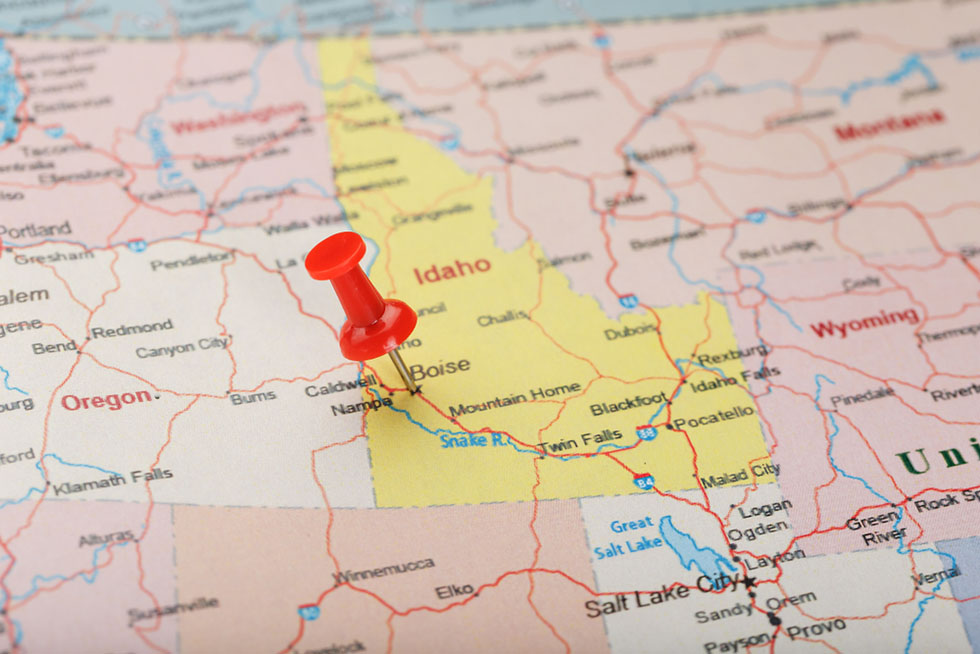
The city of Boise rolled out the EnergyBag program in 2018. | Aleksandr Grechanyuk/Shutterstock

The Hefty EnergyBag program is collecting but not currently processing hard-to-recycle plastics in Boise, Idaho. The program’s downstream processor suspended EnergyBag processing earlier this year to install new equipment.

Salt Lake City-based pyrolysis company Renewlogy announced over the summer that the company is installing upgrades at its facility, thanks to grant funds from Dow and Reynolds Consumer Products. The Utah plant is not bringing in EnergyBags for processing as those upgrades are installed, which has led to material piling up in Boise. The Utah facility has not been processing EnergyBags since early 2019, Waste Dive previously reported. The facility continues to be able to process rigid plastics, Renewlogy CEO Priyanka Bakaya told Resource Recycling.

Boise last year rolled out the EnergyBag program, which is in place in several communities across North America and has residents place hard-to-recycle plastics in a bag that is manually pulled off the sort line at a materials recovery facility (MRF). These bags are then baled and sent to downstream outlets such as Renewlogy, a company that converts plastics into diesel fuels.

Boise began collecting the bags around May 2018 and the city has collected a little over 400 tons of plastic through the program since then, shipping the material to Salt Lake City.

Bakaya said last week that the Renewlogy facility in Salt Lake City is expected to restart during the first quarter of 2020. Until then, communities that are part of the EnergyBag program and use Renewlogy as a downstream outlet are looking for other options. For Boise, that means collecting and storing the material at the local MRF until the market opens back up.

The city remains positive about the program’s outlook.

“We knew there would be some setbacks here and there,” Peter McCullough, materials management programs manager with the city of Boise environmental division, said in an interview.

Search for alternative markets

Boise stopped sending material to Renewlogy four months ago, according to the city, and there are about three truckloads of EnergyBags stored at the local MRF, which is run by Western Recycling. That’s not much more than normal: Since the program was implemented, there have been one or two truckloads of material on-site at the MRF at any given time as Western Recycling would build up enough material to make a shipment down to Salt Lake City.

Despite the pause in processing, the city does not have any plans to stop collection. If storage at the MRF became an issue, the city would likely look for other temporary storage options, McCullough said.

“Just like with the regular recycling markets, there can be changes in who wants the material and who can handle it,” McCullough said. And just like with regular recycling programs, the city doesn’t want to stop and start collection repeatedly.

“Minimizing disruption to our customers is very important,” said Colin Hickman, spokesman for the Public Works department.

Dow, Hefty and Reynolds are primarily handling the end market search, and the companies are always trying to find as many markets as they can for the material in the orange bags, McCullough explained. That includes looking at a range of options beyond pyrolysis, including traditional mixed plastics processing and downstream outlets that make railroad ties and other materials from recovered plastic, he said.

If and when Renewlogy starts accepting Boise’s EnergyBags again, the city hopes to have backup markets to avoid sending it all to one place. But with Boise’s relatively isolated geography, there are so far no nearby alternatives.

Bakaya noted the Renewlogy facility is processing some plastic to test the new equipment as it is installed. She said the project partners are not releasing information about the equipment being installed until early next year. Dow and Reynolds representatives did not respond to inquiries on the program.

The EnergyBag program uses different downstream outlets elsewhere in the country. In its Nebraska programs, which partner with MRF operator First Star Recycling, the bags are sent to a Kansas City, Mo. cement kiln. And in Cobb County, Ga., the bags are sent to a “local energy recovery facility,” according to Keep Cobb Beautiful.

Education and outreach is crucial

McCullough said the city’s experience with the program has been positive, although he noted it has taken a significant amount of work to educate the public on what goes into the orange bag.

“It adds another layer of complexity,” he said. “We have a curbside composting program here, so we have three regular carts already and the EnergyBag on top of that.”

It’s not something a community can simply launch and assume it will take care of itself, McCullough added. Just like traditional recycling programs, the EnergyBag initiative needs education and outreach to be successful, he said.

For example, the EnergyBag program faces contamination problems just like the traditional recycling stream. In Boise’s EnergyBag program, PET is considered a contaminant because it is not accepted in the downstream pyrolysis process. That’s been a difficult message to convey, according to the city.

Additionally, the city sees non-plastic contamination making it into the EnergyBags. Overall, the EnergyBag program in Boise has a contamination rate of about 18%, according to the city.

A version of this story appeared in Plastics Recycling Update on October 9.

 

Tags: Hard-to-Recycle MaterialsLocal ProgramsPlastics
TweetShare
Colin Staub

Colin Staub

Colin Staub was a reporter and associate editor at Resource Recycling until August 2025.

Related Posts

Texas sues over dumped wind turbine blades

Texas sues over dumped wind turbine blades

byScott Snowden
February 10, 2026

The state attorney general sued Global Fiberglass Solutions over alleged illegal storage and disposal of all turbine blades at two...

Greenchip launches fund for community impact and trust

byScott Snowden
February 5, 2026

The Greenchip Legacy Foundation formalizing the company's community work while reinforcing its 2026 focus on domestic processing, compliance and transparency...

Solarcycle starts up Georgia recycling plant

Solarcycle starts up Georgia recycling plant

byScott Snowden
January 30, 2026

Solarcycle has begun operating its Cedartown solar panel recycling facility, clarifying the status of a long-planned project that was previously...

VW investing millions in auto recycling in Germany

byAntoinette Smith
January 28, 2026

The German vehicle manufacturer plans to invest up to €90 million in its Zwickau plant, in efforts to supply its...

CARE launches carpet fiber ID device to aid recyclers

byAntoinette Smith
January 14, 2026

The customized unit can identify all yarn fibers and blends in about half a second, helping to make sorting more...

New Comstock site to feed Nevada solar panel recycling

New Comstock site to feed Nevada solar panel recycling

byScott Snowden
January 13, 2026

Comstock Metals has opened a new California facility aimed at improving the collection and transport of retired solar panels to...

Load More
Next Post

Groups identify recovered material users in the Northeast

More Posts

Oregon’s Recycling Modernization Act faces injunction

Court partially blocks Oregon EPR law, dismisses bulk of lawsuit

February 10, 2026
Chinese processing group details goals for US visit

AMP lays out vision of next-generation, AI-driven MRFs

July 24, 2024
Malaysia clamps down on illegal e-waste imports amid probes

Malaysia clamps down on illegal e-waste imports amid probes

February 6, 2026

REUSE Act heads to US House for consideration

February 9, 2026

APR, industry create proactive guidance for PET caps

February 12, 2026

ecoATM recycled 7.5M phones in 2025 as payouts hit $1.5B

February 10, 2026
Meta-Corning deal signals IT hardware retirement wave

Meta-Corning deal signals IT hardware retirement wave

February 9, 2026
Texas sues over dumped wind turbine blades

Texas sues over dumped wind turbine blades

February 10, 2026

Alpek talks PET overcapacity, soft demand

February 11, 2026
The electronics recycling industry is undergoing a transformation from labor-intensive manual operations to highly automated, AI-driven facilities that use advanced robotics, cleaner chemistry and digital tracking systems to extract critical materials.

The cyber-physical MRF: AI and robotics reshape e-waste recovery

February 12, 2026
Load More

About & Publications

About Us

Staff

Archive

Magazine

Work With Us

Advertise
Jobs
Contact
Terms and Privacy

Newsletter

Get the latest recycling news and analysis delivered to your inbox every week. Stay ahead on industry trends, policy updates, and insights from programs, processors, and innovators.

Subscribe

Welcome Back!

Login to your account below

Forgotten Password?

Retrieve your password

Please enter your username or email address to reset your password.

Log In

Add New Playlist

No Result
View All Result
  • The Latest
  • Analysis
  • Recycling
  • E-Scrap
  • Plastics
  • Policy Now
  • Conferences
    • E-Scrap Conference
    • Plastics Recycling Conference
    • Resource Recycling Conference
    • Textiles Recovery Summit
  • Magazine
  • About Us
  • Advertise
  • Archive
  • Jobs
  • Staff
Subscribe
This website uses cookies. By continuing to use this website you are giving consent to cookies being used. Visit our Privacy and Cookie Policy.