










Resource Recycling
  • The Latest
  • Analysis
    • All
    • Certification Scorecard
    • Industry Announcements
    • Opinion
    The electronics recycling industry is undergoing a transformation from labor-intensive manual operations to highly automated, AI-driven facilities that use advanced robotics, cleaner chemistry and digital tracking systems to extract critical materials.

    The cyber-physical MRF: AI and robotics reshape e-waste recovery

    Certification scorecard for the week of Feb. 9, 2026

    Meta-Corning deal signals IT hardware retirement wave

    Meta-Corning deal signals IT hardware retirement wave

    Malaysia clamps down on illegal e-waste imports amid probes

    Malaysia clamps down on illegal e-waste imports amid probes

    URT builds alliance to remake electronics plastics at scale

    ICYMI: Top 5 e-scrap stories from January 2026

    The electronics recycling industry is undergoing a transformation from labor-intensive manual operations to highly automated, AI-driven facilities that use advanced robotics, cleaner chemistry and digital tracking systems to extract critical materials.

    Certification scorecard for the week of Feb. 2, 2026

    Auditors warn EU may fall short on critical metals

    Auditors warn EU may fall short on critical metals

    Industry announcements for January 2026

    Industry announcements for February 2026

    ICYMI: Top 5 recycling stories from January 2026

  • Conferences
  • Publications

    Other Topics

    Textiles
    Organics
    Packaging
    Glass
    Brand Owners

    Metals
    Technology
    Research
    Markets
    Grant Watch

    All Topics

Subscribe
No Result
View All Result
Resource Recycling
  • The Latest
  • Analysis
    • All
    • Certification Scorecard
    • Industry Announcements
    • Opinion
    The electronics recycling industry is undergoing a transformation from labor-intensive manual operations to highly automated, AI-driven facilities that use advanced robotics, cleaner chemistry and digital tracking systems to extract critical materials.

    The cyber-physical MRF: AI and robotics reshape e-waste recovery

    Certification scorecard for the week of Feb. 9, 2026

    Meta-Corning deal signals IT hardware retirement wave

    Meta-Corning deal signals IT hardware retirement wave

    Malaysia clamps down on illegal e-waste imports amid probes

    Malaysia clamps down on illegal e-waste imports amid probes

    URT builds alliance to remake electronics plastics at scale

    ICYMI: Top 5 e-scrap stories from January 2026

    The electronics recycling industry is undergoing a transformation from labor-intensive manual operations to highly automated, AI-driven facilities that use advanced robotics, cleaner chemistry and digital tracking systems to extract critical materials.

    Certification scorecard for the week of Feb. 2, 2026

    Auditors warn EU may fall short on critical metals

    Auditors warn EU may fall short on critical metals

    Industry announcements for January 2026

    Industry announcements for February 2026

    ICYMI: Top 5 recycling stories from January 2026

  • Conferences
  • Publications

    Other Topics

    Textiles
    Organics
    Packaging
    Glass
    Brand Owners

    Metals
    Technology
    Research
    Markets
    Grant Watch

    All Topics

Subscribe
No Result
View All Result
Resource Recycling
No Result
View All Result
Home Resource Recycling Magazine

Cutting down disposal

byBen Eagle
February 28, 2023
in Resource Recycling Magazine

This article appeared in the January 2023 issue of Resource Recycling. Subscribe today for access to all print content.
 

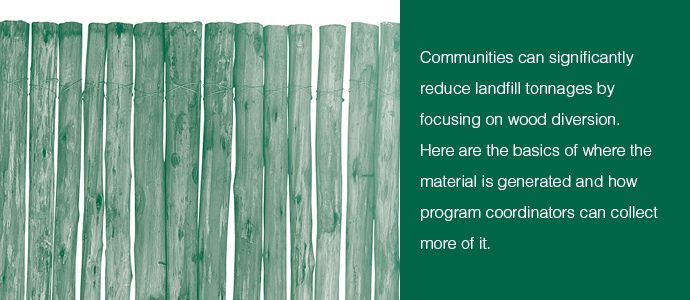
Data from the U.S. Environmental Protection Agency shows that in 2010, the country produced roughly 11.1 million tons of wood that went to landfills, compared with 2.3 million tons that was recycled.

That dumped wood equated to more than $1 billion in potential revenue that could have been earned from selling for manufacturing or construction purposes.

Fast-forward to 2018 (the most recent year for which EPA data is available), and the waste wood that went to landfills grew to 12.2 million tons, making it almost 8.3% of all municipal solid waste heading to landfill.

Clearly, there are opportunities to improve collection and reuse for this material, and local recycling programs can be an important part of the solution. This article will offer local officials and others more details on this often-overlooked segment of the waste stream and provide some perspective on how to keep more tonnages in use, instead of in disposal.

Sources of generation

The primary source of wood waste in the U.S. is material cast off during residential construction projects. This category includes lumber, both new and used, generated during new builds or remodeling.

These materials may be too damaged to be reused in another home or building, but they are often safe for casual uses like landscaping projects or furniture-making if they can be effectively recovered.

Demolition waste is another source of waste wood – this material comes from old commercial buildings that have been demolished due to damage or obsolescence.

The wood from these buildings may be more damaged than that found on residential construction sites, but it’s still perfectly safe for use in other applications with basic carpentry skills and tools.

Firewood scraps are another type of scrap wood prime for reuse by someone with basic carpentry skills and tools. This material comes from trees cut down for firewood, but it has been deemed unsuitable for that purpose.

Scrap wood is also available from local sawmills that process trees into lumber products. The sizing and quality of scrap wood varies depending on production processes. Usually, this material is available at low cost and is ready for use immediately.

The local role

Local officials have a unique opportunity to improve the recycling of wood. They can do this by working with government officials in their state to ensure that wood is included in recycling programs.

Additionally, some local governments have launched robust wood recycling programs. Cities can recover wood with other yard waste, and many large cities have curbside collection programs for yard trimmings and other organic debris that could incorporate wood materials.

In other cases, municipalities accept wood for free at recycling drop-off centers.

These local recycling centers, which tend to collect materials in multiple streams (and thus keep quality high), allow small businesses and craftspeople to use recycled materials in their products without investing in large amounts of raw material.

To increase the recycling of unused wood, local recycling program coordinators must educate the public and make it easier for people to recycle this material.

Many people do not realize that it is possible to recycle unused wood. They may also have no idea where they can take their unwanted wood to be recycled.

Local recycling coordinators can take steps to let people know which types of wood can be recycled, including softwood, hardwood, blockboard, plywood, chipboard, hardboard and others.

The public also needs more information about how valuable wood can be when appropriately recycled and used again as building materials, furniture and other products.

Community momentum

Coordinators can work within their community to increase access to local recycling options. They can talk with local government leaders or other organizations about adding more drop-off locations for wood waste.
Sponsoring a wood waste collection event can be a great way to help people understand how important it is to recycle their unused wood.

A collection event can also help educate residents about how their local recycling center operates and what types of materials they accept for recycling.

Another step toward developing community momentum is talking with building contractors or businesses who might be willing to offer wood recycling bins near their construction sites or other places where they generate wood waste.

Additionally, coordinators can tell their state representatives that they want more waste diversion programs in their community or school district. They will then be able to pass on the message to other legislators who may be able to take action on this issue.


Ben Eagle is content manager at Carved, an Indiana company that uses recovered wood to design and manufacture handmade wooden cases for mobile phones. He can be contacted at [email protected]

This article appeared in the January 2023 issue of Resource Recycling. Subscribe today for access to all print content.

Tags: Collection
TweetShare
Ben Eagle

Ben Eagle

Related Posts

WM: Upgrades temporarily slow tons recovered

WM sees ‘notable growth’ despite low recycling commodity prices

byStefanie Valentic
January 30, 2026

WM has battled headwinds from low recycling commodity prices with strategic automation and facility upgrades, the company told investors in...

Recyclers are facing unprecedented changes

byClosed Loop Center for the Circular Economy & Resource Recycling Systems
January 27, 2026

Using input from MRFs across the US, Closed Loop Partners developed a guide to help provide best practices to improve...

Houston, MRF operator sign chemical recycling MOU

CompuCycle CEO: Transparency drives electronics diversion

byStefanie Valentic
January 16, 2026

As Houston's role as a major port city raises concerns about electronics being exported overseas for processing, CompuCycle CEO Kelly...

Diversion Dynamics: Recycling partnerships are an art form, but crucial for progress

Diversion Dynamics: Recycling partnerships are an art form, but crucial for progress

byStefanie Valentic
January 8, 2026

Whether you're operating a MRF, managing municipal contracts or navigating supplier relationships, the daily pressures pile up: financial constraints, shifting...

Solar recycling ramps up in NY with new pickup service

Solar recycling ramps up in NY with new pickup service

byScott Snowden
December 23, 2025

New York’s clean energy and digital infrastructure sectors have grown in recent years and the flow of decommissioned, warranty-return, storm-damaged...

Grant funds EPS foam recycling in Nebraska

Grant funds EPS foam recycling in Nebraska

byAntoinette Smith
December 16, 2025

First Star Recycling in Omaha and the City of Lincoln each received $25,000 grants from the Foodservice Packaging Institute's Foam...

Load More
Next Post

Bearing fruit

More Posts

Chinese processing group details goals for US visit

AMP lays out vision of next-generation, AI-driven MRFs

July 24, 2024
Oregon’s Recycling Modernization Act faces injunction

Court partially blocks Oregon EPR law, dismisses bulk of lawsuit

February 10, 2026
Malaysia clamps down on illegal e-waste imports amid probes

Malaysia clamps down on illegal e-waste imports amid probes

February 6, 2026

APR, industry create proactive guidance for PET caps

February 12, 2026

REUSE Act heads to US House for consideration

February 9, 2026

Alpek talks PET overcapacity, soft demand

February 11, 2026
The electronics recycling industry is undergoing a transformation from labor-intensive manual operations to highly automated, AI-driven facilities that use advanced robotics, cleaner chemistry and digital tracking systems to extract critical materials.

The cyber-physical MRF: AI and robotics reshape e-waste recovery

February 12, 2026
Texas sues over dumped wind turbine blades

Texas sues over dumped wind turbine blades

February 10, 2026

ecoATM recycled 7.5M phones in 2025 as payouts hit $1.5B

February 10, 2026
Bipartisan reps introduce bill on recycling claims

Bipartisan reps introduce bill on recycling claims

February 12, 2026
Load More

About & Publications

About Us

Staff

Archive

Magazine

Work With Us

Advertise
Jobs
Contact
Terms and Privacy

Newsletter

Get the latest recycling news and analysis delivered to your inbox every week. Stay ahead on industry trends, policy updates, and insights from programs, processors, and innovators.

Subscribe

Welcome Back!

Login to your account below

Forgotten Password?

Retrieve your password

Please enter your username or email address to reset your password.

Log In

Add New Playlist

No Result
View All Result
  • The Latest
  • Analysis
  • Recycling
  • E-Scrap
  • Plastics
  • Policy Now
  • Conferences
    • E-Scrap Conference
    • Plastics Recycling Conference
    • Resource Recycling Conference
    • Textiles Recovery Summit
  • Magazine
  • About Us
  • Advertise
  • Archive
  • Jobs
  • Staff
Subscribe
This website uses cookies. By continuing to use this website you are giving consent to cookies being used. Visit our Privacy and Cookie Policy.