This article originally appeared in the May 2019 issue of Resource Recycling. Subscribe today for access to all print content.
As the vision of a circular economy grows, so does the focus on how packaging is formulated and managed at the end of its useful life.
For many, the goal is to support the Global Commitment – a call from the Ellen MacArthur Foundation’s New Plastic Economy initiative to create packaging that is 100 percent reusable, recyclable or compostable by 2025. This push for wide-scale change is exciting yet daunting. Most companies we speak to believe we can easily shift 80 percent of our packaging toward increased recovery, but the remaining 20 percent will require visionary change. That change is unlikely to occur without significant collaboration, investment and support.
At AMERIPEN, we have identified some collaborative efforts underway in North America, including a federal bill to support recycling infrastructure, U.S. EPA dialogues around recycling and the Alliance to End Plastic Waste. Yet each of these (rightfully) tackles one aspect of the varied challenges facing the packaging industry. How can we be sure projects and priorities are coordinated to make the maximum possible impact?
To help provide some critical conversation on this issue, AMERIPEN launched its Salon Series at the end of last year.
The AMERIPEN salons are half-day dialogues designed to tap insights from packaging industry stakeholders and explore core challenges and opportunities for advancing the vision of a circular system. Attendance is by invitation to permit for inclusion of all material types and positions across the value chain, including government, academia, nonprofit groups and industry.
Each salon tackles one specific challenge, allowing participants to have truly in-depth discussions on risks, opportunities and unintended consequences. Participants are encouraged to identify actions they would consider most impactful. At the conclusion of the series, AMERIPEN will review findings to help align the industry on an action plan for addressing some of our more intractable challenges and collectively advance circular systems.
To date, AMERIPEN has hosted two salons. The first was a partnership with the U.S. Chamber of Commerce Foundation in the fall of 2018. That gathering brought together more than 20 thought leaders from across the packaging value chain to discuss what a vision for circular packaging systems would look like in the U.S. Our second salon was held in early February and was co-hosted with the city of Phoenix and Arizona State University. This event attracted over 30 participants seeking to explore opportunities for financing increased packaging recovery.
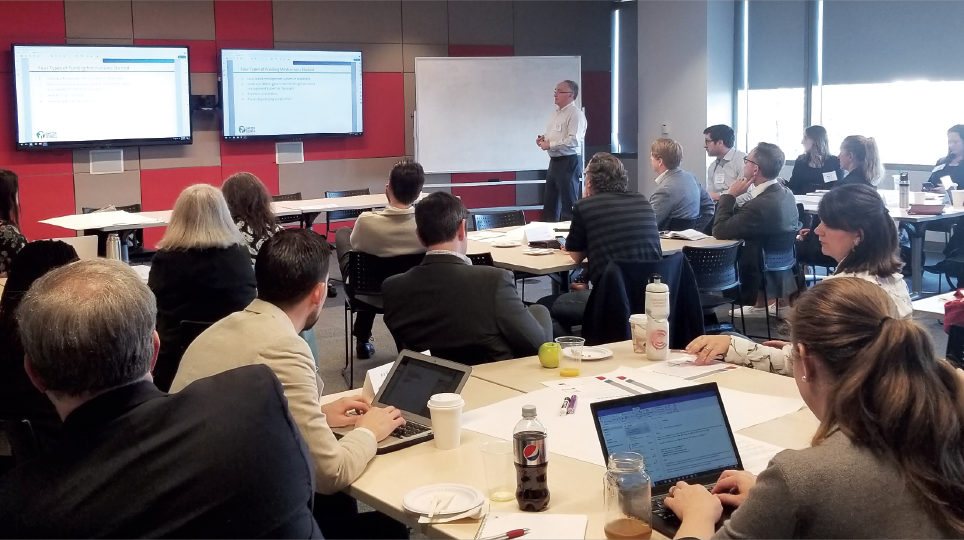
Below are some of the major takeaways from those two events.
Life-cycle thinking is needed
Salon participants noted that too frequently, policies and programs around packaging focus only on end-of-life management and not on opportunities and value further up the packaging value chain. Discussions touched on the importance of taking a life-cycle approach to examine how packaging materials are designed, collected, sorted, reprocessed and sold. This approach would help ensure that packaging policies are not seen in isolation but are integrated with strategies and goals set around the products they serve to protect.
It was also felt that thinking along more holistic lines can help inform how best to direct materials at end of life. For instance, in many jurisdictions, there is often a push to have all materials collected via curbside bins and carts. But participants pointed out that some programs, such as Recycle BC in British Columbia, have established depot stations for some harder-to-recycle materials – many of those materials are then used for energy recovery or directed toward research and development to identify alternative recovery options.
‘Circular’ can involve more than recycling
According to the Ellen MacArthur Foundation, the vision of a circular economy is always to retain products and materials at their highest utility and value. While many stakeholders interpret that vision to mean recycling, event participants challenged this notion and discussed the value of more clearly defining the boundaries of a circular packaging system.
They noted a key consideration is the primary role of packaging – to protect products from damage. At times, recycling can seem to be at odds with that functionality. The role of plastic film packaging in preventing food waste was one example cited. Do we eliminate the value plastic film offers in our quest for recycling, or can we find other recovery solutions?
While participants agreed a life-cycle perspective on packaging is needed (for instance, a product that might not be widely recyclable could have environmental upsides because it allows for less material usage in manufacturing), but they did not see this approach as an excuse for landfilling hard-to-recycle materials. Rather, they agreed recovery at the highest and best use is the ultimate goal. There was further consensus among participants that this would require an appreciation for bridging strategies and an assessment of cumulative impact toward the ambition of closed loops.
 Better communication can help lift local programs
As anyone involved in municipal recycling knows, contamination of recycled materials continues to pose a significant problem. Participants at the salon sessions all agreed that more transparency into how materials are processed, their function in the system and costs incurred by the system would help consumers better understand their role and responsibilities in ensuring the quality of a circular packaging system.
Likewise, there was consensus that the packaging industry needs to find ways to grow material demand through the increased use of recycled content within packaging or other supply chain materials. Participants also agreed an additional challenge is the significant discrepancy in collection and processing practices in different jurisdictions and materials recovery facilities. The lack of uniformity in what is accepted poses design challenges and further confuses consumers seeking to do good.
Definitions and metrics inform action
Salon participants noted that recycling is managed by local municipalities and is often viewed as an act of public and environmental health rather than an economic trade of goods. This thinking drives policies and practices focused more on volume than quality of materials collected.
There was significant discussion during the Phoenix event about the need to re-educate around the purpose of recycling as a material feedstock. Rather than support the notion that all recycling is good, the participants at that salon emphasized the importance of communicating environmental outcomes by material and recovery process to help the public understand that wider recovery – not just recycling – may be needed.
For example, in the Canadian province of Nova Scotia, new legislation was recently passed to redefine “recovery” in order to permit for the application of energy recovery technology from pyrolysis company Renewlogy to address plastic waste in the province.
Finally, event participants discussed several challenges and opportunities related to accurately measuring what gets collected. Metrics that rely on weight-based goals, for example, fail to consider source reduction and material optimization efforts and may also miss the fact that people are recycling more (but lighter weight) material.
Funding is critical and can come in various forms
Across both salon events, there was recognition that we need to identify sustainable funding sources to help address issues around aging infrastructure, limited end markets for emerging materials, recycled content demand and R&D for new materials. Collectively, participants recognized funding was needed at all stages of the packaging value chain, not just at end of life.
While it was hard to reach agreement on funding mechanisms, there was consensus that a toolbox of approaches would likely be required. ReMADE’s model for public-private funding on R&D was cited as a positive step for innovation. Other ideas included advanced disposal fees and carbon taxes linked to packaging and recovery – in both cases, an important caveat would be that funding is directed to defined outcomes and not allocated toward a government’s general funds.
 There was also recognition that we need a defined process and funding mechanisms to help support recovery of emerging materials. Most participants did not support material bans, limits on what could be accepted for recycling, or rigid parameters around product design for fear these steps would stifle innovation. But they did agree that collaborative efforts to push forward recovery options for emerging materials needed to follow alongside development.
In defining a process and funding strategy for harder-to-recycle materials, it was anticipated that stakeholders across the packaging value chain would require increased transparency into how materials are handled. There was agreement that there needs to be more support and insight into how best to process material that, while technically recyclable, may not be accepted at many facilities because of poor economics.
More challenges await
Salon participants noted that e-commerce is disrupting traditional packaging design, and planning for packaging recovery needs to consider how e-commerce will continue to affect the sector. Initial research into shifts on packaging design by AMERIPEN indicates an increased demand for hard-to-recycle materials and difficulty with harmonizing recycling practices across communities.
Additionally, as pressures mount to reduce food waste, packaging formats proven to be effective at minimizing food waste need to be considered. Policies for packaging and food waste management must be integrated in order to realize potential value.
Kyla Fisher is program manager at AMERIPEN and can be contacted at kyla@threepeaksustainability.com. AMERIPEN represents the North American packaging value chain by providing public policymakers with fact-based, material-neutral, scientific information. AMERIPEN is the only organization exclusively focused on U.S. public policy for the entire packaging industry.