










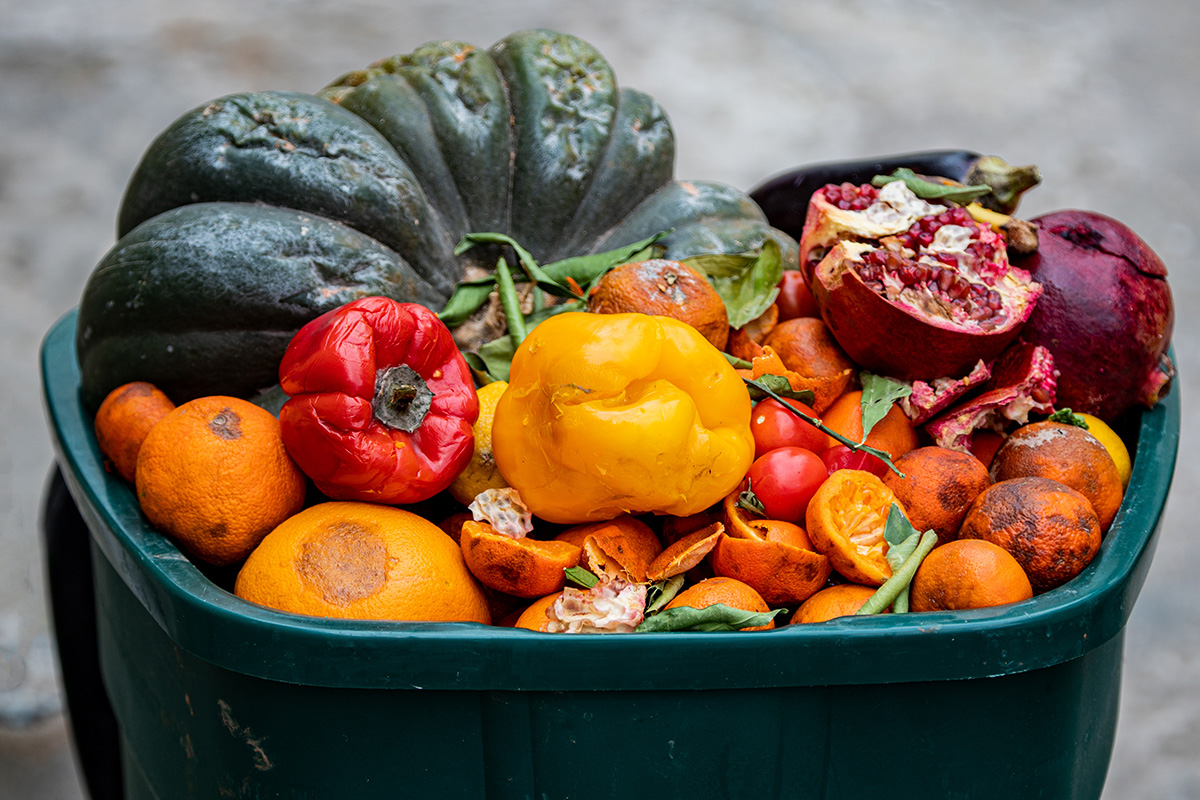
Wisconsin officials are laying out a broader push to cut food waste after a new state evaluation showed discarded food remains the largest single component of material going into municipal solid waste landfills.
During a Feb. 3 webinar, Wisconsin Department of Natural Resources (DNR) staff said the effort grew out of the state’s 2020-2021 waste characterization study, which found wasted food and food scraps together made up about 20% of landfill material by weight. The state has since set a goal of reducing per-capita food waste disposal in landfills by 50% by 2030, compared with 2020 levels.
Sarah Murray, recycling and solid waste section manager at the DNR, said the earlier landfill study forced the agency to take a closer look at food waste after showing organics made up nearly a third of the overall waste stream and food alone represented an unusually large share.
“This was a significant change from our previous waste characterization study about 10 years before that, and led us to really start looking more closely at this issue,” Murray said.
The Wisconsin Food Waste Evaluation, prepared by consulting firm HDR for the DNR, is intended to provide a baseline for future work while also identifying policy recommendations, infrastructure gaps and possible next steps for state agencies, local governments and businesses. Murray said the document should not be read simply as an internal DNR plan.
“We don’t consider this to be just a DNR report or report directing what the DNR will do,” she said. “It’s really a study meant to serve as a resource for anybody who’s interested in working on this issue in the state.”
The report estimates that more than 900,000 tons of food waste were disposed of in Wisconsin landfills in 2024, including about 652,000 tons of previously edible food and 270,000 tons of food scraps such as peels, bones and shells. It also cites ReFED estimates that Wisconsin generated about 3.07 million tons of food waste in 2023 across the broader supply chain.
Amanda Erickson, a solid waste planner with HDR, said the work was designed not just to quantify food waste but to examine where it is generated, where it goes and what practical options exist for keeping more of it out of landfills.
“Three quarters of that food could have been eaten,” Erickson said, referring to the estimated 854,000 tons of annual wasted food and food scraps highlighted in the presentation. “And finally, that goal, to reduce food waste to landfill also represents an opportunity to reduce the resources, time and money that are lost when food waste is sent to landfill.”
While manufacturing accounts for the largest share of overall food waste generation in Wisconsin, ReFED estimates that residential and food service sources account for most of the food waste that actually ends up in landfills. Residential sources account for 209,000 tons, or 47%, of food waste sent to landfill, while food service accounts for 182,000 tons, or 41%.
The study also found the state’s current diversion infrastructure is not sufficient to handle large additional volumes. Wisconsin has 286 licensed composting facilities, but only 30 are approved to accept food waste. It also has 122 anaerobic digestion facilities, including 37 that currently accept food waste. Existing facilities may be able to take on more material, the report said, but overall the state lacks the capacity needed to divert significant additional tonnage from landfills.
The report points to regional disparities as well, identifying the South Central, Southeast and Northeast regions as the areas where additional processing capacity would be most beneficial. It also notes that about 1,260 licensed solid waste haulers operate in the state, but only roughly 130 reported hauling food waste.
Animal feed and food donation remain significant parts of the conversation, though both face practical constraints. Erickson said edible food recovery remains the preferred option when it can be done safely.
“Food donation to people is the highest priority on that EPA scale, for a reason” she said. “ Getting food to people in need is the highest and best use for that material.”
The evaluation estimates about 72,300 tons of food were donated in Wisconsin in 2023, while about 295,000 tons went to animal feed. For now, officials said the next phase will focus on outreach, technical assistance, improved measurement and discussions with stakeholders about which recommendations should move first. Murray said the report is best viewed as a starting point.
“So there’s a lot of different recommendations in the report,” she said. “But it’s a really good starting point to say what priorities we’re going to tackle first.”