





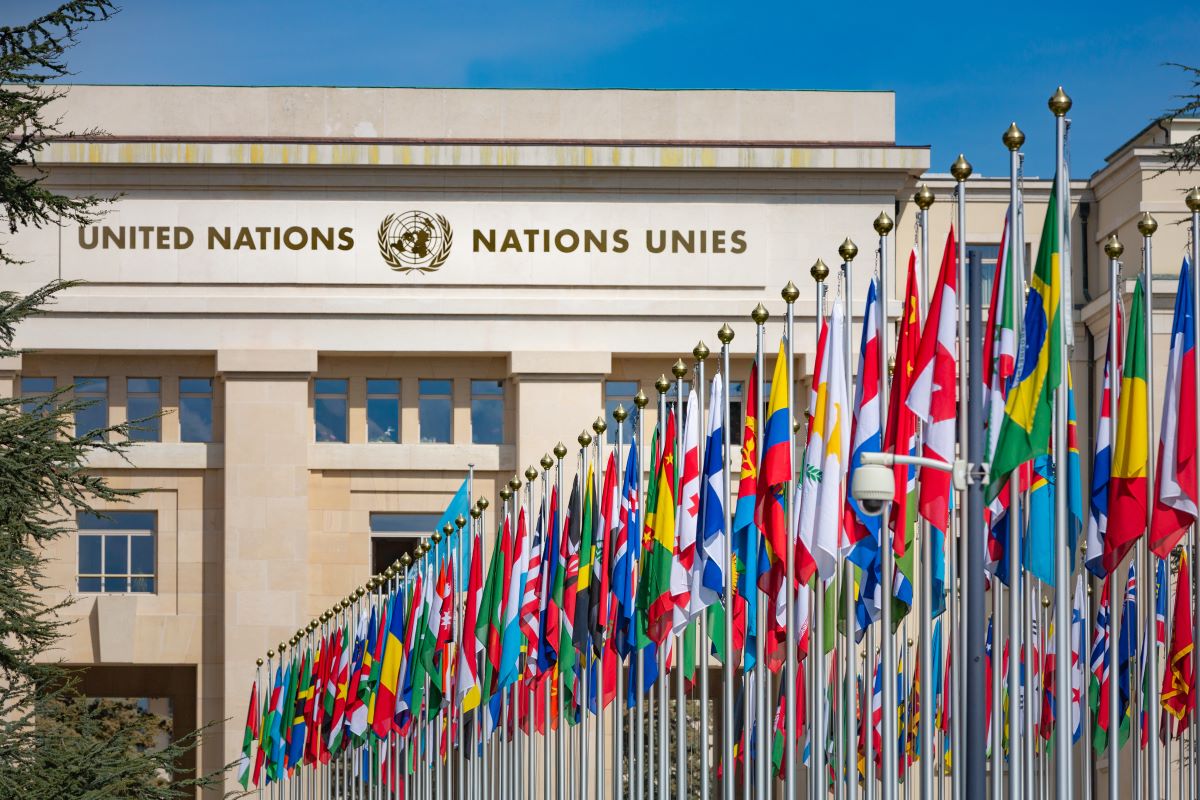
The first working draft of the United Nations’ global plastics agreement lays out the broad strokes of what is intended to be a legally binding way to manage plastic pollution on land and in the oceans.
Although the Sept 4. draft has several blank “placeholder” sections and many sections containing several versions of potential language, the text shows that the agreement may cover microplastics, chemicals, design for recyclability, reuse and refill systems, PCR, extended producer responsibility, labeling, fishing gear, environmental justice and innovation in non-plastic alternatives.
Known as a “zero draft text” because it is the starting point to build the international legally binding instrument on plastic pollution, the draft will be debated at the third session of the Intergovernmental Negotiating Committee (INC) in Nairobi, Kenya from Nov. 13-19.
In 2022, a vote on a U.N. resolution kicked off the process of creating the global agreement, with support from 175 nations. The goal was to craft a legally binding agreement by the end of 2024 that seeks to end the leakage of plastic waste into the environment by 2040.
The U.S. is involved in the process, as are various U.S.-based industry organizations. The second INC meeting was held in Paris in early June, which was when the members voted to create the draft.
Reactions to the first draft have been mixed, with Plastics News reporting that the Global Partners for Plastics Circularity, a group that represents plastics producers, was concerned about an “absence of options to accelerate and scale a circular economy for plastics.”
Meanwhile, the Break Free from Plastic coalition applauded the sections on plastic production reduction, elimination of polymers and chemicals of concern, elimination of short-lived plastics products, and targets for reuse. The coalition expressed concern, however, that language on recycled plastic content, extended producer responsibility and waste management were not ambitious enough.
Ocean Conservancy also noted that it was pleased to see its five key priorities and several of its policy recommendations in the draft text, but added in a press release that “if the UN and the world are serious about confronting the plastics pollution crisis, we must ensure that the strongest provisions are adopted.”
Many issues yet to be settled
Many parts of the draft are still placeholders, such as the preamble, definitions, principles, scope and final governing body.
“The text considers the fact that not all matters to be covered in the legal instrument have yet been the subject of detailed submissions and discussion by Members,” the draft explains. “As mandated by the committee at its second session, certain sections are identified in the draft text as placeholders and will need to be elaborated in light of such submissions and discussions.”
The draft presents multiple options under each section for the members to debate in November.
“The options presented underscore the importance of complementarity, coordination and cooperation within the international context, in particular with existing efforts that may cover some aspects related to plastic pollution,” the draft noted.
The objective of the document is to “protect human health and the environment from plastic pollution, including in the marine environment,” the draft stated. It also set out options to add to the end of that sentence, including “by ending plastic pollution,” “based on a comprehensive approach that addresses the full life cycle of plastic,” “through the prevention, progressive reduction and elimination of plastic pollution throughout the life cycle of plastic by 2040″ and “through managing both the utilization of plastics and plastic waste, while contributing to the achievement of sustainable development.”
Virgin and alternative materials
On the topic of virgin polymers, there were three options given to meet the goal of taking “the necessary measures to prevent and mitigate the potential for adverse impacts on human health or the environment from the production of primary plastic polymers, including their feedstocks and precursors.”
The first option is that each party “shall not allow its level of production and supply” to exceed a to-be-determined reduction target. The second option uses less binding language, stating that parties “shall manage and reduce the global production and supply of primary plastic polymers to achieve the global target.” The third option would direct parties to “take the necessary measures to manage and reduce the global production and supply of primary plastic polymers.”
Similarly, for chemicals and polymers of concern, the three options ranged from eliminating the use of the chemicals of concern to minimizing or regulating them.
Other categories with similarly worded options were problematic and avoidable plastic products, including short-lived and single-use plastic products; intentionally added microplastics; the reduction, reuse, refill and repair of plastics and plastic products; product design, composition and performance; the use of recycled plastic contents; extended producer responsibility; and waste management.
For alternative plastics, the draft gives two options: that parties ensure that alternative plastics and plastic products are “safe, environmentally sound and sustainable,” or that parties “encourage the development and use of safe, environmentally sound and sustainable alternative plastics and plastic products.”
The document also encourages the development of non-plastic substitutes.
Emissions and marine debris
The section on emissions and releases of plastic does not offer options, but instead notes that parties shall “prevent and eliminate the emissions and releases of plastic polymers, plastics, including microplastics and plastic products across their life cycle, to the environment.”
“Parties are encouraged to promote scientific and technical innovation to prevent and capture the releases of plastics and plastic products, including microplastics, into the marine environment,” the draft text reads.
A section on handling abandoned fishing gear also made its way into the first draft, as well as a directive for parties to identify and prioritize pollution “accumulation zones, hotspots and sectors,” including in the marine environment, and take “effective mitigation and remediation measures.”
The draft also includes export restrictions on certain chemicals, polymers and products and the transboundary movement of plastic waste, except for “safe and environmentally sound management, with the prior informed consent of the importing state.”
The just transition to a circular economy is also covered, with the draft suggesting ways to bring the informal collection sector into the fold, and requirements for labeling, tracking and monitoring plastics.
“Each party shall monitor and track the types and volumes of its production, imports and exports of chemicals and polymers used in the production of plastic polymers, plastics and plastic products, and regulated plastic products across their life cycle,” the draft notes, and “each party shall report the information collected.”
Under the draft, each country will have to develop and implement a national plan to meet the obligations of the eventual legally binding instrument.
The draft also suggested further development annexes to set baselines, targets and timelines; craft lists of polymers and chemicals of concern; and create design and EPR standards.
A version of this story appeared in Plastics Recycling Update on Sept. 6.