




Advertisement Header Ad
Resource Recycling
  • The Latest
  • Analysis
    • All
    • Certification Scorecard
    • Industry Announcements
    • Opinion

    Certification scorecard for Dec. 18, 2025

    Industry announcements for the week of Dec. 15

    Certification scorecard for December 10, 2025

    Industry Announcements for Week of December 8

    Certification Scorecard for December 3, 2025

    Industry Announcements for Week of December 1

    News from Dynamic Lifecycle Innovations, Precision E-Cycle

    News from Northeast Recycling Council, Plastipak and more

    News from Northeast Recycling Council, Sortera Technologies and more

  • Conferences
  • Publications

    Other Topics

    Textiles
    Organics
    Packaging
    Glass
    Brand Owners

    Metals
    Technology
    Research
    Markets
    Grant Watch

    All Topics

Subscribe
No Result
View All Result
Resource Recycling
  • The Latest
  • Analysis
    • All
    • Certification Scorecard
    • Industry Announcements
    • Opinion

    Certification scorecard for Dec. 18, 2025

    Industry announcements for the week of Dec. 15

    Certification scorecard for December 10, 2025

    Industry Announcements for Week of December 8

    Certification Scorecard for December 3, 2025

    Industry Announcements for Week of December 1

    News from Dynamic Lifecycle Innovations, Precision E-Cycle

    News from Northeast Recycling Council, Plastipak and more

    News from Northeast Recycling Council, Sortera Technologies and more

  • Conferences
  • Publications

    Other Topics

    Textiles
    Organics
    Packaging
    Glass
    Brand Owners

    Metals
    Technology
    Research
    Markets
    Grant Watch

    All Topics

Subscribe
No Result
View All Result
Resource Recycling
No Result
View All Result
Home Recycling

Study: Recycling accounts for tiny share of plastic’s total GHGs

byJared Paben
December 12, 2022
in Recycling
Share on XLinkedin
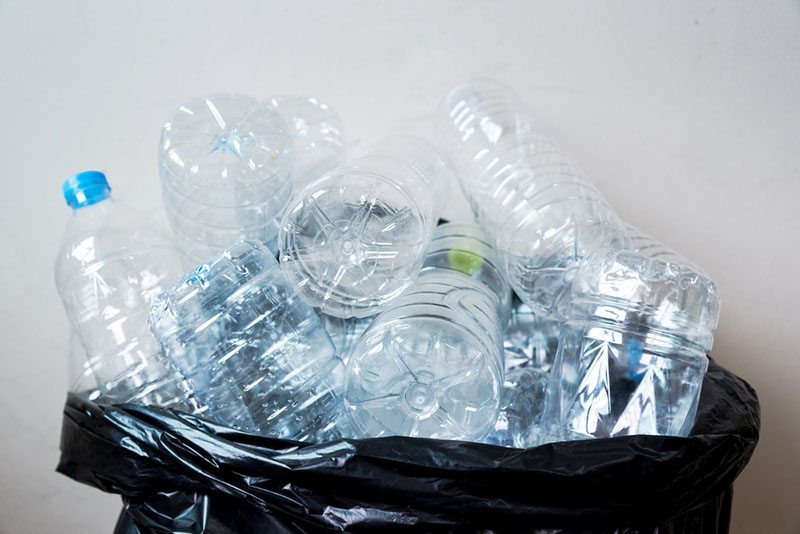
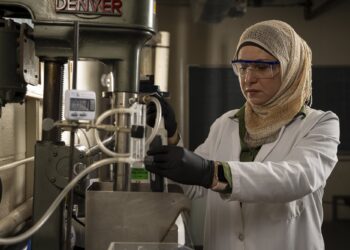
The REMADE Institute-funded research found that, over the course of their full life cycles, several common polymers account for about 1.5% of all U.S. greenhouse gas emissions. | rochariberio/Shuttestock

By the time plastic products reach their end of life, the bulk of their climate damage has already been done, according to a study that reaffirms greenhouse gasses tied to plastics are mostly generated in prime resin production, shipping and molding. 

The study, funded by the REMADE Institute, was recently published in the journal ACS Sustainable Chemistry & Engineering.

As the wider societal conversation about plastics continues to evolve, the material’s climate impact has been much-discussed, both in terms of harmful environmental impacts from production but also in regards to the energy and emissions benefits that can come from plastic use.

Stakeholders have also sought to compare the environmental impacts tied to different forms of end-of-life management. 

The REMADE-funded study focused on PET, HDPE, LDPE/LLDPE and PP in the U.S. It found that the full life cycles of those polymers accounted for about 100.6 million metric tons of carbon dioxide-equivalent emissions per year (the study used 2019 as a baseline year). That’s about 1.5% of total U.S. greenhouse gas (GHG) emissions. 

Of that 100.6 million metric tons of CO2-equivalent emissions, 58.0% came from virgin resin production, 29.3% came from semi-manufacturing processes (essentially extruding and molding the resin), 7.7% came from end-of-life management and 5.0% came from transportation within the U.S. 

Under the transportation category and compared to the whole, shipping resin generated 2.6% of total emissions, shipping semi-finished goods (such as extruded or molded products) generated 2.3%, and moving recycled resins around the country generated 0.1% of total plastic life cycle emissions. 

It should also be noted the study mentioned the impacts of marine and terrestrial plastic litter, but it focused on energy usage and GHG impacts.

The end-of-life details

According to the research, of the PET and polyolefin material generated in the end-of-life stream, 77% was landfilled, 16% was incinerated and 7% was recycled.

However, when assessing how much each of those end-of-life pathways contributed to plastics’ total emissions impact, incineration proved to have the heaviest hand.

In terms of the 100.6 million metric tons of plastics’ cumulative CO2 emissions, incineration with energy recovery accounted for 6.1%, mechanical recycling accounted for 1.0%, landfilling for 0.4% and collecting/sorting/baling accounted for 0.1%.

Waste-to-energy plants produce electricity, theoretically offsetting the need for more carbon-intensive power plants. 

But the study found that waste-to-energy contributed the most to GHG emissions even taking into account the electricity generated, likely because waste-to-energy plants have a low electrical conversion efficiency rate. 

On the landfill side, the study noted that though plastic is wasted as a potential recycled feedstock when it goes to the dump, it doesn’t contain biodegradable carbon. 

As a result, the landfill-related emissions tabulated in the research are associated with collecting and moving the waste to the landfill, as well as the operation of landfill equipment, not the result of the plastic breaking down over time.

All that being said, landfilled plastic can indirectly generate more GHG-equivalent emissions because it likely means greater virgin plastic production, which is where the bulk of climate-changing gasses originate, the study noted. 

“In our previous systems analysis model for PET bottles, we showed that landfilling plastics leads to sourcing of more fossil-derived virgin plastics, which results in higher GHG emissions,” according to the report. 

Circular economy doesn’t guarantee sustainability

The study touches on a topic of major debate in the U.S. right now: whether boosting recycling is the sole solution to reducing environmental impacts of plastics, or whether restricting virgin plastic production should be part of the equation. 

Democrats in Congress recently introduced a bill that would put a halt to plastic manufacturing plant construction, pointing to a variety of health and environmental impacts in plastic production. But the legislation drew an outcry from plastics industry stakeholders, who don’t want to see any limits on the production and sale of plastics and argue that the plastics bring GHG benefits that substitute materials don’t. 

For its part, the REMADE report argues that ensuring a more sustainable supply chain and beneficial economic and social outcomes means relying on a number of factors, including but not exclusive to recycling. 

“Many claims are made that the circular economy is a concept that holds great potential to decouple economic growth from environmental harm,” the document concludes. “However, a circular economy for plastics may not guarantee a more sustainable supply chain with lower impacts on the environment and beneficial economic and societal outcomes. The sustainability of a future circular economy for plastics in the United States will depend on the nature of the plastic material flows, the sources of raw materials for plastics production (whether fossil in origin or from biomass), and the processes that recover and recycle plastic resins at sufficient scale and quality.”

Contributing to the report were researchers from Michigan Technological University, Resource Recycling Systems (RRS), Yale University, Idaho National Laboratory, and Chemstations, Inc. 

The effort was funded by the REMADE Institute, a public-private partnership started by the U.S. Department of Energy and housed at the Rochester Institute of Technology in New York state.

A version of this story appeared in Plastics Recycling Update on December 6.
 

Tags: Research
Jared Paben

Jared Paben

Related Posts

Chemical bonds

Alberta catalyst discovery targets hydrogen and plastics

byScott Snowden
December 10, 2025

A chance discovery inside a University of Alberta laboratory has developed into a Canadian cleantech project that aims to reshape...

Global recycling patent trends may reflect legislative push

Global recycling patent trends may reflect legislative push

byAntoinette Smith
November 25, 2025

Patent applications for chemical recycling technologies have reached a record high globally with government initiatives among the factors driving innovation,...

Study maps barriers to firms’ supply chain climate goals

byAntoinette Smith
October 14, 2025

Publicly articulating clear sustainability goals helps ensure company follow-through, according to an annual supply chain study from the Massachusetts Institute...

US recycles 13.3% of packaging, Plastic Pact estimates

New report explores the future of CPG packaging goals

byAntoinette Smith
July 23, 2025

A new report from RaboResearch explores the factors behind brand owners' retreat from 2025 packaging recycled content goals – and...

Project brings rare earth recovery into e-scrap facility

Project brings rare earth recovery into e-scrap facility

byColin Staub
July 10, 2025

A pilot project is demonstrating a bolt-on modular system that could make it logistically and economically feasible for e-scrap processors...

RIT researchers develop AI-based textile recycling system

RIT researchers develop AI-based textile recycling system

byAndrew Hawthorne
July 2, 2025

Researchers at the Rochester Institute of Technology are developing a high-speed automated system to disassemble and recycle clothing.

Load More
Next Post

What to do to access new EPA grant funding

More Posts

The Re:Source Podcast Episode 1: E-Scrap look-back and 2026 outlook

The Re:Source Podcast Episode 1: E-Scrap look-back and 2026 outlook

November 21, 2025
ERI and ReElement partner on rare earth magnet recovery

ERI and ReElement partner on rare earth magnet recovery

November 26, 2025
Cyber risks confront ITAD work, contracts, coverage

Cyber risks confront ITAD work, contracts, coverage

November 26, 2025
Ohio start-up turns plastics into high-end furniture

Ohio start-up turns plastics into high-end furniture

November 24, 2025
WM adds PP and paper cups to curbside recycling lists

WM adds PP and paper cups to curbside recycling lists

November 24, 2025
Atlas acquisition boosts Circular Services’ organics reach

Atlas acquisition boosts Circular Services’ organics reach

November 24, 2025
Policy Now | December 2025 – Year-end nears, policy talks continue

Policy Now | December 2025 – Year-end nears, policy talks continue

December 1, 2025
WM rolling out curbside acceptance of PP cups 

WM rolling out curbside acceptance of PP cups 

November 25, 2025
Ohio startup creates end market for small challenging plastics

Ohio startup creates end market for small challenging plastics

November 25, 2025
Global recycling patent trends may reflect legislative push

Global recycling patent trends may reflect legislative push

November 25, 2025
Load More

About & Publications

About Us

Staff

Archive

Magazine

Work With Us

Advertise
Jobs
Contact
Terms and Privacy

Newsletter

Get the latest recycling news and analysis delivered to your inbox every week. Stay ahead on industry trends, policy updates, and insights from programs, processors, and innovators.

Subscribe

Welcome Back!

Login to your account below

Forgotten Password?

Retrieve your password

Please enter your username or email address to reset your password.

Log In

Add New Playlist

No Result
View All Result
  • The Latest
  • Analysis
  • Recycling
  • E-Scrap
  • Plastics
  • Conferences
    • E-Scrap Conference
    • Plastics Recycling Conference
    • Resource Recycling Conference
    • Textiles Recovery Summit
  • Magazine
  • About Us
  • Advertise
  • Archive
  • Jobs
  • Staff
Subscribe
This website uses cookies. By continuing to use this website you are giving consent to cookies being used. Visit our Privacy and Cookie Policy.