





Resource Recycling
  • The Latest
  • Analysis
    • All
    • Certification Scorecard
    • Industry Announcements
    • Opinion

    Certification scorecard – Week of March 23, 2026

    Certification Scorecard – Week of March 16, 2026

    Groups identify recovered plastics users in the Northeast

    Bale pricing for recycled plastics diverges

    Why global ITAD is stranded in the Gulf

    Why global ITAD is stranded in the Gulf

    Certification scorecard for the week of March 9, 2026

    Diversion Dynamics: Secondhand exports slow down fast fashion

    Certification scorecard for the week of March 2, 2026

    Industry announcements for January 2026

    Industry Announcements for March 2026

    HP receives ocean plastics certification

    HP Inc. earnings point to memory inflation challenge

  • Conferences
  • Publications

    Other Topics

    Textiles
    Organics
    Packaging
    Glass
    Brand Owners

    Metals
    Technology
    Research
    Markets
    Grant Watch

    All Topics

Subscribe
No Result
View All Result
Resource Recycling
  • The Latest
  • Analysis
    • All
    • Certification Scorecard
    • Industry Announcements
    • Opinion

    Certification scorecard – Week of March 23, 2026

    Certification Scorecard – Week of March 16, 2026

    Groups identify recovered plastics users in the Northeast

    Bale pricing for recycled plastics diverges

    Why global ITAD is stranded in the Gulf

    Why global ITAD is stranded in the Gulf

    Certification scorecard for the week of March 9, 2026

    Diversion Dynamics: Secondhand exports slow down fast fashion

    Certification scorecard for the week of March 2, 2026

    Industry announcements for January 2026

    Industry Announcements for March 2026

    HP receives ocean plastics certification

    HP Inc. earnings point to memory inflation challenge

  • Conferences
  • Publications

    Other Topics

    Textiles
    Organics
    Packaging
    Glass
    Brand Owners

    Metals
    Technology
    Research
    Markets
    Grant Watch

    All Topics

Subscribe
No Result
View All Result
Resource Recycling
No Result
View All Result
Home Recycling

National bottle bill likely to land in Congress soon

Marissa HeffernanbyMarissa Heffernan
February 8, 2022
in Recycling
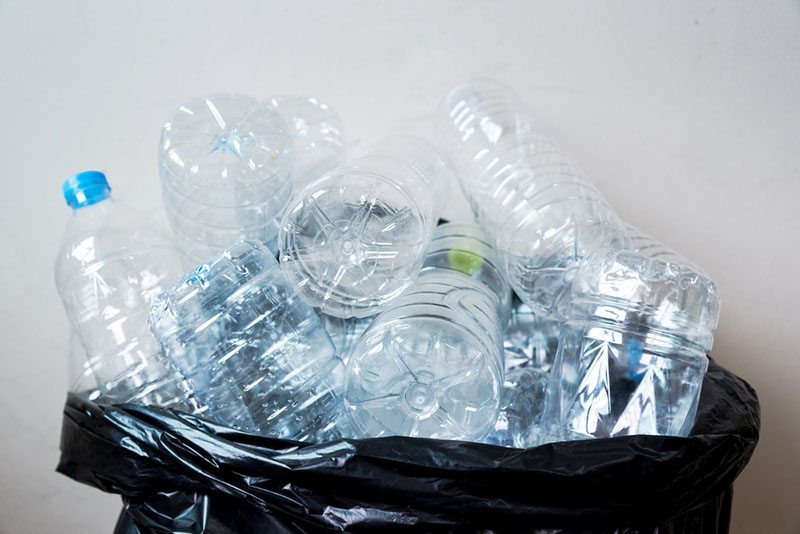
In the draft bill, deposits are set at at least 10 cents for containers under 24 fluid ounces and 15 cents for containers larger than that. | Veja/Shutterstock

West Coast lawmakers plan to introduce a national container deposit bill that one advocate says has a better chance of passing than past proposals because of wide “industry engagement.”

The draft bill, which was developed in large part by advocacy group Texans for Clean Water, would create a standardized bottle deposit system for the country. It would also require minimum recycled content percentages in certain plastic container types.

U.S. Rep. Alan Lowenthal and U.S. Sen. Jeff Merkley, both Democrats, plan to introduce the legislation by mid-March, though supporters are still working to get a bipartisan introduction. 

The bill language is still undergoing revision during bipartisan talks and is subject to change, according to Maia Corbitt, president of Texans for Clean Water and former head of the State of Texas Alliance for Recycling. 

“This language has a really good coalition of folks working on it – major environmental groups, like Greenpeace and the National Stewardship Action Council, the U.S. Public Interest Research Group – and more industry engagement than ever before,” she said. 

While the draft bill language was originally taken from the Break Free from Plastic Pollution Act, it has been changed to be more moderate and “very different,” Corbitt said, due to input from stakeholders nationwide as well as bipartisan collaboration. 

“It’s good news,” she said. “The big takeaway is that it’s now becoming probable and not just possible and that’s pretty good.” 

If passed, the bill would take effect Feb. 1, 2023, but Corbitt said that’s subject to negotiation, and there are other target dates for different provisions of the bill. 

Texans for Clean Water pushed for legislation in Texas last year that aimed to develop a deposit-like system for a range of plastic products in the Lone Star State.

National beverage container program 

The bill would cover beer, wine, liquor, carbonated soft drinks, coffee drinks, dairy products derived from animal milk, milk alternatives, energy and sports drinks, fruit juices, kombucha, tea and different types of water, such as flavored, mineral, soda and tonic waters. It would not include medications, infant formula or meal replacement liquids.

The bill also does not count using containers as fuel, energy production, building materials or landfill cover as “recycling,” nor any form of chemical recycling. Chemical recycling refers to processes that use heat, pressure and/or solvents to break down the molecular chains of plastic, creating chemicals that can be used to produce fuels, waxes or new plastics.

Corbitt said the chemical recycling language is a current sticking point in negotiations, as “there are certainly those who don’t want a blanket moratorium put in a bill before the technology has been borne out.” 

Containers collected through deposit systems are typically recycled mechanically, but with the expanded product list comes some items that may be sold in harder-to-recycle pouches or laminates, Corbitt said. 

Deposits are set at at least 10 cents for containers under 24 fluid ounces and 15 cents for containers larger than that. 

“The recycling preclusions for chemical recycling I think will be something that will continue to be negotiated, along with that product list,” Corbitt said, but she added that this is “closer than we’ve ever been.”  

Minimum-recycled-content targets

Corbitt said research from a variety of sources has shown that bottle bills work to both substantially reduce litter and increase recycling rates in the jurisdictions in which they are implemented. Strategies to bring more recycled material into the manufacturing pipeline are growing in importance as more brands set recycled-content targets.

“We’re looking at really needing to jump-start that capture and essentially bottle bills are the only things at this point proven to do that,” she said. 

To recycle the container, consumers should not be required to remove anything, such as a cap, label or filter, the proposed legislation reads. 

The bill also sets out minimum post-consumer resin (PCR) requirements for new plastic beverage containers, specifying that the PCR supplies must be in the U.S. The minimum starts at 25% by 2025, then 50% by 2030, 70% by 2035 and 80% by 2040.  

For refillable or reusable containers, the bill calls for a study to determine technical and safe minimum post-consumer requirements for glass, metal or other beverage containers, as well as minimum reuse and refill requirements. 

Corbitt said refillable containers are one of the larger sticking points that different parties are still negotiating. While environmental groups are pushing for this section to be included, Corbitt acknowledged that developing required infrastructure for refills would “be a heavy lift” for producers. 

Producer responsibility 

Under the bill, responsible parties would have to provide for the cleanup of beverage containers that become litter and use unredeemed deposits to invest in collection, recycling and reuse infrastructure in the state or region.

The bill calls for the creation of producer responsibility organizations (PROs) to carry out producers’ responsibilities. The organizations would be required to provide outreach and education to consumers on proper end-of-life management of containers, inform consumers of collection locations, and offer recycling instructions in multiple languages.

The PROs would also be required to provide 100% reimbursement to the entity managing the containers, including administrative costs, sorting and reprocessing, and to pay the entity that collects curbside recycling the value of the applicable refund value.

Allowing MRFs to recoup the redemption value of what goes through their facilities is an important part of the bill, Corbitt said.

An annual report is also required from the organizations with data on volumes, recycling rates, final destinations of containers, contamination levels and collection services.

Designing for the environment and labeling

The bill also includes a provision requiring containers to be designed to minimize environmental and health impacts and to have clear, honest labels about the container’s recyclability.

Two years after enactment, the bill would also bring into a play a standardized label for each category of container.

Corbitt said as more individual states eye bottle bills, a federal harmonization of the system is attractive to the industry.

Texans for Clean Water is working closely with Rep. Lowenthal of California and Sen. Merkley of Oregon. Bill backers are in the process of getting Republican support from federal lawmakers in several other states, Corbitt said.

Shred-Tech

Tags: Container DepositsEPRLegislation
TweetShare
Marissa Heffernan

Marissa Heffernan

Marissa Heffernan worked at Resource Recycling from January 2022 through June 2025, first as staff reporter and then as associate editor. Marissa Heffernan started working for Resource Recycling in January 2022 after spending several years as a reporter at a daily newspaper in Southwest Washington. After developing a special focus on recycling policy, they were also the editor of the monthly newsletter Policy Now.

Related Posts

Quebec PRO reflects on first year of packaging EPR

byAntoinette Smith
March 30, 2026

The province's all-packaging collection approach has simplified messaging while providing lessons for the PRO as well as for industry.

ag plastics field

Ag industry holds potential for recycling feedstock

byStefanie Valentic
March 24, 2026

With less than 15% of US agricultural plastics currently being recycled, insiders say the gap between what's possible and what's...

Traceability tools add recycled material trust

Industry coalition seeks injunction against California’s SB 343

byStefanie Valentic
March 19, 2026

A coalition of packaging producers, farmers, restaurants and grocers has filed a class action lawsuit seeking to block enforcement of...

EPR expanding beyond packaging into tougher waste streams

EPR expanding beyond packaging into tougher waste streams

byScott Snowden
March 19, 2026

Proposals beyond packaging include boat wrap, hazardous products and oil containers, though infrastructure gaps and unclear producer rules remain, panelists...

Minnesota EPR program advances in budget bill

AF&PA seeks injunction on Oregon EPR, defends paper recycling

byStefanie Valentic
March 17, 2026

AF&PA has filed for a temporary injunction on Oregon's Recycling Modernization Act, arguing the EPR law threatens an already high-performing...

Oregon state capitol building with state flag and blue sky.

Oregon opens comment on updated REM plan

byStefanie Valentic
March 16, 2026

The revised responsible end market plan from Circular Action Alliance aims to accelerate EPR implementation with a nationally scalable end-market...

Load More
Next Post

News from Braskem, Octal Holding and more

More Posts

Mexican Coke bottler to invest $1bn in ops this year

Mexican Coke bottler to invest $1bn in ops this year

March 25, 2026
Envela reports stronger Q3 ITAD revenues

Top 5 reasons for the rise of US e-scrap recycling

March 23, 2026
Unilever shifting focus to flexibles targets

Unilever shifting focus to flexibles targets

March 23, 2026

AMP raises $91 million to push AMP ONE ahead

December 10, 2024
Closeup of Trex composite flooring installed in a restaurant.

Trex gears up for new plastic board plant

March 24, 2026
L-R: Koichiro Nishimura, CEO of ERI Japan and Manager, ITOCHU; John Shegerian, Chairman & CEO of ERI; and Daisuke Inoue, Deputy General Manager, ITOCHU, celebrate the announcement of ERI Japan.

ERI enters Japan through joint venture with Itochu

March 24, 2026

Quebec PRO reflects on first year of packaging EPR

March 30, 2026
Groups identify recovered plastics users in the Northeast

Bale pricing for recycled plastics diverges

March 17, 2026
#ESC2025 Speaker Spotlight: Matthew Young

From bootstrap to boom: EVR poised for growth after capital injection

March 26, 2026

Canada backs pH7 expansion with up to $3 million

March 25, 2026
Load More

About & Publications

About Us

Staff

Archive

Magazine

Work With Us

Advertise
Jobs
Contact
Terms and Privacy

Newsletter

Get the latest recycling news and analysis delivered to your inbox every week. Stay ahead on industry trends, policy updates, and insights from programs, processors, and innovators.

Subscribe

Welcome Back!

Login to your account below

Forgotten Password?

Retrieve your password

Please enter your username or email address to reset your password.

Log In

Add New Playlist

No Result
View All Result
  • The Latest
  • Analysis
  • Recycling
  • E-Scrap
  • Plastics
  • Policy Now
  • Conferences
    • E-Scrap Conference
    • Plastics Recycling Conference
    • Resource Recycling Conference
    • Textiles Recovery Summit
  • Magazine
  • About Us
  • Advertise
  • Archive
  • Jobs
  • Staff
Subscribe
This website uses cookies. By continuing to use this website you are giving consent to cookies being used. Visit our Privacy and Cookie Policy.