













This article appeared in the January 2019 issue of Resource Recycling. Subscribe today for access to all print content.
The following is an excerpt from James McSweeney’s book “Community-Scale Composting Systems: A Comprehensive Practical Guide for Closing the Food System Loop and Solving Our Waste Crisis” (Chelsea Green Publishing, February 1, 2019) and is reprinted with permission from the publisher.
Inevitably most compost operations are faced with certain inputs that they are not sure how or if they should accept and manage. Knowing how to interpret the character of compost feedstocks gives you many tools in assessing variability in common materials like manures or leaves.
Overwhelmingly, these are the same tools needed to assess the unique or challenging materials that will inevitably be coming your way. Challenging materials might include common feedstocks like meat and dairy, paper products, and, more recently, compostable service ware. But the possibilities are really endless, from apple pomace to zoo manures.
All of these materials can be properly composted, and at times there are benefits to accepting some more challenging products. First and foremost, accepting a wider range of materials from food scrap generators increases the potential diversion in your region and the types of generators you can service.
There are also potential drawbacks. As a composter, you have the final say about what comes into your operation. You are the “gatekeeper of the soil,” so to speak, and many composters take that job very seriously. You’ll need to work with the generators and/or haulers to let them know about what is acceptable to you, so that you avoid needing to reject unacceptable material that comes to the site. Watch out for materials in the compostable gray area such as paper cups, which are sometimes coated with polyethylene. Similarly, not every compost operation can process compostable plastic clamshells or utensils, so make sure the generator and the hauler are aware of your specifications.
In general, when handling a potentially challenging ingredient such as fish waste or ice cream, dilution is the solution. If a challenging material will overwhelm the system, or throw it off balance, it might not be a good fit. Special accommodations can often be made, but these typically come at a cost. Contaminants such as trash are better avoided altogether, as are persistent chemicals, inorganic materials like rocks, or large particles like whole logs that would take years or expensive equipment to break down.
Meat, dairy and eggs
Can meat, dairy, and eggs be composted? Absolutely, and composters large and small do it around the world. Perhaps the better question is: Should you compost them? The fact is that many small composters avoid meat and dairy as a risk reduction measure, and I can’t fault them for it.
But most collection programs will accept all food scraps, so composting animal products is in some ways the benchmark of a system’s capacity and versatility. The goal of most food scrap generators is to divert all of their material, which has added benefits: First, it makes source separation easy – all food can be composted, so less education is required; and, second, it reduces odors from the trash by getting the worst materials out of the waste stream.
So why do some composters avoid these materials? Meat, dairy and eggs are high in protein, which means that when they are composted, they can generate some very offensive odors if the process is not managed properly. Odors attract animals and other vectors. In essence, composting meat, dairy and other forms of animal protein increases the risk of issues, which is the main reason why most information about backyard and home composting advises people to leave these materials out of the pile. Following a proper recipe and employing other best management practices controls and breaks down odors.
Animal proteins are also more likely to contain human pathogens than are other types of food scraps, which is why heat-treating all portions of compost at 131 degrees Fahrenheit or warmer for at least three days is an important best management practice. Luckily, active composting can easily reach that temperature without any external heating process. Making sure that the compost is fully mature is also critical in reducing potential pathogens.
While there is absolutely nothing wrong with avoiding animal proteins, they can be successfully composted on a small scale. I’ve worked with numerous schools that use insulated and hardware cloth secured bins to compost 100 percent of the food scraps they generate. If you still have any doubt, consider that many farms effectively compost whole cows, which is considered preferable to other disposal methods. In fact, some of the richest compost I’ve ever seen was made from cow mortalities. For sites that manage the compost process less than optimally, avoiding meat and dairy is probably good advice, but it’s not an answer to controlling odors and vectors in itself. Simply avoiding animal proteins by no means alleviates the risk of issues; best management practices are critical with or without meat and dairy.
Paper products
Many paper products are an easily compostable carbon input. And there aren’t a lot of other materials with reported carbon-to-nitrogen ratios in the 400:1 to 850:1 range and moisture of 8 percent or more that also have a lot of surface area and are usually free to acquire (apart from perhaps the cost of collection). Glossy paper should be avoided as well as any mixed paper. Shredded office paper, with the exception of envelopes with plastic windows, is an excellent material. When pondering what to accept, a good question to ask yourself is, “Would I use this as a mulch in my garden?”
Relying on paper too heavily could impact the quality of the process as well as the end product. Some on-site composting systems avoid paper from cafeterias altogether, because it overwhelms the food scraps in terms of volume, throwing off the recipe. But if you keep the ratio of paper to other materials low, it disappears incredibly quickly. Some people who collect compost at home and then bring it to a residential drop-off point like to keep it in a paper bag. By accepting brown paper bags, you can accommodate participants who would prefer this practice.
Compostable plastics and service ware
A growing number of businesses and institutions use compostable foodservice ware. That growth has spawned an increasingly diverse range of compostable products, from silverware to coffee cups to single-use coffee pods. There are so many options, in fact, that being a food scrap composter today means having a policy about what in this realm, if anything, is acceptable to your operation. Most commonly, these products include a range of paper and compostable or biodegradable plastics. In addition, there are products that span the range from minimally processed plant-based products, like pressed leaf plates and bamboo forks, to purportedly compostable aluminum silverware.
Compostable plastics (such as polylactic acid, PLA) are polymers that should break down under proper composting conditions. They are typically derived from plants such as corn. Many food scrap collection programs utilize compostable plastic bags, which can help encourage participation and address the “ick” factor by creating a barrier between the food scraps and the compost bucket or tote. Other programs want to service generators who use compostable foodservice ware such as compostable plastic cups and silverware.
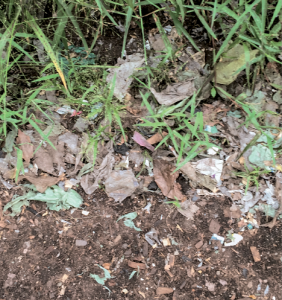
There are a range of challenges associated with compostable plastics, but manufacturers are getting better at making them actually compostable, so 10 years from now the world of compostable plastics will likely look very different. Currently, many composters find that the conditions they can achieve in their composting process do not adequately break down all of the plastics. If you require a compost system that has this capability and are looking for a commercially available system, this should be one of the first questions you ask a manufacturer. Accept only “compostable” (ASTM D6400 or D6868) products, which is the current industry standard.
Another challenge is that a compostable plastic fork can be difficult to distinguish from a petroleum-based plastic fork, making it hard to identify contamination. If the fork doesn’t break down, it might then get screened out, which defeats the intent of composting if the overs are then discarded.
Composters in some cities are working with foodservice establishments to use only certified or third-party-approved compostable ware. (This can work well, especially in closed venues such as sports stadiums.) Other composters prefer not to accept them, treating these products as contaminants, which simplifies the process of educating generators.
Currently, organic agriculture regulation in the United States considers compostable plastics a synthetic. Not all regulating bodies have publicly adopted the recommendation from the National Organic Standards Board that these be on the list of restricted-use products, which has caused some confusion in the industry, but based on recent conversations with organic certifiers, it appears that compost approved for use on organic farms should not contain non-incidental compostable plastics unless your certifier tells you otherwise.
If you choose to accept compostable plastics, expect to deal with a learning curve. Keep these products at the core of your pile to better allow them to break down. Remember that many people view them as “trash”; avoid letting these products spread around the compost site, as this will give visitors the wrong impression. Also, make sure that organic farmers know that your product contains PLA, as they could put their organic certification at risk by using a restricted product.
Avoiding and managing contamination
When non-organic materials make their way into compost feedstocks, it’s called contamination. Unfortunately, contaminants are one of the challenges that most composters have to contend with at one time or another. Some contaminants are just added work to deal with, like rocks in a manure pile. Other contaminants, such as certain persistent herbicides, are an outright threat to plants.
One vital step in assessing a feedstock for use at your operation is to consider potential contamination sources and the cost or risk they might add for the operation. Problems can arrive through numerous and sometimes unexpected pathways, so take your time, do your research, and work to build a relationship of trust with the generator so that there can be ongoing communication about contamination.
Ultimately it’s up to each operation to decide:
- What if any contamination is acceptable.
- What preventive measures and generator/hauler education are necessary.
- What the strategy will be to remove any contaminants and ensure a clean and safe product and work space.
Generally contaminants fall into two categories, physical and chemical.
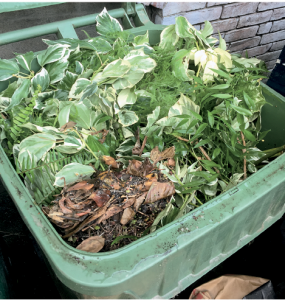
Unlike chemical contaminants, physical contaminants are primarily inert, meaning they don’t decompose and won’t interact chemically with the compost, soil or plants. In most cases these materials are visible to the naked eye (trash, rocks and large sticks, for example) and can be picked out by hand or screened out. However, physical contamination might also include particles as small as sand or plastic nano-particles, for which there is no practical method of removal.
There are costs associated with removal of contaminants that can be picked or screened out. For large sites, these can be considerable. Screeners for removal of trash and oversized particles can be helpful. Prevention is the best long-term strategy, although most operations need to anticipate removal of some physical contamination. In particular, contamination in poorly separated food scraps can pose a significant challenge. Training and education of food scrap generators to prevent contamination through source separation is a topic unto itself (and is covered in a later chapter of the book).
Although perhaps less costly on a frequent basis than physical contaminants, chemical contaminants are a concern that composters must also take seriously. Because they are not visible to the naked eye, wayward chemicals might find their way into a compost pile completely unbeknownst to the operator or end user. That chemical will then make its way into the soil, which is at best an unfortunate breach of trust between the maker and end user, and at worst might harm or kill someone’s garden. Therefore, you must take adequate precautions to identify and prevent sources of chemical contamination.
There are a number of potential pathways for contamination to occur, including something as simple as a gas spill or blown hydraulic hose.
Operations should have spill protocols in place and remove any contaminated material immediately. More challenging to deal with is contamination that comes in the organics. These chemicals might be several times removed from the generator source itself, as is the case with most persistent herbicides.
Part of the challenge with chemical contaminants is in knowing what is and isn’t acceptable. It could in fact be argued that composting is a good way to remediate many chemical agents and render them inert. While I personally fall on the side of using natural versus synthesized products, particularly when it comes to foods and land management, there should be no illusions about the fact that compost feedstocks may contain all manner of synthetic substances. It’s the back end of a “better living through chemistry” food system, and as have organic food producers, composters have had to make trade-offs about the purity of what goes into the soil. Recycling manures from conventional farms, for example, often involves handling synthetic products. Yet many organic farms would struggle to meet the nutrient demands of their crops without conventional manures, and composters would be severely limited as well.
Food scraps are no different; all of the weird things that we do to our food eventually have repercussions at our compost sites. While most of us would like purity in our feedstock, that first involves greater purity in the systems used to produce the foods that we eat. Maybe closing the food-soil loop will be a catalyst for this kind of change. Until then, we’ll be faced with the choice of what is and is not acceptable for composting.
James McSweeney is an educator and a leading provider of community-scale composting solutions. With a background in agroecology and permaculture, restoring ecological integrity to our local farm and food systems is at the heart of his work. McSweeney is the author of “Community-Scale Composting Systems: A Comprehensive Practical Guide for Closing the Food System Loop and Solving Our Waste Crisis” (Chelsea Green Publishing, February 2019).