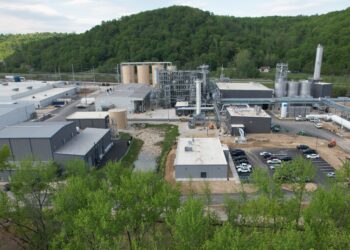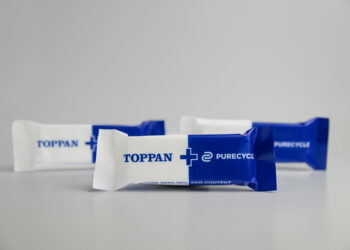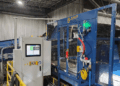














Ohio-based polypropylene recycler PureCycle will receive a €40 million grant ($46 million) toward construction of its Belgium dissolution recycling plant, from the European Climate, Infrastructure and Environment Executive Agency (CINEA).
The Antwerp dissolution recycling plant is scheduled for mechanical completion toward the end of 2028, with ramp-up to full capacity the following year.
“This should position us to serve customers that need a solution like PureCycle’s ahead of the PPWR recycled content obligations taking effect in 2030,” the company told Plastics Recycling Update, referring to the EU’s sweeping Packaging and Packaging Waste Regulation.
The PureCycle project is known as ASTRA PP – Advanced Solvent-based Technology for Recycling in Antwerp for Polypropylene.
Total investment for the plant is more than €250 million ($288 million), funded through a combination of equity and debt. “This grant represents a meaningful share of the equity component and is a very welcome contribution to the project’s financing structure,” the company said.
In addition to signing the grant agreement, PureCycle has applied for Flemish regional support for additional project funding. The grant money will be issued in various stages, PureCycle said.
The company plans to submit its permit application this year, and obtain approval, as well as complete project funding and financial close, with construction expected to start in 2027.
The grant funding also has indirect benefits for the sister plant planned for Rayong, Thailand. “The European Innovation Fund grant comes with an EU STEP Seal, a formal recognition of project excellence, which helps build credibility and trust with stakeholders across Asia,” the company said.
Last month PureCycle said the Thailand plant was on track for mechanical completion in 2027, and groundbreaking is expected in the second half of this year. So far nine feedstock letters of intent have been signed, exceeding the capacity for the first production line.
Progress on the company’s other US plant, planned for Augusta, Georgia, still hinges on refinement of the so-called Gen 2 dissolution recycling technology, which offers scaled-up production capacity from the current iteration, CEO Dustin Olson said during a late February investor call.
Olson said construction costs per pound of capacity would be $1.25 to $1.50, versus $3.50 for the smaller Ironton plant. This would make the cash costs, including labor, for recycled PP lower than on-purpose virgin production, he said, adding that variable costs don’t increase linearly.
“We’re going to be able to build a facility that’s nearing virgin-level worker cost,” he said. “That’s the lowest cost of PP in the world.” He speculated that as global demand for PP increases, this dynamic could make a PureCycle facility a more efficient use of capital than a virgin resin plant, producing virgin-quality resin for a lower price and with lower energy use and emissions.
A developing global regulatory landscape
New US and EU regulations are of particular interest for PureCycle, especially how the laws determine how different recycling technologies fit into the emerging landscape. In addition, the Covid pandemic and geopolitical conflicts that affected supply of energy as well as raw materials have spurred governments to shore up more regional infrastructure.
During a Roth Capital conference fireside chat on March 23, Olson said one long-term tailwind for PureCycle is the move especially in Europe to prioritize local supply of post-consumer plastics. “We can drop our facilities all around the world and have a nationalized, focused facility for their nation that reduces their dependency on others.”
In the US, some of the emerging state-level legislation does not include chemically recycled plastics in accounting for recycled content, and PureCycle is aiming to help lawmakers understand the difference between dissolution recycling and chemical processes such as pyrolysis.
New Jersey has been a particular focus, as the state works to determine how to classify non-mechanical recycling processes, to complement its 2024 implementation of minimum recycled content mandates.
Olson has been in talks with the New Jersey governor’s office, emphasizing the difference between physical processes like PureCycle’s dissolution recycling, which is a plastic-to-plastic technology, while chemical processes are not.
“Ours got lumped into chemical recycling, not into physical recycling,” Olson said. He added that much of the terminology has evolved over the past few years, “and so even calling your technology the right thing is important” both for crafting appropriate regulations and for commercializing the output.
Chemical recycling processes change the molecular structure of a polymer. Solvent-based methods like PureCycle’s separate polymers from additives and contaminants, and have lower emissions and energy requirements, but maintain the polymer structure.
However, Olson noted that “most states are starting to adopt APR certification as the gating item to being accepted, and we have that certification.” In August 2025, PureCycle’s PureFive resin was recognized with certification from the Association of Plastic Recyclers (APR), serving as verification that the company’s primary grade of PP was made using post-consumer plastics.
APR owns Resource Recycling, Inc., publisher of Plastics Recycling Update.