









Plastics recycling works — when the system works with it.
That’s not a slogan. It’s a reality backed by data and by decades of experience from the companies and communities that make up the plastics recycling value chain.
Here’s the good news: The infrastructure to recycle plastic packaging in the U.S. and Canada is strong. In fact, mechanical recyclers across North America have the capacity right now to recycle significantly more plastic than we currently do. If we got more material into the system — and if companies were willing to consistently buy recycled content — we could drastically accelerate progress toward a circular economy for plastics.
The Myth of Capacity Shortage
There’s a persistent narrative that plastics recycling is limited by a lack of infrastructure or technical capability. That’s simply not true.
Mechanical recyclers have ample built capacity – sortation lines, conveyor belts, grinding, washing, pelletizing, and other capital equipment today – across all major resin types to produce more recycled plastic and reduce reliance on virgin plastic. These are the facilities that buy and process recyclable plastics from local community programs across the U.S. and Canada.
A recent survey of over 85 plastic reclaimers in the U.S. and Canada found ample excess capacity across nearly every resin type from PET and HDPE to polypropylene and film. If reclaimers had more material and consistent demand, they could collectively process 2 billion more pounds of plastic every year.
This additional 2 billion pounds would come on top of the 5 billion pounds U.S. reclaimers are already recycling annually (per the latest industry numbers in 2022). Processing 7 billion pounds of plastic for recycling annually would be the equivalent of keeping a total of 479 fully loaded 18-wheeler truckloads of plastic out of landfills every single day.
Economics Are the Bottleneck
So, let’s be clear: This is not a capacity issue. It’s an economic issue.
The data demonstrate that plastics reclaimers have the capacity to supply more recycled plastics to consumer goods companies, but only if there is stronger, sustained demand for this material.
We’ve heard a lot of ambitious goals from the corporate sector in recent years — bold targets for recycled content, circular packaging pledges, zero waste to landfill declarations. But we’ve also seen a lot of those promises rolled back recently (see RR coverage here). None of these goals or promises means anything without financial commitment. If brands want recycled content to be available and scalable, they need to invest in its future.
When brand companies and manufacturers choose to use low-cost virgin plastic instead of recycled material, they undercut the entire recycling ecosystem. Without companies willing to invest in recycled material at a fair price, recycling facilities can’t run at full potential, valuable recycling capacity goes unused, and the industry’s growth stalls.
One solution is clear, enforceable policy. A 2024 study from the University of California, Berkeley, found that the single most impactful action policymakers can take to reduce plastic pollution is to require the use of recycled plastics in the production of new products. These types of mandates work because they create guaranteed markets for recycled plastic, support stable pricing, and send a strong signal to the entire value chain that recycled content is not optional — it’s essential. Currently, five U.S. states mandate recycled content for some types of plastics, but much, much more work is needed. See the U.S. progress to date here.
Other systemic changes can also help align the economics of recycling with sustainability goals. The U.S. Plastics Pact’s April 2025 report, “Overcoming Barriers to Increasing PCR Use in the U.S.,” highlights several policy levers to better align the economics of recycling with sustainability goals, including extended producer responsibility (EPR), deposit return systems (DRS), and measures to discourage reliance on virgin plastics. Together, these policies can help ensure the recycling industry’s existing excess capacity is put to use and that PCR use grows across U.S. manufacturing.
Support Domestic Recyclers, Not Just the Idea of Recycling
Another critical piece is making sure the benefits of a robust recycling chain stay here at home. Too often, when companies report on their sustainability progress, they focus on how much PCR they use, but not where it came from. But that matters. Buying imported PCR may check a reporting box, but it does not build a circular economy at home. It does not create jobs in U.S. communities, or support the recyclers who are building the infrastructure we need to meet long-term demand. In fact, it directly undermines U.S. recyclers — if U.S. recyclers cannot sell their materials, they will be forced to close their businesses, and then MRFs will have no domestic buyers for your community programs. This isn’t just a potential threat — plastics recyclers today are losing contracts and having to close or decrease operations because consumer goods companies are choosing to buy recycled plastic priced below market value from Vietnam or Thailand instead of U.S. recyclers. Read more about how imports are at an all time high and how this is threatening North American businesses.
The reality is that imported PCR often comes from markets with limited oversight, inconsistent quality, and few guarantees about social or environmental responsibility. Relying on imports undermines the very recyclers that brands will need if they hope to scale domestic recycled content in the years ahead.

Supporting North American recyclers requires ensuring the reliability, traceability, and resilience of the entire system. At a time when global supply chains are increasingly volatile, domestic PCR offers a stable, circular, and lower-carbon solution.
Collection Must Catch Up
While market demand is a primary barrier to increasing plastics recycling, we cannot overlook the supply side. Even with plastics reclaimers ready and able to process more material, much of that material never makes it into the recycling system in the first place. To recycle more, we also need to collect more — and collect it better. Data from The Recycling Partnership shows U.S. households throw away over 70% of recyclable plastic bottles.
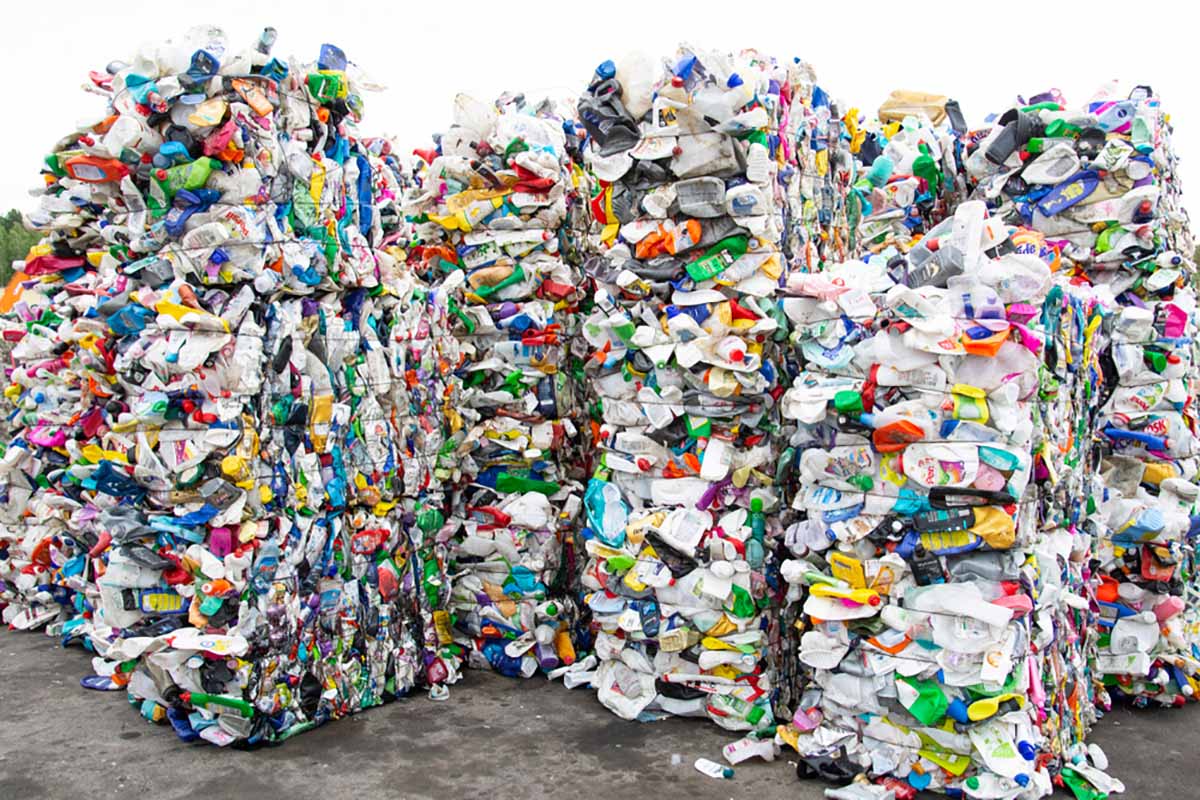
For example, the recycling rate of PET water and soda bottles — the most common type of plastic accepted in curbside recycling programs — could improve by more than 30% using the plastic recycling infrastructure already operating in the U.S. and Canada, if more of those bottles were simply put in the recycling bin at homes and businesses.
And that’s just one example. If plastic reclaimers were able to run at full capacity, we could increase the volume of plastics recycled across PET, HDPE, PP, and film by substantial percentages — gains that are entirely achievable with better upstream participation and policy support.
To address this problem, we need local programs that accept more plastics, consistent messaging to reduce consumer confusion and increase participation in recycling programs, and better design for recyclability standards so that once a package is collected, it can actually be recycled effectively.
We also need smart federal policy. One promising policy to help make that happen is the CIRCLE Act — the Cultivating Investment in Recycling and Circular Local Economies Act. This bipartisan bill, introduced in July 2025 by Reps. Tom Suozzi (D-NY) and Brian Fitzpatrick (R-PA), would provide a 30% investment tax credit, phased in over 10 years, for qualified recycling infrastructure investments, with municipalities receiving equivalent rebates. By supporting upgrades to collection, processing, and sortation, the CIRCLE Act would help ensure that reclaimers can run closer to full capacity, while keeping more valuable material in domestic supply chains.
Economists and industry groups project that the Act could unlock more than $30 billion in economic benefits, generate up to 200,000 new jobs, return 169 million tons of recyclable materials to domestic markets, and save taxpayers nearly $9.5 billion in avoided disposal costs.
The more material we get into the system, the more we can recycle, and the more recycled content we can provide to companies who are ready to buy.
Stop Making Excuses. Start Taking Action.
There are no more excuses for why plastics recycling isn’t working better. The capacity is there. The recyclers are ready. What we need now is the real commitment — from policymakers, brands, and consumers.
Policymakers must advance legislation that supports products designed for recycling, invests in convenient recycling collection for all North American homes and businesses, supports economic changes that internalize the true cost of waste, and encourages recycled content from North America. Brand owners must stop looking for the cheapest possible resin and instead recognize PCR as a strategic material essential to long-term sustainability. And consumers must play their part because every bottle, tub, or container put in the recycling bin is a chance to turn waste into new value.
Plastics recycling is not theoretical. It’s not an experiment. It’s a proven solution that’s working right now — and with the right support, it can do even more as an essential part of a comprehensive global strategy to reduce plastic pollution and waste.
We have the capacity. Let’s put it to use.
Steve Alexander is president of the Association of Plastics Recyclers (APR). APR owns Resource Recycling, Inc., publisher of Plastics Recycling Update.