





Resource Recycling
  • The Latest
  • Analysis
    • All
    • Certification Scorecard
    • Industry Announcements
    • Opinion

    Certification Scorecard — Week of April 6, 2026

    Closed Loop Partners acquires Sutter Metals, connecting electronics disposition to metals recovery

    Certification Scorecard — Week of March 30, 2026

    Industry announcements for January 2026

    Industry announcements for April 2026

    Certification scorecard – Week of March 23, 2026

    Certification Scorecard – Week of March 16, 2026

    Groups identify recovered plastics users in the Northeast

    Bale pricing for recycled plastics diverges

    Why global ITAD is stranded in the Gulf

    Why global ITAD is stranded in the Gulf

    Certification scorecard for the week of March 9, 2026

  • Conferences
  • Publications

    Other Topics

    Textiles
    Organics
    Packaging
    Glass
    Brand Owners

    Metals
    Technology
    Research
    Markets
    Grant Watch

    All Topics

Subscribe
No Result
View All Result
Resource Recycling
  • The Latest
  • Analysis
    • All
    • Certification Scorecard
    • Industry Announcements
    • Opinion

    Certification Scorecard — Week of April 6, 2026

    Closed Loop Partners acquires Sutter Metals, connecting electronics disposition to metals recovery

    Certification Scorecard — Week of March 30, 2026

    Industry announcements for January 2026

    Industry announcements for April 2026

    Certification scorecard – Week of March 23, 2026

    Certification Scorecard – Week of March 16, 2026

    Groups identify recovered plastics users in the Northeast

    Bale pricing for recycled plastics diverges

    Why global ITAD is stranded in the Gulf

    Why global ITAD is stranded in the Gulf

    Certification scorecard for the week of March 9, 2026

  • Conferences
  • Publications

    Other Topics

    Textiles
    Organics
    Packaging
    Glass
    Brand Owners

    Metals
    Technology
    Research
    Markets
    Grant Watch

    All Topics

Subscribe
No Result
View All Result
Resource Recycling
No Result
View All Result
Home Plastics

Plywood-alternative producer targets post-industrial PP

Colin StaubbyColin Staub
March 12, 2025
in Plastics
Plywood-alternative producer targets post-industrial PP
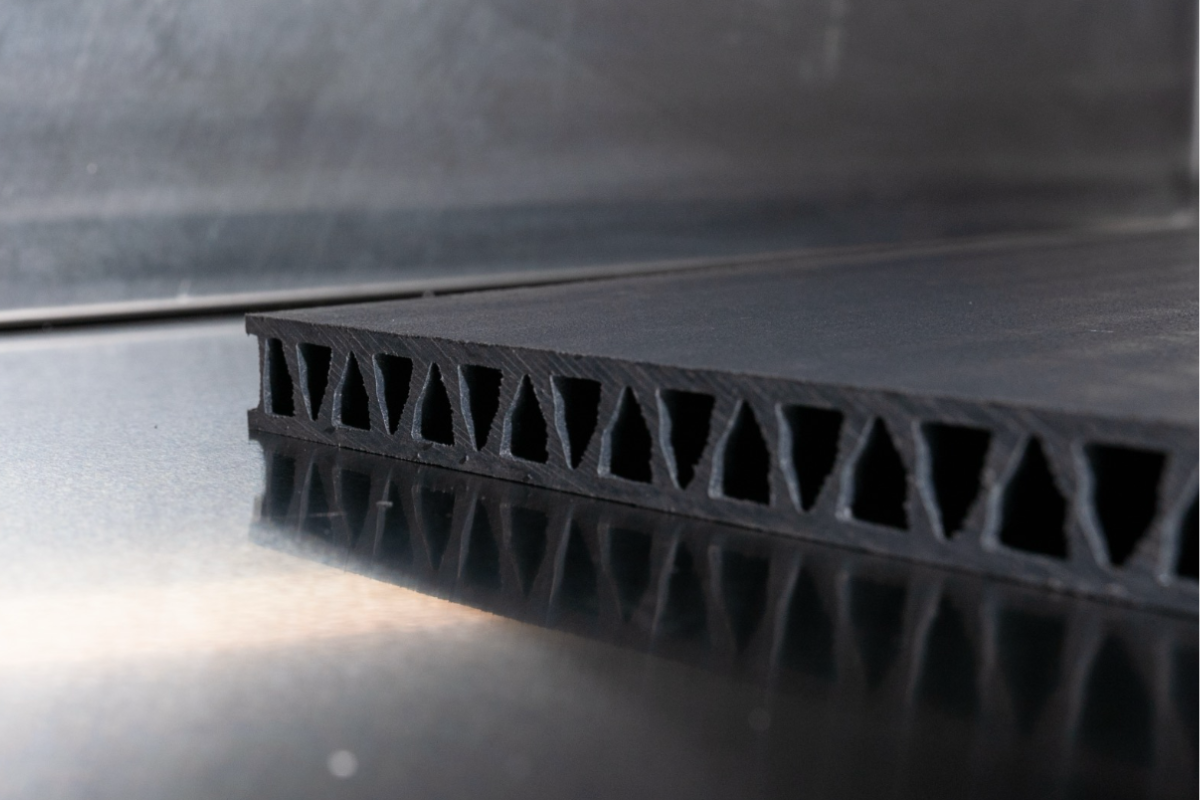
The recycled-content plastic plywood material is billed as a stronger, waterproof option to replace traditional plywood. | Photo courtesy of Supersede

Phoenix, Arizona-based Supersede started up last fall with a goal to use recycled plastic to create a plywood-alternative board specifically for marine use. The company has started with post-industrial PP as a feedstock and is experimenting with post-consumer resin as it gears up for an expansion.

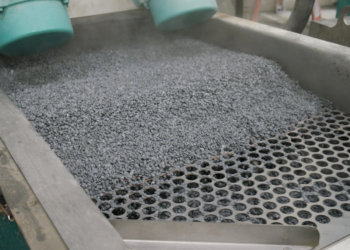
Launched in October 2024, Supersede currently operates a single facility in Phoenix, sourcing post-industrial PP regionally and occasionally nationally from manufacturers, brokers and other suppliers. The company is targeting material that hasn’t yet been reprocessed, often bringing in full product scrap. At its plant, the company grinds the plastic, mixes in additives, pelletizes it and puts the pellets into an extruder. Out the back end of the extruder comes a plastic sheet of plywood-replacement board.

The company’s first facility can produce 150,000 4-by-8-foot sheets of the plywood product per year, and the company is currently developing a second facility in the Midwest with double the capacity of the first. That facility’s location has not yet been released.

By January 2026, the company has a goal to hit 25 million pounds per year of recycled plastic capacity. 

“We started this business with a really altruistic view on how to make an impact, and at the end of the day, what is really resonating is it’s just a better-performing product,” said Sean Petterson, CEO of Supersede. “So we’re going to scale it based on that.”

Petterson, an entrepreneur with a background in the manufacturing sector, explained plywood has been degrading in quality in recent decades, both through changes in the types and quantities of chemicals used in the material and through the younger age of trees providing the lumber. 

The idea of using thermoform plastic took hold for the material’s structural characteristics, particularly the fact that it’s 100% waterproof. It became a natural fit for marine use, where it can help avoid structural failures from rot and mold, Petterson said, which are more common with traditional plywood.

“In the process of trying to develop a means to replace it, we wanted to look at waste streams,” he said.

The company settled on a post-industrial PP sourced directly from manufacturers who generate production scrap. Post-industrial was chosen because it’s a cleaner stream of material than post-consumer, and the level of contamination within most post-consumer streams would not mesh with the marine board’s requirements.

“When we’re designing something that’s going to be a structural element, we need it to be highly specific,” he said. 

Still, the company is fine-tuning its process to handle some small amounts of contamination, like what the company encounters when bringing in production scrap. Depending on the product, the PIR stream might include contaminants like clips or handles of a different polymer, for example. So the PP might have small amounts of nylon or PET mixed in. Supersede is able to manage and distribute that contamination during the regranulation process.

“We’re really focusing on finding that type of application, where we can ingest a certain level of contamination, because obviously there is a broader market for a pure, 100% PP,” he said.

Petterson noted Supersede is looking at incorporating PCR in future products beyond the current marine board, where the structural attributes might not require such stringent feedstock quality.

The company has been testing PCR, particularly using mixed plastics, Petterson said. Supersede has been testing and blending those mixed materials and then evaluating how the formulation affects the board product in test runs.

“Our goal here is to ingest as much low-melt plastic as we can, I think that’s the main thing that we need with our extrusion process,” he said.

Tags: PPProcessors
TweetShare
Colin Staub

Colin Staub

Colin Staub was a reporter and associate editor at Resource Recycling until August 2025.

Related Posts

WM rolling out curbside acceptance of PP cups 

APR releases first semiannual Design Guide update

byBrian Clark Howard
April 3, 2026

The Association of Plastic Recyclers (APR) has published the first semiannual APR Design Guide for Plastics Recyclability. Now in its...

Policy update: EPR, right to repair and more

TERRA expands certified e-scrap network to Ecuador

byScott Snowden
April 1, 2026

TERRA has added Vertmonde in Quito to its certified electronics recycling network, giving the organization a first member in Ecuador...

Belgian and Flemish flags fly against a backdrop of an ocean beach

PureCycle receives €40m EU grant for new plant

byAntoinette Smith
March 26, 2026

The €250 million PP recycling plant in Belgium is scheduled for mechanical completion toward the end of 2028, with ramp-up...

Greenway now takes e-scrap from Midwest businesses

Greenway now takes e-scrap from Midwest businesses

byScott Snowden
March 11, 2026

Chicago-based Greenway Metal Recycling ties the move to rising volumes of retired electronics and increasing compliance demands.

PureCycle sees easing headwinds to R-PP adoption

PureCycle sees easing headwinds to R-PP adoption

byAntoinette Smith
March 3, 2026

CEO Dustin Olson thinks the worst years of "high headwinds" are mostly behind the industry and that demand from legislation...

What the NAND flash crunch means for remarketing, refurbishment and residual values

What the NAND flash crunch means for remarketing, refurbishment and residual values

byDavid Daoud
February 26, 2026

AI infrastructure demand is consuming the world's flash memory supply. The secondary market and ITAD industry will feel the consequences.

Load More
Next Post
3R Technology working on first US e-plastics site

3R Technology working on first US e-plastics site

More Posts

PCA closing Richmond plant

PCA closing Richmond plant

April 2, 2026
With RPET in crisis, focus turns to solutions

With RPET in crisis, focus turns to solutions

April 2, 2026
Wineries help create model for film recycling

Wineries help create model for film recycling

April 7, 2026
Oregon’s Recycling Modernization Act faces injunction

Why EPR’s biggest obstacle might not be legislation

April 6, 2026

Apparel retailer organization challenges SB 707 textile PRO selection

April 2, 2026
End markets, policy key to RPET viability

End markets, policy key to RPET viability

April 8, 2026
WM rolling out curbside acceptance of PP cups 

APR releases first semiannual Design Guide update

April 3, 2026

Independents complement primary PRO in state EPR

April 6, 2026
Minnesota State Capitol

Minnesota watches Oregon as EPR implementation advances

April 6, 2026

Trafigura signs $1.1b deal for recycled battery metals

April 8, 2026
Load More

About & Publications

About Us

Staff

Archive

Magazine

Work With Us

Advertise
Jobs
Contact
Terms and Privacy

Newsletter

Get the latest recycling news and analysis delivered to your inbox every week. Stay ahead on industry trends, policy updates, and insights from programs, processors, and innovators.

Subscribe

Welcome Back!

Login to your account below

Forgotten Password?

Retrieve your password

Please enter your username or email address to reset your password.

Log In

Add New Playlist

No Result
View All Result
  • The Latest
  • Analysis
  • Recycling
  • E-Scrap
  • Plastics
  • Policy Now
  • Conferences
    • E-Scrap Conference
    • Plastics Recycling Conference
    • Resource Recycling Conference
    • Textiles Recovery Summit
  • Magazine
  • About Us
  • Advertise
  • Archive
  • Jobs
  • Staff
Subscribe
This website uses cookies. By continuing to use this website you are giving consent to cookies being used. Visit our Privacy and Cookie Policy.