




Resource Recycling
  • The Latest
  • Analysis
    • All
    • Certification Scorecard
    • Industry Announcements
    • Opinion
    Colorado regulators suggest mid-range EPR scenario

    Why collaboration on plastic waste still matters

    Battery processors lay out latest moves

    Battery recycler Ascend Elements files for bankruptcy

    EPR fees are a market signal. Here’s what they’re telling you.

    EPR fees are a market signal. Here’s what they’re telling you.

    Wolframite ore, the primary ore of tungsten from Altai, Russia

    Tungsten scrap export controls draw industry attention

    Certification Scorecard — Week of April 6, 2026

    Closed Loop Partners acquires Sutter Metals, connecting electronics disposition to metals recovery

    Certification Scorecard — Week of March 30, 2026

    Industry announcements for January 2026

    Industry announcements for April 2026

    Certification scorecard – Week of March 23, 2026

  • Conferences
  • Publications

    Other Topics

    Textiles
    Organics
    Packaging
    Glass
    Brand Owners

    Metals
    Technology
    Research
    Markets
    Grant Watch

    All Topics

Subscribe
No Result
View All Result
Resource Recycling
  • The Latest
  • Analysis
    • All
    • Certification Scorecard
    • Industry Announcements
    • Opinion
    Colorado regulators suggest mid-range EPR scenario

    Why collaboration on plastic waste still matters

    Battery processors lay out latest moves

    Battery recycler Ascend Elements files for bankruptcy

    EPR fees are a market signal. Here’s what they’re telling you.

    EPR fees are a market signal. Here’s what they’re telling you.

    Wolframite ore, the primary ore of tungsten from Altai, Russia

    Tungsten scrap export controls draw industry attention

    Certification Scorecard — Week of April 6, 2026

    Closed Loop Partners acquires Sutter Metals, connecting electronics disposition to metals recovery

    Certification Scorecard — Week of March 30, 2026

    Industry announcements for January 2026

    Industry announcements for April 2026

    Certification scorecard – Week of March 23, 2026

  • Conferences
  • Publications

    Other Topics

    Textiles
    Organics
    Packaging
    Glass
    Brand Owners

    Metals
    Technology
    Research
    Markets
    Grant Watch

    All Topics

Subscribe
No Result
View All Result
Resource Recycling
No Result
View All Result
Home Plastics

Chemical recycling studies explore feedstock, benefits

Marissa HeffernanbyMarissa Heffernan
October 18, 2022
in Plastics
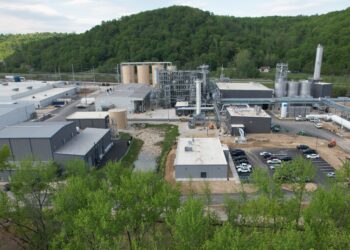
Agilyx moves to produce styrene instead of oil
A Eunomia report commissioned by the Alliance to End Plastic Waste aimed to set requirements for pyrolysis feedstock. | paul prescott/Shutterstock
Two recently released reports investigated the benefits of chemical recycling and dug into setting feedstock requirements for pyrolysis.

In one report, commissioned by the American Chemistry Council, researchers from the City College of New York suggested that chemical recycling could help avoid climate impacts, reduce demand for energy resources and expand the circular economy.

The terms “chemical recycling” and “advanced recycling” generally refer to a wide array of processes that use heat, pressure and solvents to break down the molecular chains of polymers into liquids or gasses that can then be processed into fuels, oils, waxes, new plastics or other chemical products.

Using 13 up-to-date life cycle assessments, the authors of the report found that chemical recycling technologies can produce plastic and chemical products with “a reduced global warming potential compared to products made from virgin resources,” a press release stated, and can also reduce the need for fossil energy resources by up to 97% compared to landfilling.

Chemical recycling can also reduce CO2-equivalent emissions by more than 100% compared to typical end-of-life processes, the report noted, “when accounting for displaced demand for chemical products and energy.”

Author Marco Castaldi, professor of chemical engineering and director of the college’s Earth Engineering Center (EEC), said that as “advanced recycling becomes increasingly efficient, it is poised to play a major role in achieving global sustainability goals.”

A Eunomia report commissioned by the Alliance to End Plastic Waste aimed to set requirements for pyrolysis feedstock. It outlined nine requirements that came from interviews with 32 companies and organizations in Asia, North America and Europe. Pyrolysis is chemical recycling using high heat.

The requirements include using clean, well-sorted feedstock made up of about 85% PE and PP, with moisture limits of around 7% and no more than 15% contaminants. There’s also a need for better collection and sorting systems.

A press release noted that the Eunomia white paper “aims to provide clarity on feedstock requirements and propose model specification guidelines that can be used to enable greater alignment across the recycling value chain.”

Martyn Tickner, chief advisor of the Technical Solutions Centre at the Alliance to End Plastic Waste, pointed out that improving knowledge of feedstock requirements “can help progress the industry’s understanding of how chemical recycling and mechanical recycling can work alongside each other.”

Sarah Edwards, director of Eunomia, noted that the pyrolysis specifications laid out simply serve as a guideline, and while the review focused on pyrolysis, there are other chemical recycling technologies available.

“As policy helps drive up recycling rate targets, understanding the specification of plastics that can be managed through other advanced recycling will be critical for sorters as well as mechanical recyclers,” Edwards said.

 

Tags: Chemical RecyclingIndustry Groups
TweetShare
Marissa Heffernan

Marissa Heffernan

Marissa Heffernan worked at Resource Recycling from January 2022 through June 2025, first as staff reporter and then as associate editor. Marissa Heffernan started working for Resource Recycling in January 2022 after spending several years as a reporter at a daily newspaper in Southwest Washington. After developing a special focus on recycling policy, they were also the editor of the monthly newsletter Policy Now.

Related Posts

Colorado regulators suggest mid-range EPR scenario

Why collaboration on plastic waste still matters

byCrystal Bayliss
April 13, 2026

Six years ago, the U.S. Plastics Pact launched at a moment of rising concern about plastic waste and growing momentum...

Industrial sources drive rise in PVC recycling

byAntoinette Smith
April 13, 2026

Volumes of post-industrial PVC recycled in 2024 rose by 10% from 2019 levels, while post-consumer sources fell and missed a...

End markets, policy key to RPET viability

End markets, policy key to RPET viability

byAntoinette Smith
April 8, 2026

Longer-term actions support domestic RPET markets and can help prevent the loss of public trust in recycling systems, industry experts...

MRF equipment firm Machinex wins patent fight with rival

Judge blocks four groups from joining Oregon Recycling Act injunction

byStefanie Valentic
April 7, 2026

A judge has shut the door on four industry groups seeking to join NAW's Oregon EPR injunction and clarified who's...

UBC stakeholders report on recycling progress

Trump’s Section 232 tariff overhaul provides mixed results for recycling industry

byStefanie Valentic
April 7, 2026

A sweeping overhaul of the Section 232 steel and aluminum derivatives tariff program took effect April 6, slashing duty rates...

Independents complement primary PRO in state EPR

byAntoinette Smith
April 6, 2026

Separate producer responsibility organizations for specialized packaging such as petroleum products can help ensure success for everyone, according to the...

Load More
Next Post
Scientists combine chemistry, biology to recycle mixed plastics

Scientists combine chemistry, biology to recycle mixed plastics

More Posts

EPR fees are a market signal. Here’s what they’re telling you.

EPR fees are a market signal. Here’s what they’re telling you.

April 10, 2026
End markets, policy key to RPET viability

End markets, policy key to RPET viability

April 8, 2026

Trafigura signs $1.1b deal for recycled battery metals

April 8, 2026
Wineries help create model for film recycling

Wineries help create model for film recycling

April 7, 2026
With RPET in crisis, focus turns to solutions

With RPET in crisis, focus turns to solutions

April 2, 2026
Wolframite ore, the primary ore of tungsten from Altai, Russia

Tungsten scrap export controls draw industry attention

April 9, 2026
Plastics Recyclers Have the Capacity to Recycle More. Now Let’s Use It.

Study finds most recycling occurs within 30 miles of access

April 8, 2026

WM opens new $60m MRF in Indy

April 10, 2026
Solarcycle starts up Georgia recycling plant

S3399 signals a shift in how states are tackling solar panel waste

April 6, 2026
Bill to update New Jersey e-scrap program heads to governor

New Jersey recyclers talk EPR

April 9, 2026
Load More

About & Publications

About Us

Staff

Archive

Magazine

Work With Us

Advertise
Jobs
Contact
Terms and Privacy

Newsletter

Get the latest recycling news and analysis delivered to your inbox every week. Stay ahead on industry trends, policy updates, and insights from programs, processors, and innovators.

Subscribe

Welcome Back!

Login to your account below

Forgotten Password?

Retrieve your password

Please enter your username or email address to reset your password.

Log In

Add New Playlist

No Result
View All Result
  • The Latest
  • Analysis
  • Recycling
  • E-Scrap
  • Plastics
  • Policy Now
  • Conferences
    • E-Scrap Conference
    • Plastics Recycling Conference
    • Resource Recycling Conference
    • Textiles Recovery Summit
  • Magazine
  • About Us
  • Advertise
  • Archive
  • Jobs
  • Staff
Subscribe
This website uses cookies. By continuing to use this website you are giving consent to cookies being used. Visit our Privacy and Cookie Policy.