





Resource Recycling
  • The Latest
  • Analysis
    • All
    • Certification Scorecard
    • Industry Announcements
    • Opinion
    The electronics recycling industry is undergoing a transformation from labor-intensive manual operations to highly automated, AI-driven facilities that use advanced robotics, cleaner chemistry and digital tracking systems to extract critical materials.

    The cyber-physical MRF: AI and robotics reshape e-waste recovery

    Certification scorecard for the week of Feb. 9, 2026

    Meta-Corning deal signals IT hardware retirement wave

    Meta-Corning deal signals IT hardware retirement wave

    Malaysia clamps down on illegal e-waste imports amid probes

    Malaysia clamps down on illegal e-waste imports amid probes

    URT builds alliance to remake electronics plastics at scale

    ICYMI: Top 5 e-scrap stories from January 2026

    The electronics recycling industry is undergoing a transformation from labor-intensive manual operations to highly automated, AI-driven facilities that use advanced robotics, cleaner chemistry and digital tracking systems to extract critical materials.

    Certification scorecard for the week of Feb. 2, 2026

    Auditors warn EU may fall short on critical metals

    Auditors warn EU may fall short on critical metals

    Industry announcements for January 2026

    Industry announcements for February 2026

    ICYMI: Top 5 recycling stories from January 2026

  • Conferences
  • Publications

    Other Topics

    Textiles
    Organics
    Packaging
    Glass
    Brand Owners

    Metals
    Technology
    Research
    Markets
    Grant Watch

    All Topics

Subscribe
No Result
View All Result
Resource Recycling
  • The Latest
  • Analysis
    • All
    • Certification Scorecard
    • Industry Announcements
    • Opinion
    The electronics recycling industry is undergoing a transformation from labor-intensive manual operations to highly automated, AI-driven facilities that use advanced robotics, cleaner chemistry and digital tracking systems to extract critical materials.

    The cyber-physical MRF: AI and robotics reshape e-waste recovery

    Certification scorecard for the week of Feb. 9, 2026

    Meta-Corning deal signals IT hardware retirement wave

    Meta-Corning deal signals IT hardware retirement wave

    Malaysia clamps down on illegal e-waste imports amid probes

    Malaysia clamps down on illegal e-waste imports amid probes

    URT builds alliance to remake electronics plastics at scale

    ICYMI: Top 5 e-scrap stories from January 2026

    The electronics recycling industry is undergoing a transformation from labor-intensive manual operations to highly automated, AI-driven facilities that use advanced robotics, cleaner chemistry and digital tracking systems to extract critical materials.

    Certification scorecard for the week of Feb. 2, 2026

    Auditors warn EU may fall short on critical metals

    Auditors warn EU may fall short on critical metals

    Industry announcements for January 2026

    Industry announcements for February 2026

    ICYMI: Top 5 recycling stories from January 2026

  • Conferences
  • Publications

    Other Topics

    Textiles
    Organics
    Packaging
    Glass
    Brand Owners

    Metals
    Technology
    Research
    Markets
    Grant Watch

    All Topics

Subscribe
No Result
View All Result
Resource Recycling
No Result
View All Result
Home Plastics

German group develops black plastic sorting technology

byEditorial Staff
June 30, 2016
in Plastics
German group develops black plastic sorting technology

New research out of Germany holds promise for high-accuracy optical sorting of black plastics at reasonable costs.

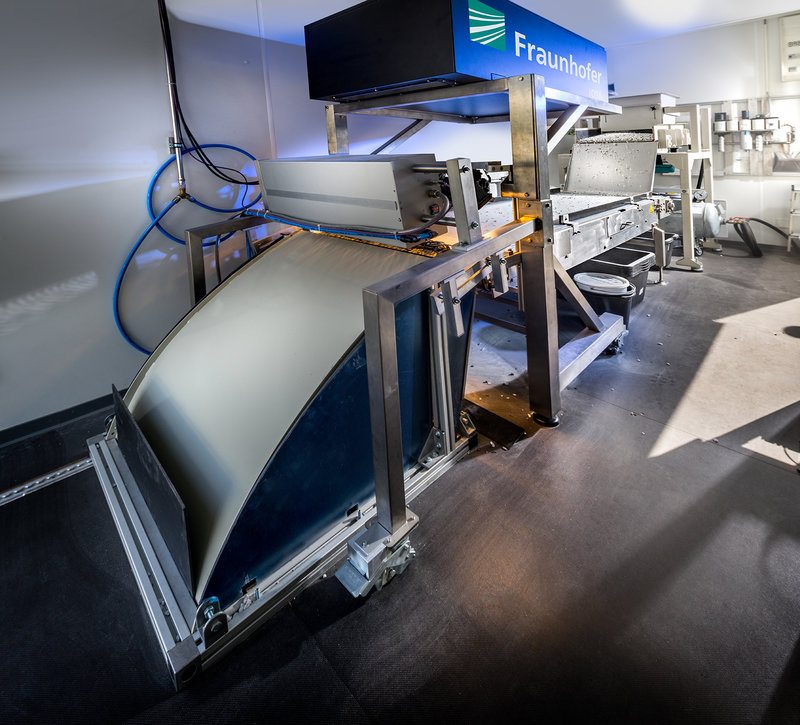
Researchers at the Fraunhofer Society developed imaging and software technology capable of analyzing plastics of many different colors and determining the polymer.

“For the first time, we have developed an affordable sorting system that detects every plastic color, including black, both in real time and in large quantities,” Thomas Langle, department head at the Fraunhofer Institute of Optronics, System Technologies and Image Exploitation, stated in a press release.

The system, called BlackValue, is similar to existing optical sorters in that a conveyor belt carries and tosses plastic items off the end, using air jets to separate them. But instead of using a near-infrared imaging system, which has difficulty reading black plastics because they soak up much of the rays, the radar camera used by Fraunhofer researchers operates lower on the electromagnetic spectrum, closer to microwave and radio wave radiation.

The shredded plastic items come off the belt at a speed up to 10 feet per second. The camera emits a beam of radiation and, at the opposite end of the beam, the system analyzes how the individual plastic pieces have modified the spectra, allowing the computer to determine the plastic type.

A visible-light camera helps the computer understand the shape of the plastic piece so it can release a puff of air at the right time to send it to the right location.

Researchers also experimented with a camera operating in the terahertz frequency, a higher-energy frequency closer toward visible light. That higher-energy range provides for more precise measurements, but it’s much more expensive – possibly more than $1 million, according to the researchers.

So they looked for a cheaper combination that recycling centers could afford: a 90 gigahertz camera with less precise measuring capabilities. When paired with advanced software algorithms, however, the device is capable of detecting even minute differences in the spectra, according to the press release. The software is also self-learning, improving its accuracy over time.

The result is a 98 percent to 99 percent sorting accuracy and prices in line with hyperspectral cameras, according to the Fraunhofer Society.

The camera is expected to be on the market by the end of 2017. The technology was presented during the World Conference for Non-Destructive Testing in Munich, held June 13-17.


Tags: EuropeSortationTechnology
TweetShare
Editorial Staff

Editorial Staff

Related Posts

The electronics recycling industry is undergoing a transformation from labor-intensive manual operations to highly automated, AI-driven facilities that use advanced robotics, cleaner chemistry and digital tracking systems to extract critical materials.

The cyber-physical MRF: AI and robotics reshape e-waste recovery

byDavid Daoud
February 12, 2026

The electronics recycling industry is entering a new phase of technological acceleration. Advances in artificial intelligence, robotics, advanced chemistry, and...

Member states select new chair for global plastics treaty

Member states select new chair for global plastics treaty

byAntoinette Smith
February 10, 2026

During a short session, the Intergovernmental Negotiating Committee elected Chilean diplomat Julio Cordano to continue efforts toward an internationally binding...

Royal Mint, Procurri partner for ITAD metals recovery

byScott Snowden
February 5, 2026

Reformation Metals partnered with Procurri to combine secure IT asset disposal with clean technology recycling that recovers up to 99%...

Auditors warn EU may fall short on critical metals

Auditors warn EU may fall short on critical metals

byDavid Daoud
February 4, 2026

A recent report showing Europe is unlikely to secure enough critical minerals by 2030 has implications for ITAD firms and...

German researchers say plastics treaty still within reach

byAntoinette Smith
February 4, 2026

In a new white paper, the group proposes three key changes to revive the treaty talks after a new chair...

Cirba Solutions: Battery fires stoking EPR bill movement

byStefanie Valentic
February 2, 2026

As batteries appear in everything from light-up shoes to electric vehicles, new EPR laws are reshaping recycling requirements.

Load More
Next Post
In other news: March 23, 2016

Plastics recycling technology roundup: June 30, 2016

More Posts

Oregon’s Recycling Modernization Act faces injunction

Court partially blocks Oregon EPR law, dismisses bulk of lawsuit

February 10, 2026
Chinese processing group details goals for US visit

AMP lays out vision of next-generation, AI-driven MRFs

July 24, 2024
Malaysia clamps down on illegal e-waste imports amid probes

Malaysia clamps down on illegal e-waste imports amid probes

February 6, 2026

REUSE Act heads to US House for consideration

February 9, 2026
Meta-Corning deal signals IT hardware retirement wave

Meta-Corning deal signals IT hardware retirement wave

February 9, 2026

ecoATM recycled 7.5M phones in 2025 as payouts hit $1.5B

February 10, 2026
Packaging Corp. to buy Greif containerboard segment

Export trends offset containerboard production decline

February 6, 2026
Texas sues over dumped wind turbine blades

Texas sues over dumped wind turbine blades

February 10, 2026

Amcor expects flat sales volumes to continue 

February 6, 2026

Alpek talks PET overcapacity, soft demand

February 11, 2026
Load More

About & Publications

About Us

Staff

Archive

Magazine

Work With Us

Advertise
Jobs
Contact
Terms and Privacy

Newsletter

Get the latest recycling news and analysis delivered to your inbox every week. Stay ahead on industry trends, policy updates, and insights from programs, processors, and innovators.

Subscribe

Welcome Back!

Login to your account below

Forgotten Password?

Retrieve your password

Please enter your username or email address to reset your password.

Log In

Add New Playlist

No Result
View All Result
  • The Latest
  • Analysis
  • Recycling
  • E-Scrap
  • Plastics
  • Policy Now
  • Conferences
    • E-Scrap Conference
    • Plastics Recycling Conference
    • Resource Recycling Conference
    • Textiles Recovery Summit
  • Magazine
  • About Us
  • Advertise
  • Archive
  • Jobs
  • Staff
Subscribe
This website uses cookies. By continuing to use this website you are giving consent to cookies being used. Visit our Privacy and Cookie Policy.