





Resource Recycling
  • The Latest
  • Analysis
    • All
    • Certification Scorecard
    • Industry Announcements
    • Opinion

    Who should pay for lithium-ion battery fire damage?

    America’s critical-materials buildout has a feedstock problem

    Certification scorecard – week of Sept. 14

    Canada Plastics Pact reports 2024 progress

    Trade tensions shift global mineral partnerships 

    Spin-off lets Linca focus on battery mineral recovery

    Critical mineral policy shift creates opportunity

    CommanderAI launches searchable hauler database

    Inside the Circle: Put AI to work for the people who do the work

  • Conferences
    • Resource Recycling Conference
    • Plastics Recycling Conference
    • E-Scrap: The Longevity Conference
    • Textiles Recovery Summit
  • Publications
    • E-Scrap News
    • Plastics Recycling Update
    • Policy Now
    • Resource Recycling
    • Other Topics
      • All Topics
      • Brand Owners
      • Critical Minerals
      • Glass
      • Grant Watch / RFPs
      • Markets
      • Organics
      • Packaging
      • Research
      • Technology
      • Textiles
Subscribe
No Result
View All Result
Resource Recycling
  • The Latest
  • Analysis
    • All
    • Certification Scorecard
    • Industry Announcements
    • Opinion

    Who should pay for lithium-ion battery fire damage?

    America’s critical-materials buildout has a feedstock problem

    Certification scorecard – week of Sept. 14

    Canada Plastics Pact reports 2024 progress

    Trade tensions shift global mineral partnerships 

    Spin-off lets Linca focus on battery mineral recovery

    Critical mineral policy shift creates opportunity

    CommanderAI launches searchable hauler database

    Inside the Circle: Put AI to work for the people who do the work

  • Conferences
    • Resource Recycling Conference
    • Plastics Recycling Conference
    • E-Scrap: The Longevity Conference
    • Textiles Recovery Summit
  • Publications
    • E-Scrap News
    • Plastics Recycling Update
    • Policy Now
    • Resource Recycling
    • Other Topics
      • All Topics
      • Brand Owners
      • Critical Minerals
      • Glass
      • Grant Watch / RFPs
      • Markets
      • Organics
      • Packaging
      • Research
      • Technology
      • Textiles
Subscribe
No Result
View All Result
Resource Recycling
No Result
View All Result
Home Plastics

EU panel weighs in on plastics recycling technologies

byEditorial Staff
June 2, 2016
in Plastics
EU panel weighs in on plastics recycling technologies

A European Union panel has approved the use of Starlinger de-contamination technology to recycle post-consumer PET into 100 percent-recycled-content food and beverage packaging.

The Panel on Food Contact Materials, Enzymes, Flavourings and Processing Aids (CEF) also signed off on using an antioxidant additive in food containers, but it said authorities should reconsider allowable migration limits for a UV absorber.

The CEF is part of the European Food Safety Authority (EFSA). In the European Union, recycled plastics and additives can only be used in food and beverage packaging if the EFSA says they’re safe. Under EU law, recycling companies submit applications to individual countries, which apply to the EFSA on their behalf.

Following is a roundup of recent approvals from the CEF (click here to see our previous roundup, published in February).

Starlinger DeCon technology

The CEF approved three applications to use Starlinger’s DeCon technology to recycle PET into food packaging.

The process starts by turning post-consumer PET containers from deposit and curbside collections into washed and dried flakes. The flakes are pre-heated in batch reactors with a flow of hot gas before they’re condensed in a continuous reactor at a high temperature using a combination of vacuum and gas flow.

The final flakes can be used to mold beverage containers or thermoform sheets for the creation of recycled-content food trays.

EFSA determined the technology ensures the food is contaminated with less than 0.1 microgram (or one ten-thousandth of a milligram) of contamination per kilogram of food. Anything below that level is considered a negligible risk to human health.

EFSA on March 2 published its approvals of the following applications, all submitted by Germany’s Federal Office of Consumer Protection and Food Safety on behalf of the companies:

  • Application on behalf of Coopbox Hispania of Spain (approval)
  • Application on behalf of Ecoiberia-reciclados Ibericos of Portugal (approval)
  • Application on behalf of ANL Plastics of Belgium (approval)

Starlinger IV+ technology

CEF also approved the use of Starlinger’s IV+ technology to recycle PET into food packaging.

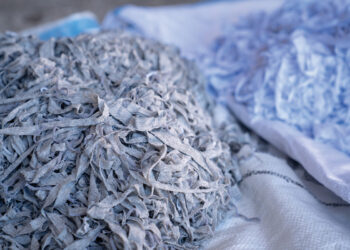
In the Starlinger IV+ system, PET containers from curbside and deposit collections are converted to pellets, which can be used to create containers with 100 percent recycled content.

In the first step, post-consumer containers are processed into hot caustic washed and dried flakes before they’re crystallized in a reactor with a hot air flow. Then they’re extruded under vacuum at a high temperature and crystallized. Finally, the crystallized pellets are pre-heated before going into a continuous-running solid state polycondensation reactor at high temperature and under vacuum.

The Finnish Food Safety Authority submitted the application on behalf of Pramia Plastic Oy of Finland. The CEF’s approval was published in March.

Antioxidant additive

CEF in March approved the use of a-tocopherol acetate as an antioxidant additive in plastic food packaging.

The United Kingdom’s Food Standards Agency applied to have the CEF study its use, stating that the substance would be used in molded polyolefin food storage containers and tanks. The maximum level would be 640 milligrams per kilogram of plastic.

In plastics, the substance interacts with moisture to form two substances: a-tocopherol and acetic acid. Both of those have already been studied and approved as food additives, so there was no concern about using them as a plastic additive.

The application was submitted on behalf of New Jersey-headquartered additive maker Cytec Solvay Group, which says antioxidants can be used to maintain the stability of plastics during processing.

UV absorber

Finally, the CEF studied the use of zinc oxide in nanoform in unplasticized polymers at up to 2 percent by weight. German company BYK Chemie sought the approval, planning to use zinc oxide to absorb ultraviolet radiation in food packaging plastics.

EU regulations limit zinc oxide migrations from packaging into food to 25 milligrams of zinc oxide per kilogram of food. Meanwhile, the Scientific Committee on Food recommends people have no more than 25 milligrams per day of zinc.

The CEF recently studied the use of zinc oxide nanoparticles as UV absorbers in polyolefins and determined the substance, in nanoform, won’t migrate into food and drink. It will migrate in soluble ionic zinc form, however. And while the amount leaching into food still complies with safe limits, a person could exceed the 25 milligrams per day recommendation when zinc oxide is consumed along with zinc from other dietary sources, according to the CEF.

The CEF recommended the European Commission reconsider the migration limit, taking into account the fact that people will consume zinc from other sources throughout the day.

The application was submitted by The Netherlands Ministry of Health, Welfare and Sport on behalf of BYK Chemie. CEF published its opinion in March.

Tags: EuropeIndustry GroupsPETTechnology
TweetShare
Editorial Staff

Editorial Staff

Related Posts

Recyclers reeling from NJ PCR extension

Recyclers reeling from NJ PCR extension

byAntoinette Smith
September 23, 2026

The recent three-year extension for exemptions to the state's PCR mandates elicited frustration and confusion among recyclers.

Textile EPR and the definition of recycling

Textile Exchange reports progress in production

byPaul Lane
September 22, 2026

The organization said the industry has made some sustainability progress, but there’s much room for improvement.

ALPLA’s holistic approach to packaging design

ALPLA’s holistic approach to packaging design

byAntoinette Smith
September 18, 2026

The packaging and recycling company's North American design lead explains why recyclability goals can't exist in isolation.

Study assesses environmental cost of excess data storage

BAN paper says AI e-scrap estimates are low

byPaul Lane
September 17, 2026

The advocacy group said current estimates on the scrap resulting from data centers don’t account for the full picture of...

US packaging is evolving. The recycling system isn’t ready

US packaging is evolving. The recycling system isn’t ready

byAntoinette Smith
September 16, 2026

The second installment of the 2026 State of Recycling report from The Recycling Partnership indicates that lighter-weight packaging substrates have...

Google Pixel 6 phone

Google makes repairability part of design ethos

byBrian Clark Howard
September 16, 2026

The tech titan supports the right-to-repair movement in several key ways.

Load More
Next Post
Transforming low-value plastics into high-value waxes

Transforming low-value plastics into high-value waxes

2026 Buyers’ Guide

Equipment, services and technology suppliers serving the recycling industry.

Browse the Guide

More Posts

Colorado’s EPR programs move from planning to practice

Colorado’s EPR programs move from planning to practice

September 17, 2026

SB 54 plan for cartons, film draws warning

September 15, 2026
Study assesses environmental cost of excess data storage

BAN paper says AI e-scrap estimates are low

September 17, 2026
Alpek closing Pennsylvania RPET plant

Alpek seizing on war-related opportunity 

July 27, 2026
US packaging is evolving. The recycling system isn’t ready

US packaging is evolving. The recycling system isn’t ready

September 16, 2026
New Jersey pushes back PCR mandate to 2030

New Jersey pushes back PCR mandate to 2030

September 10, 2026
Van filled with rolled carpeting for recycling or disposal.

California carpet recycling rate reaches 37%

September 17, 2026
Canada tariffs latest in new normal for RPET

Canada tariffs latest in new normal for RPET

September 11, 2026
Spin-off lets Linca focus on battery mineral recovery

Critical mineral policy shift creates opportunity

September 14, 2026

America’s critical-materials buildout has a feedstock problem

September 18, 2026
Load More

About & Publications

About Us

Staff

Archive

Magazines

Work With Us

Advertise
Jobs
Contact
Terms and Privacy

Newsletters

Get the latest recycling news and analysis delivered to your inbox every week. Stay ahead on industry trends, policy updates, and insights from programs, processors, and innovators.

Subscribe

Welcome Back!

Login to your account below

Forgotten Password?

Retrieve your password

Please enter your username or email address to reset your password.

Log In

Add New Playlist

No Result
View All Result
  • The Latest
  • Analysis
  • Recycling
  • E-Scrap
  • Plastics
  • Policy Now
  • Conferences
    • E-Scrap Conference
    • Plastics Recycling Conference
    • Resource Recycling Conference
    • Textiles Recovery Summit
  • Magazines
  • About Us
  • Advertise
  • Archive
  • Jobs
  • Staff
Subscribe
This website uses cookies. By continuing to use this website you are giving consent to cookies being used. Visit our Privacy and Cookie Policy.