







Resource Recycling
  • The Latest
  • Analysis
    • All
    • Certification Scorecard
    • Industry Announcements
    • Opinion
    Industry announcements for January 2026

    Industry Announcements for March 2026

    HP receives ocean plastics certification

    HP Inc. earnings point to memory inflation challenge

    Certification scorecard for the week of Feb. 23, 2026

    Umicore highlights strength in recycling, catalysis

    Apto, Tusaar partner on rare earths recovery

    Apto, Tusaar partner on rare earths recovery

    Certification scorecard for the week of Feb. 16, 2026

    Sims Lifecycle leverages hyperscale decommissioning

    Sims Lifecycle leverages hyperscale decommissioning

    The electronics recycling industry is undergoing a transformation from labor-intensive manual operations to highly automated, AI-driven facilities that use advanced robotics, cleaner chemistry and digital tracking systems to extract critical materials.

    The cyber-physical MRF: AI and robotics reshape e-waste recovery

    Certification scorecard for the week of Feb. 9, 2026

  • Conferences
  • Publications

    Other Topics

    Textiles
    Organics
    Packaging
    Glass
    Brand Owners

    Metals
    Technology
    Research
    Markets
    Grant Watch

    All Topics

Subscribe
No Result
View All Result
Resource Recycling
  • The Latest
  • Analysis
    • All
    • Certification Scorecard
    • Industry Announcements
    • Opinion
    Industry announcements for January 2026

    Industry Announcements for March 2026

    HP receives ocean plastics certification

    HP Inc. earnings point to memory inflation challenge

    Certification scorecard for the week of Feb. 23, 2026

    Umicore highlights strength in recycling, catalysis

    Apto, Tusaar partner on rare earths recovery

    Apto, Tusaar partner on rare earths recovery

    Certification scorecard for the week of Feb. 16, 2026

    Sims Lifecycle leverages hyperscale decommissioning

    Sims Lifecycle leverages hyperscale decommissioning

    The electronics recycling industry is undergoing a transformation from labor-intensive manual operations to highly automated, AI-driven facilities that use advanced robotics, cleaner chemistry and digital tracking systems to extract critical materials.

    The cyber-physical MRF: AI and robotics reshape e-waste recovery

    Certification scorecard for the week of Feb. 9, 2026

  • Conferences
  • Publications

    Other Topics

    Textiles
    Organics
    Packaging
    Glass
    Brand Owners

    Metals
    Technology
    Research
    Markets
    Grant Watch

    All Topics

Subscribe
No Result
View All Result
Resource Recycling
No Result
View All Result
Home Plastics Recycling Update Magazine

First Person Perspective: Undoing plastic bans is risky business

bySydney Harris and Scott Cassel
October 28, 2020
in Plastics Recycling Update Magazine
First Person Perspective: Undoing plastic bans is risky business
State and local governments are facing increasing pressure to reverse, delay or otherwise roll back environmentally beneficial waste-reduction policies, such as fees or bans on plastic bags, in the name of public health.

As the novel coronavirus continues to spread throughout the U.S., state and local governments are working tirelessly to respond and adapt. The primary concern for all of us in this trying time is the health and safety of our communities, especially the essential workers in health care, sanitation, retail, transportation and public safety who are putting themselves at risk to help stop the spread of COVID-19.

Unfortunately, state and local governments are facing increasing pressure to reverse, delay or otherwise roll back environmentally beneficial waste-reduction policies, such as fees or bans on plastic bags, in the name of public health.

The plastics industry in particular has argued that plastic bags are the most sanitary option for transporting food home from restaurants and grocery stores, and it has urged governments to act swiftly to lift restrictions on plastic bags and other single-use plastics.

The plastics industry has specifically called out reusable bags as unsanitary, although there is no scientific evidence to support the claim that properly sanitized reusable bags contribute to the transmission of COVID-19.

To date, neither the Centers for Disease Control and Prevention (CDC) nor the World Health Organization has issued guidance advising against the use of reusable bags.

The Product Stewardship Institute (PSI) has created a digital tracker to record the changes taking place across the United States. Thus far, Connecticut has lifted statewide fees on plastic bags while Massachusetts and New Hampshire have banned reusable bags in grocery stores, pharmacies, and – in the case of New Hampshire – all retail stores.

Massachusetts has also banned local jurisdictions from charging fees on single-use plastic, paper and compostable bags. Maine has delayed its recently enacted single-use plastic bag ban and 5-cent fee on paper bags until 2021. Several local jurisdictions across the country are placing bag bans and other single-use plastics policies on hold, as well. On a corporate level, many major chains, including Starbucks and Dunkin’, have restricted customers from bringing in reusable items, such as coffee mugs.

Repercussions of sidelining reuse

While the protection of our communities and essential workers is paramount in the short term, we must also acknowledge that increased use and disposal of single-use items has long-term implications for the environment and human health at each step of the consumer-products value chain, from production through waste management.

In the case of plastics, for instance, oil and natural gas extraction and refinement for plastics production causes chronic and sometimes fatal respiratory conditions, cancers, neurotoxicity, reproductive and developmental damage, and immune suppression in many thousands of people each year.

At their end-of-life, hundreds of thousands of tons of plastic products from the U.S. and other wealthier nations are shipped abroad to developing countries, where low-wage waste-pickers must sort through our rubbish to extract recyclable items. Much of this waste is openly burned, leading to further chronic health concerns. The conversion of petrochemicals into plastic products also has a tremendous carbon footprint.

While many suspensions on reusable items cite the quick disposal of single-use products as a boon to worker and consumer health, the resulting increase in waste adds to the challenges facing our already-strained collection system. The waste industry has braced for increased residential volumes since the start of the outbreak in the U.S. At the same time, the industry is dealing with a reduced workforce. As of April 9, at least 350 sanitation workers in New York City had tested positive for COVID-19.

Protecting communities from harmful chemicals and pollution has always been at the heart of local and state waste reduction policies such as bans or fees on plastic bags. While most of the rollbacks to these policies across the U.S. are temporary, it will be critical to ensure they do not lead to long-term policy reversals. The need for sustainable, sanitary reuse infrastructure to facilitate long-term waste reduction has become clear amid this crisis.

The role of EPR

Over the long term, product stewardship and extended producer responsibility (EPR) laws will help address many of the challenges with plastics and other single-use products in the U.S. by creating incentives for reuse, recycling and the production of materials with fewer environmental impacts, and by supporting infrastructure development for proper collection and recycling.

PSI’s recently released report, “EPR for Packaging & Paper Products: Policies, Practices, & Performance,” outlines problems faced by U.S. recycling programs and how EPR programs in four Canadian provinces have increased packaging recovery and recycling, reduced contamination and developed domestic markets for difficult-to-recycle materials.

As we look ahead to a post-COVID-19 future, PSI is hopeful that innovative product stewardship policies will provide avenues for reducing the production and consumption of single-use materials, increasing domestic reuse and recycling opportunities, and safeguarding public health and safety.

PSI will continue to track policy changes and advise members on responding to concerns about existing policies. If you have any updates on plastics or single-use policy changes stemming from the COVID-19 crisis, please contact us at the email below.

Sydney Harris is senior associate for policy and programs and Scott Cassel is CEO and founder of the Product Stewardship Institute (PSI). Contact them at [email protected].

This story originally appeared in the Spring 2020 issue of Plastics Recycling Update. Subscribe today for access to all print content.

Tags: Legislation
TweetShare
Sydney Harris and Scott Cassel

Sydney Harris and Scott Cassel

Related Posts

Minnesota publishes prelim EPR assessment

Minnesota publishes prelim EPR assessment

byAntoinette Smith
February 20, 2026

The report will inform recommendations featured in the next report to develop the state's EPR program for packaging.

Vermont’s battery stewardship law targets fire risk

byStefanie Valentic
February 20, 2026

The state's new law gives residents more options to safely dispose of everything from single-use alkaline batteries to medium-format e-bike...

Textile clothing bins

Report details how to make CA textile recycling work

byPaul Lane
February 16, 2026

A new report confirms the sentiment that led to a new textile recovery law in California, detailing just how much...

Bipartisan reps introduce bill on recycling claims

Bipartisan reps introduce bill on recycling claims

byAntoinette Smith
February 12, 2026

Legislators introduced the Recycled Materials Attribution Act in the US House, drawing support from a new industry group and scrutiny...

Oregon’s Recycling Modernization Act faces injunction

Court partially blocks Oregon EPR law, dismisses bulk of lawsuit

byStefanie Valentic
February 10, 2026

An Oregon federal court issued a limited injunction halting the state's EPR law for members of NAW, but rejected the...

Member states select new chair for global plastics treaty

Member states select new chair for global plastics treaty

byAntoinette Smith
February 10, 2026

During a short session, the Intergovernmental Negotiating Committee elected Chilean diplomat Julio Cordano to continue efforts toward an internationally binding...

Load More
Next Post
Industry experts offer dirty details on PET contamination

Data Sort: Latest numbers on export vs. processing in U.S. and Canada

More Posts

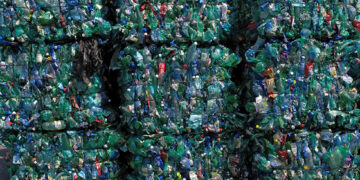
PET bales stacked for recycling.

Evergreen closing RPET plants in Ohio, New York

February 24, 2026

Rising containerboard demand comes as OCC prices taper

November 5, 2024
WM opens new $90m MRF in south Florida 

WM opens new $90m MRF in south Florida 

February 23, 2026

Paper giants foresee continuing rise in OCC prices

August 28, 2023

North American paper mills discuss demand, OCC pricing

May 15, 2023
Battery fire risk isn’t going away. Insurance is responding

Battery fire risk isn’t going away. Insurance is responding

February 24, 2026
Recycled plastic lumber firms report diverging results

Trex CEO to retire after 23-year run

February 25, 2026
How will 2026 unfold for plastics recycling?

How will 2026 unfold for plastics recycling?

February 19, 2026
Chinese processing group details goals for US visit

AMP lays out vision of next-generation, AI-driven MRFs

July 24, 2024
Minnesota publishes prelim EPR assessment

Minnesota publishes prelim EPR assessment

February 20, 2026
Load More

About & Publications

About Us

Staff

Archive

Magazine

Work With Us

Advertise
Jobs
Contact
Terms and Privacy

Newsletter

Get the latest recycling news and analysis delivered to your inbox every week. Stay ahead on industry trends, policy updates, and insights from programs, processors, and innovators.

Subscribe

Welcome Back!

Login to your account below

Forgotten Password?

Retrieve your password

Please enter your username or email address to reset your password.

Log In

Add New Playlist

No Result
View All Result
  • The Latest
  • Analysis
  • Recycling
  • E-Scrap
  • Plastics
  • Policy Now
  • Conferences
    • E-Scrap Conference
    • Plastics Recycling Conference
    • Resource Recycling Conference
    • Textiles Recovery Summit
  • Magazine
  • About Us
  • Advertise
  • Archive
  • Jobs
  • Staff
Subscribe
This website uses cookies. By continuing to use this website you are giving consent to cookies being used. Visit our Privacy and Cookie Policy.