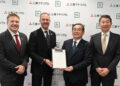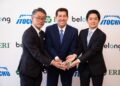













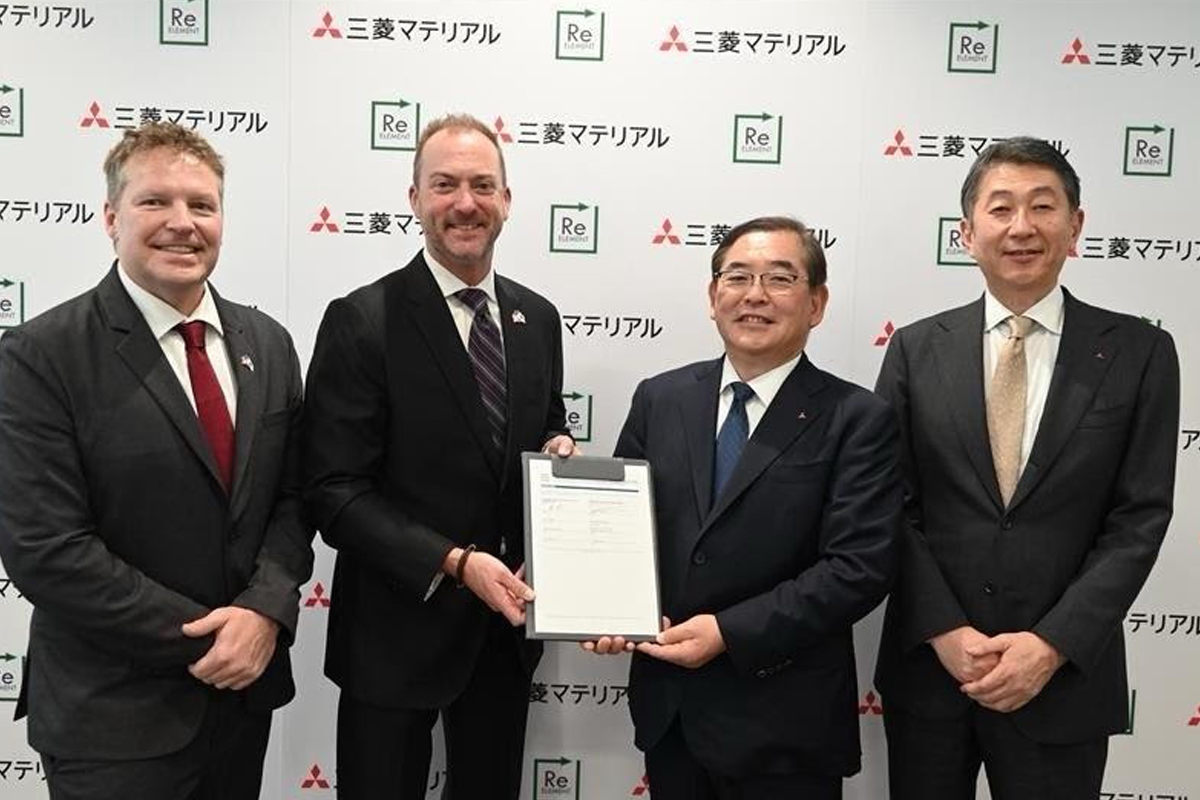
ReElement Technologies has entered a strategic collaboration with Mitsubishi Materials Corp. that includes an investment and a plan to expand rare earth and critical mineral refining capacity across the United States and Japan.
The agreement, announced March 31, combines feedstock sourcing, recycling and refining activities as both companies target constraints in mineral processing supply chains.
American Resources Corp., which holds a minority stake in ReElement, said the investment reflects Mitsubishi Materials’ support for the company’s refining-focused approach to producing high-purity materials used in electrification, advanced manufacturing and defense applications.
In the United States, the companies said the collaboration will support ReElement’s refining operations through feedstock sourcing, tolling and offtake arrangements, with the aim of increasing domestic processing capacity. In Japan, the companies plan to evaluate joint opportunities to commercialize recycling systems for rare earth elements and other critical minerals.
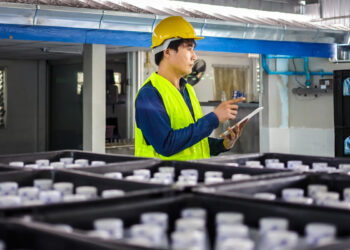
ReElement’s platform is based on chromatography, a separation process that the company said can process inputs including recycled materials, mine waste and primary ores. The company said the system is designed as an alternative to conventional solvent-based refining methods, which it described as difficult to deploy outside China due to environmental, capital and operational constraints.
Mark Jensen, chief executive officer of ReElement Technologies, said the partnership reflects a shared focus on supply chain resilience.
“We are honored to partner with Mitsubishi Materials Corporation, a global leader in materials innovation and resource circulation,” he said. “Their commitment and long-term vision reinforce the importance of building secure and resilient critical mineral supply chains across the United States and allied nations.”
Jensen said the combination of Mitsubishi Materials’ experience in sourcing and recycling with ReElement’s refining system is intended to address processing constraints.
“By combining MMC’s expertise in feedstock sourcing and recycling with ReElement’s refining-first platform, we are advancing a scalable and economically viable solution to the midstream bottleneck,” he said.
Tetsuya Tanaka, executive officer and president of Mitsubishi Materials Corporation, said the investment aligns with the company’s strategy to expand its recycling business.
“This investment represents an important initiative to concretely advance the enhancement and global expansion of our circular resource business,” he said, adding that the companies will also study joint development opportunities in Japan.
The collaboration highlights continued focus on the processing stage of the critical minerals supply chain, where separation and purification capacity remains limited relative to upstream extraction.
ReElement said its system is designed to be modular and scalable, with lower chemical, energy and labor intensity compared with conventional methods, and the ability to process multiple feedstocks. The company also said the approach can support localized refining near feedstock sources or end markets.