





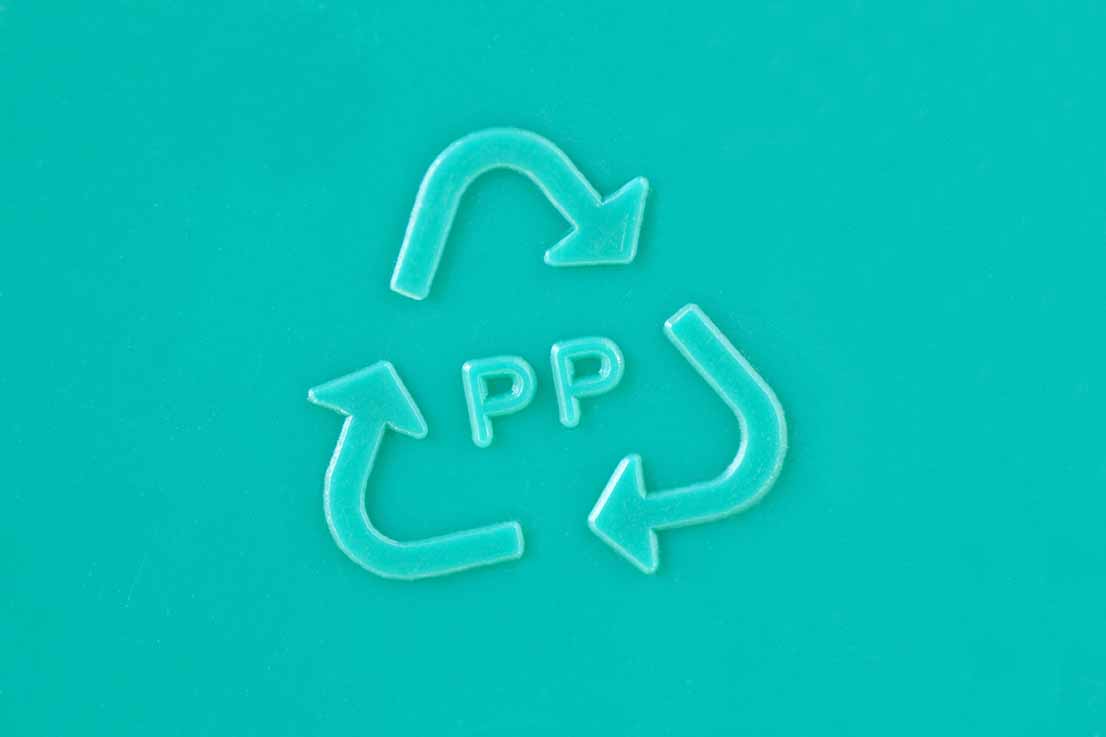
Historically, recycled commodity markets have run on informal “handshake” agreements and relationships that stretch back years, if not decades. But polypropylene recycler PureCycle recently announced a three-year feedstock contract with WM, the nation’s largest hauler and recycler.
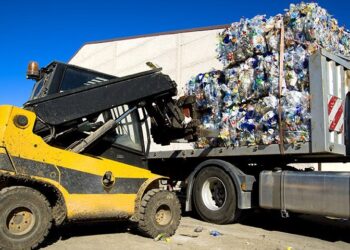
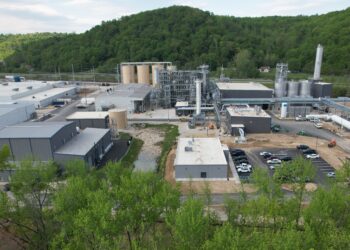
The agreement, which took effect this month, is for about 50 truckloads (2 million pounds) per month of PP bales. As is typical for contracts, the pricing terms are confidential, but PureCycle CEO Dustin Olson said that in general pricing will correlate with market trends. He said bales will come from WM sites that provide the most cost-effective and efficient transportation to PureCycle’s secondary sorting facility in Denver, Pennsylvania. As of press time, WM had not responded to a request for comment.
In an interview, Olson said the contract built on a relationship in which PureCycle has been a reliable buyer and the companies have worked together on previous circularity projects. They “gained a lot of good practice working together” through large national sporting events, he said, but perhaps more important is PureCycle’s track record as a buyer. “I mean, we pay our bills, we pick up reliably, we run the plant better and better and better every day, and so we’re a reliable buyer for them.”
While such agreements are standard in traditional commodity markets, “when it comes to waste, how many long-term contracts have you seen like this with majors? Not many,” Olson said. “That’s the way you grow in the US, in terms of adding capacity — you’ve got to have the right feedstock security available to you.”
An industry in transition
As the recycling industry matures, long-term agreements are among the mechanisms necessary to help ensure recyclers’ survival. Without certainty, investment stalls or even shrinks.
Unlike producers of virgin polymers and chemicals, where long-term feedstock and offtake agreements are the norm, recyclers have long placed a heavy emphasis on relationships rather than formal agreements.
This dynamic is especially evident when sellers opt to sell not necessarily to the highest bidder, but rather to the customer who not only pays in a timely fashion – or at all – but also will continue buying from them.
A stark example is the color HDPE market, which tends to be more volatile as smaller buyers enter the market for a few months, increasing competition for bales, and then withdraw until the next high season. In this case, a more consistent buyer may be able to get needed feedstock at a lower price than a seasonal one. PureCycle is making a similar case in PP: It’s the buyer that keeps showing up.
Olson said the relationship could grow to “many hundreds of truckloads” as PureCycle production expands. WM has “a lot more than 50 loads a month that they want to sell, and so I think this is just the beginning,” he said. “These guys are driven to get the material off the [MRF] floor every single day, period.”
WM also has “great access to brands. Every brand knows them, and every brand wants a circularity story,” Olson said. “I think at the end of the day, together we’re going to create a value proposition to the brands that’s just really unique. And I think brands are going to really enjoy that.”
Olson said PureCycle has good relationships with all the major haulers as well as smaller ones, and looking ahead, “I think that will continue, and maybe we will become more public with that.”
The Recycling Partnership’s Polypropylene Recycling Coalition sees such agreements as “an encouraging signal of continued investment in domestic polypropylene recycling markets,” Brittany LaValley, senior vice president of impact strategy and management, at The Recycling Partnership, said in a statement. “Strong connections between material recovery facilities and end markets are essential to building a more effective recycling system.”
The formal relationship is symbiotic, Olson said. “WM couldn’t do it without us, because we bring upcycling to that portion of the circle, and we couldn’t do it without WM, because if they’re not collecting and sorting and managing it properly, then forget about it. It’s not going to work.”