



As the United States continues to take steps to bolster its critical mineral supply, several other nations are looking outward to enhance their supply chains.
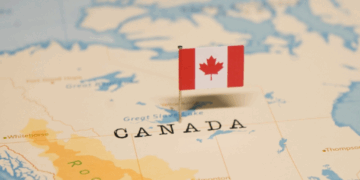
Critical minerals are among the agenda items this week when Canadian Prime Minister Mark Carney visits Europe, a trip that will include an address to the European Parliament. Canada is looking to strengthen its ties to the European Union on many fronts as the trade war with the US continues, resulting in a series of tariffs.
The US depends on Canada for about 44% of nickel supply and 25% of civilian uranium needs, according to US Geological Survey estimates. Those materials were included among the $28.8 billion Canadian ($20.69 billion US) in critical minerals that Canada sent into the US in 2025.
Ontario Premier Doug Ford has threatened to cut off critical mineral supplies to the US if the trade war worsens. His province and the nation have yet to take such action, yet Carney’s actions in Europe indicate that Canada is exploring other avenues for mineral trade.
Canada has already beefed up its trade across the Pacific this year. A report from the Canada China Business Council found Canadian exports to China went up 30% in the first half of 2026, while overall trade increased 3.6%. Mineral exports were a key part of that, with shipments of metal ores and nonmetallic minerals to China up 29%.
Carney’s visit to Europe may help satisfy similar mineral needs across the Atlantic. EU nations are looking to decrease dependence upon Chinese mineral supplies, but numerous critical mineral projects in Europe are reporting financing issues, creating the need for a more secure short-term fix. Canada has worked this year with individual EU nations, including Germany and France, to bolster mineral trade.
In Asia, South Korea and Uzbekistan agreed to expand their partnership into several emerging sectors, including critical minerals. South Korea’s leadership views central Asian countries, including Kazakhstan and Tajikistan, as key partners for bolstering alternative supply chains.
South Korea imports more than 99% of its critical minerals and, like the European Union, wants to reduce reliance on China for those materials. Now at 80%, Korea has set a goal to import no more than 50% of its minerals from China by 2030.
Uzbekistan, like several other former Soviet republics, has deep reserves of several critical minerals including copper, tungsten and lithium. Earlier this year, Uzbekistan and the US entered into a memorandum of understanding to bring more of those minerals into the US.