Resource Recycling
  • The Latest
  • Analysis
    • All
    • Certification Scorecard
    • Industry Announcements
    • Opinion
    Colorado regulators suggest mid-range EPR scenario

    Why collaboration on plastic waste still matters

    Battery processors lay out latest moves

    Battery recycler Ascend Elements files for bankruptcy

    EPR fees are a market signal. Here’s what they’re telling you.

    EPR fees are a market signal. Here’s what they’re telling you.

    Wolframite ore, the primary ore of tungsten from Altai, Russia

    Tungsten scrap export controls draw industry attention

    Certification Scorecard — Week of April 6, 2026

    Closed Loop Partners acquires Sutter Metals, connecting electronics disposition to metals recovery

    Certification Scorecard — Week of March 30, 2026

    Industry announcements for January 2026

    Industry announcements for April 2026

    Certification scorecard – Week of March 23, 2026

  • Conferences
  • Publications

    Other Topics

    Textiles
    Organics
    Packaging
    Glass
    Brand Owners

    Metals
    Technology
    Research
    Markets
    Grant Watch

    All Topics

Subscribe
No Result
View All Result
Resource Recycling
  • The Latest
  • Analysis
    • All
    • Certification Scorecard
    • Industry Announcements
    • Opinion
    Colorado regulators suggest mid-range EPR scenario

    Why collaboration on plastic waste still matters

    Battery processors lay out latest moves

    Battery recycler Ascend Elements files for bankruptcy

    EPR fees are a market signal. Here’s what they’re telling you.

    EPR fees are a market signal. Here’s what they’re telling you.

    Wolframite ore, the primary ore of tungsten from Altai, Russia

    Tungsten scrap export controls draw industry attention

    Certification Scorecard — Week of April 6, 2026

    Closed Loop Partners acquires Sutter Metals, connecting electronics disposition to metals recovery

    Certification Scorecard — Week of March 30, 2026

    Industry announcements for January 2026

    Industry announcements for April 2026

    Certification scorecard – Week of March 23, 2026

  • Conferences
  • Publications

    Other Topics

    Textiles
    Organics
    Packaging
    Glass
    Brand Owners

    Metals
    Technology
    Research
    Markets
    Grant Watch

    All Topics

Subscribe
No Result
View All Result
Resource Recycling
No Result
View All Result
Home Plastics

Scientists combine chemistry, biology to recycle mixed plastics

Marissa HeffernanbyMarissa Heffernan
October 18, 2022
in Plastics
Scientists combine chemistry, biology to recycle mixed plastics
A tandem chemical and biological process that draws from decades-old studies on chemical oxidation can be used to break down a variety of plastic types. | PowerUp/Shutterstock

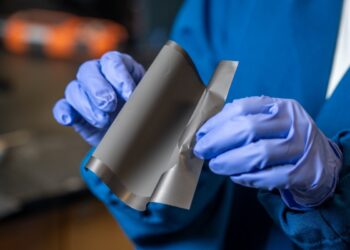
Researchers have developed a way to turn mixed polymer plastics into a single chemical product, which could potentially eliminate the need to sort plastic by type prior to recycling.

“Combining chemical and biological processes is a promising new strategy for the valorization of mixed plastic waste,” an NREL press release stated.

The project comes from the Bio-Optimized Technologies to keep Thermoplastics out of Landfills and the Environment (BOTTLE) Consortium and the U.S. Department of Energy’s National Renewable Energy Laboratory (NREL).

Gregg Beckham, a senior research fellow at NREL and head of BOTTLE, said in the press release that the research is “a potential entry point into processing plastics that cannot be recycled at all today.”

The procedure is a tandem chemical and biological process that draws from decades-old studies on chemical oxidation, which can be used to break down a variety of plastic types. The study tested it on PET, PS and HDPE, but the researchers said it could also work for PP and PVC. The team plans to do further study on those materials.

The research was published in the journal Science, with Beckham as the senior author. Co-authors were NREL researchers and BOTTLE team members from the Massachusetts Institute of Technology, Oak Ridge National Laboratory and the University of Wisconsin–Madison.

Kevin Sullivan, a postdoctoral researcher at NREL and co-author of the paper, said the process uses oxygen and catalysts to break down the large polymer molecules.

“The chemical catalysis process we have used is just a way of accelerating that process that occurs naturally, so instead of degrading over several hundred years, you can break down these plastics in hours or minutes,” Sullivan said.

Oxidation turns the PS, PET and HDPE into a “complex mixture of chemical compounds – including benzoic acid, terephthalic acid and dicarboxylic acids – that would require advanced and costly separations to yield pure products,” the press release stated, but the BOTTLE team used biology to take a shortcut.

The researchers engineered a soil microbe, called Pseudomonas putida, to “funnel” the mixture of intermediates into either polyhydroxyalkanoates (PHAs), a form of biodegradable bioplastics, or beta-ketoadipate, which can be used to make nylon materials.

Allison Werner, another co-author of the study, said biological funneling consists of engineering the metabolic network of microbes “to direct the carbon from a large number of substrates to a single product.”

“To do this, we take DNA from nature – usually other microbes – and paste it into Pseudomonas putida’s genome,” Werner said. “The DNA is transcribed into RNA, which in turn is translated into proteins that perform diverse biochemical transformations, forming a new metabolic network and ultimately enabling us to capture more carbon and to tune where it goes.”

Previously, scientists have used the same microbe to valorize chemical mixtures from plant cell walls. Beckham emphasized that the engineered bacteria do not degrade plastics directly.

“If you took the bacteria that we use right now, and you combine it with polyethylene, the bacteria will die, and the plastic will stay there,” Beckham said, which is why the oxidation process is necessary.

The BOTTLE team plans to conduct further research to understand and quantify all the additives and dyes in plastics, and an upcoming NREL mission to the International Space Station will test whether microgravity improves the process.

The study was funded by the U.S. Department of Energy’s Advanced Manufacturing Office and Bioenergy Technologies Office.
 

Tags: Chemical RecyclingHDPEPETPSResearch
TweetShare
Marissa Heffernan

Marissa Heffernan

Marissa Heffernan worked at Resource Recycling from January 2022 through June 2025, first as staff reporter and then as associate editor. Marissa Heffernan started working for Resource Recycling in January 2022 after spending several years as a reporter at a daily newspaper in Southwest Washington. After developing a special focus on recycling policy, they were also the editor of the monthly newsletter Policy Now.

Related Posts

Amazon, DOE partner on critical materials recovery

byScott Snowden
April 13, 2026

DOE and Amazon will study recovery of graphite from textiles and gallium from IT hardware, aiming to strengthen US supply...

Rice researchers use lemon juice to boost battery recycling

byScott Snowden
April 9, 2026

Rice researchers reported a battery recycling process that uses plasma and mild solvents to recover most metals from black mass...

End markets, policy key to RPET viability

End markets, policy key to RPET viability

byAntoinette Smith
April 8, 2026

Longer-term actions support domestic RPET markets and can help prevent the loss of public trust in recycling systems, industry experts...

With RPET in crisis, focus turns to solutions

With RPET in crisis, focus turns to solutions

byAntoinette Smith
April 2, 2026

Stakeholders from across the RPET value chain share concrete solutions for the short term to help prevent further loss of...

Packaging sector sees shift from AI pilots to wider use

byScott Snowden
April 1, 2026

AI adoption is expanding across packaging operations as costs fall and use cases widen, though concerns around accountability, ROI and...

Report pegs fire losses at $2.5b in US and Canada recycling industry

byScott Snowden
March 27, 2026

A new fire report estimates $2.5b in damage across US and Canadian recycling facilities in 2025, with lithium-ion batteries still...

Load More
Next Post

Study confirms Digimarc Recycle improves sortation

More Posts

EPR fees are a market signal. Here’s what they’re telling you.

EPR fees are a market signal. Here’s what they’re telling you.

April 10, 2026
End markets, policy key to RPET viability

End markets, policy key to RPET viability

April 8, 2026

Trafigura signs $1.1b deal for recycled battery metals

April 8, 2026
Wineries help create model for film recycling

Wineries help create model for film recycling

April 7, 2026
With RPET in crisis, focus turns to solutions

With RPET in crisis, focus turns to solutions

April 2, 2026
Wolframite ore, the primary ore of tungsten from Altai, Russia

Tungsten scrap export controls draw industry attention

April 9, 2026
Plastics Recyclers Have the Capacity to Recycle More. Now Let’s Use It.

Study finds most recycling occurs within 30 miles of access

April 8, 2026

WM opens new $60m MRF in Indy

April 10, 2026
Solarcycle starts up Georgia recycling plant

S3399 signals a shift in how states are tackling solar panel waste

April 6, 2026
Bill to update New Jersey e-scrap program heads to governor

New Jersey recyclers talk EPR

April 9, 2026
Load More

About & Publications

About Us

Staff

Archive

Magazine

Work With Us

Advertise
Jobs
Contact
Terms and Privacy

Newsletter

Get the latest recycling news and analysis delivered to your inbox every week. Stay ahead on industry trends, policy updates, and insights from programs, processors, and innovators.

Subscribe

Welcome Back!

Login to your account below

Forgotten Password?

Retrieve your password

Please enter your username or email address to reset your password.

Log In

Add New Playlist

No Result
View All Result
  • The Latest
  • Analysis
  • Recycling
  • E-Scrap
  • Plastics
  • Policy Now
  • Conferences
    • E-Scrap Conference
    • Plastics Recycling Conference
    • Resource Recycling Conference
    • Textiles Recovery Summit
  • Magazine
  • About Us
  • Advertise
  • Archive
  • Jobs
  • Staff
Subscribe
This website uses cookies. By continuing to use this website you are giving consent to cookies being used. Visit our Privacy and Cookie Policy.