












Despite being less than a month old, California’s first-in-the-nation textile EPR program is already headed to court. The American Apparel & Footwear Association (AAFA) has filed a petition in the Sacramento County Superior Court challenging CalRecycle’s selection of Landbell USA to run the state’s landmark Responsible Textile Recovery Act.
The association argues the European-rooted organization fails to meet SB 707’s own requirements for how a producer responsibility organization (PRO) must be formed, governed and operated, pointing specifically to an absence of a diverse governing board and what it calls inadequate financial controls.
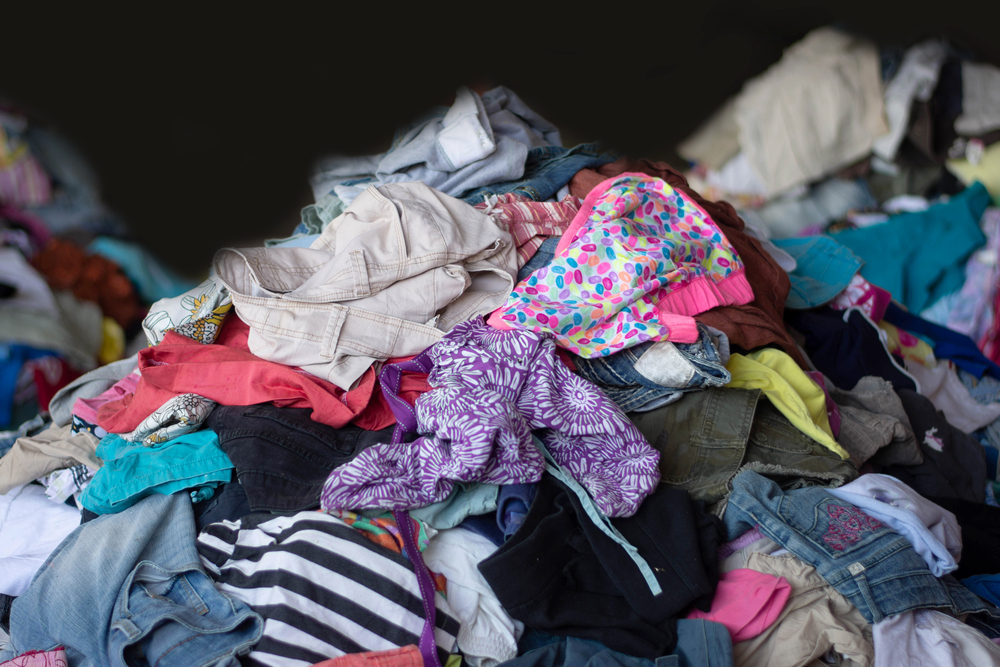
The subsequent legal challenge with SB 707 is a shift as AAFA initially supported the law but is now contesting who implements it. The landmark law sets into motion the pieces needed to make the collection, sorting, reuse, repair and recycling of textiles, closing the loop on the waste stream.
A July 1, 2026 deadline dictates when textile producers must register with and join Landbell USA as the approved PRO. Missing that deadline puts companies at risk of enforcement action, including fines of up to $10,000 per day for non-compliance.
Just after the law passed in August 2024, AAFA’s CEO Steve Lamar stated the association was “gratified that the bill that passed today is more implementable” than originally introduced, and withdrew its opposition to the legislation.
He did note previously, however, that “the industry would have preferred to see some additional amendments, such as language to provide for harmonization with the European Union on the recycling definition, to eliminate restrictions on the sale of recycled textiles, and to fully close the loophole for third-party sellers on online marketplaces.”
The AAFA also testified in July 2023 and July 2024 along with Accelerating Circularity and the American Circular Textiles Group, submitting comments about SB 707, saying the bill should be revised to a two-year bill.
AAFA’s comments regarding SB 707 zeroed in on unresolved aspects of the legislation that producers indicated need clarification before the program can function at scale:
- How reuse and recycling infrastructure will be built and financed in practical terms for both consumers and the businesses expected to move material through the system, including where covered products will go after collection and how end markets will be developed and supported over time
- How the PRO structure will allow existing for-profit and nonprofit businesses to participate without being squeezed out, while still generating enough supply to make the economics work
- What guidelines will govern product safety, sorting protocols and material handling standards
- Where brand and retailer liability begins and ends
- How a needs assessment will be grounded in actual pilot data rather than projections, the only credible basis, the association argues, for designing a program that can hold up at statewide scale
- How brands that sell directly to California consumers but have no physical presence in the state are expected to participate
Lamar stressed that the challenge isn’t just about principle, it’s about the clock. With producers facing the July 1 registration deadline, he told Sourcing Journal the association “can’t afford to lose any more time on this.”
The Sacramento County Superior Court will review the petition and determine whether to reverse Landbell USA’s approval. No hearing date or decision timeline has been reported yet.