





Resource Recycling
  • The Latest
  • Analysis
    • All
    • Certification Scorecard
    • Industry Announcements
    • Opinion
    The electronics recycling industry is undergoing a transformation from labor-intensive manual operations to highly automated, AI-driven facilities that use advanced robotics, cleaner chemistry and digital tracking systems to extract critical materials.

    The cyber-physical MRF: AI and robotics reshape e-waste recovery

    Certification scorecard for the week of Feb. 9, 2026

    Meta-Corning deal signals IT hardware retirement wave

    Meta-Corning deal signals IT hardware retirement wave

    Malaysia clamps down on illegal e-waste imports amid probes

    Malaysia clamps down on illegal e-waste imports amid probes

    URT builds alliance to remake electronics plastics at scale

    ICYMI: Top 5 e-scrap stories from January 2026

    The electronics recycling industry is undergoing a transformation from labor-intensive manual operations to highly automated, AI-driven facilities that use advanced robotics, cleaner chemistry and digital tracking systems to extract critical materials.

    Certification scorecard for the week of Feb. 2, 2026

    Auditors warn EU may fall short on critical metals

    Auditors warn EU may fall short on critical metals

    Industry announcements for January 2026

    Industry announcements for February 2026

    ICYMI: Top 5 recycling stories from January 2026

  • Conferences
  • Publications

    Other Topics

    Textiles
    Organics
    Packaging
    Glass
    Brand Owners

    Metals
    Technology
    Research
    Markets
    Grant Watch

    All Topics

Subscribe
No Result
View All Result
Resource Recycling
  • The Latest
  • Analysis
    • All
    • Certification Scorecard
    • Industry Announcements
    • Opinion
    The electronics recycling industry is undergoing a transformation from labor-intensive manual operations to highly automated, AI-driven facilities that use advanced robotics, cleaner chemistry and digital tracking systems to extract critical materials.

    The cyber-physical MRF: AI and robotics reshape e-waste recovery

    Certification scorecard for the week of Feb. 9, 2026

    Meta-Corning deal signals IT hardware retirement wave

    Meta-Corning deal signals IT hardware retirement wave

    Malaysia clamps down on illegal e-waste imports amid probes

    Malaysia clamps down on illegal e-waste imports amid probes

    URT builds alliance to remake electronics plastics at scale

    ICYMI: Top 5 e-scrap stories from January 2026

    The electronics recycling industry is undergoing a transformation from labor-intensive manual operations to highly automated, AI-driven facilities that use advanced robotics, cleaner chemistry and digital tracking systems to extract critical materials.

    Certification scorecard for the week of Feb. 2, 2026

    Auditors warn EU may fall short on critical metals

    Auditors warn EU may fall short on critical metals

    Industry announcements for January 2026

    Industry announcements for February 2026

    ICYMI: Top 5 recycling stories from January 2026

  • Conferences
  • Publications

    Other Topics

    Textiles
    Organics
    Packaging
    Glass
    Brand Owners

    Metals
    Technology
    Research
    Markets
    Grant Watch

    All Topics

Subscribe
No Result
View All Result
Resource Recycling
No Result
View All Result
Home Recycling

Group calls for PCR quality standards

Marissa HeffernanbyMarissa Heffernan
August 7, 2023
in Recycling
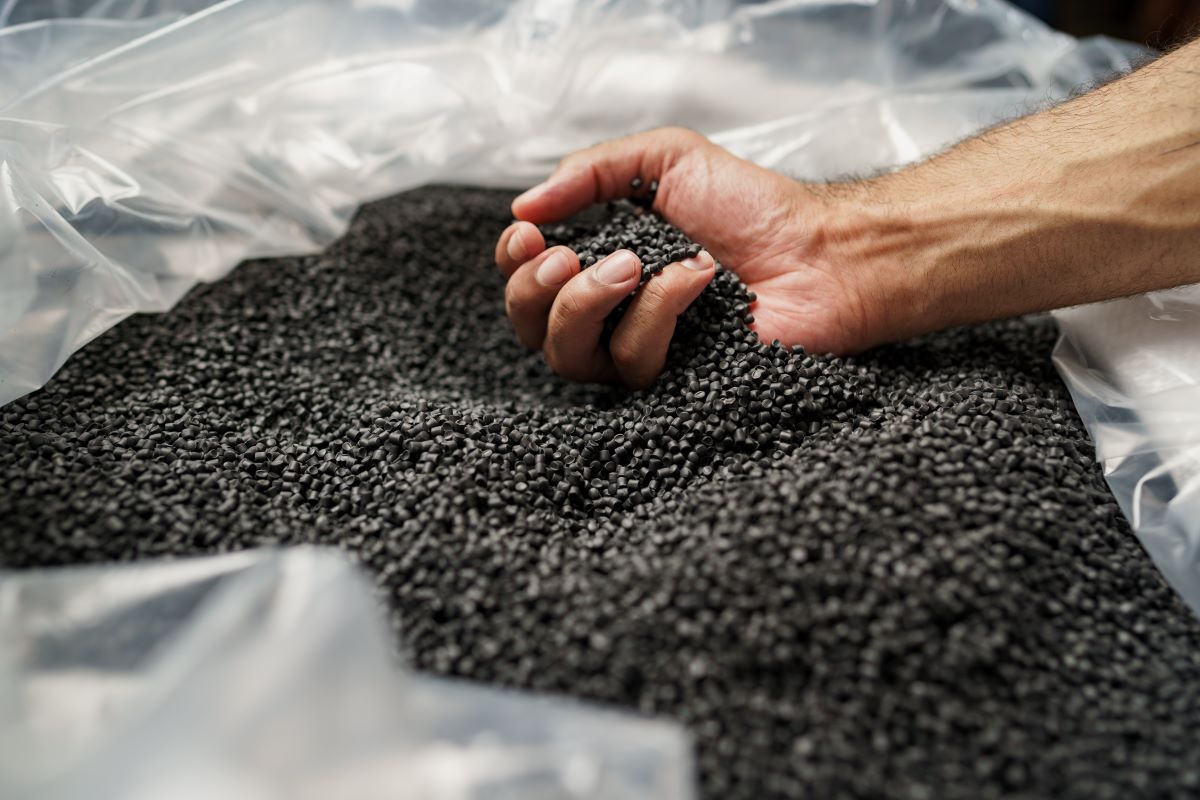
The Alliance to End Plastic Waste argues that consistent specifications for quality material will help drive investment in sorting and collection technology. | Fabrika Simf/Shutterstock

The Alliance to End Plastic Waste suggested the recycling industry in the European Union develop target specifications for processed plastics to ease the transition to a circular economy.

The group, which was founded in 2019 by some of world’s largest plastic production and packaging stakeholders, made recommendations for those specifications in a report featuring research carried out by consulting firm Eunomia Research and Consulting. 

“Currently, there are no common recyclate specifications or consensuses in the European market to align the secondary plastics industry,” the report stated. “The definition of quality remains unclear, and a framework to implement such quality in the recycling process is lacking.”

Right now, recyclers often use their own unique specifications or create specialized recycled resins for each customer, both of which limit the number of converters or producers a processor can sell their material to. 

“The somewhat siloed nature of the supply chain makes it difficult for each business to be effective in producing sufficient and consistent material to meet application-specific market needs,” the report stated. 

The report noted that with demand for recycled resins rising, there is also greater need for consistent target specifications for recycled material. Currently, recycled post-consumer plastic from rigid packaging meets 8% of the demand for HDPE and 3% of the demand for PP, it added. 

“Clarifying target specifications will make the required changes transparent and, by providing proper value for the recyclate quality, encourage tailored upstream investment for sorting and recycling operations and drive improved collection and sorting technologies,” the report stated. 

Developing specifications

The report proposed that the industry do the technical work of crafting target specifications for key applications by running industrial trials, the aim being to work toward global standards and harmonization.

As an example, the report identified the values and ranges of the most important characteristics that recycled material would need for a converter to achieve at least 30% recycled content in a specific packaging application in the European market. 

The three polyolefin packaging applications covered by the report were HDPE for blow-molded bottles, LDPE extruded shrink film and PP injection-molded caps and tubs. Standards were developed with 28 operators across the plastics recycling value chain. 

“Based on stakeholder input, a set of recyclate quality target specifications were developed to provide the physico-chemical, mechanical and aesthetic properties required for each application,” the report noted. 

It clarified that the specifications are not intended to meet food or skin contact-sensitive regulatory requirements, and are only a starting point, with full specifications to be informed by trials.  

The report looked at ash content, density, filtration, gel count, melt index, moisture content, odor, pellet color, polyethylene content, polypropylene content and volatile content for physical properties and elongation at break, flexural modulus, tearing force, tensile strength at break and tensile strength at yield for mechanical properties. 

The specifications for HDPE, LDPE and PP can all be found in the final pages of the report. 

“This study set out to define recyclate quality target specifications that are achievable under current market conditions with existing technologies, techniques and processes,” the report stated. “Waste collectors, sorters and recyclers may need to adopt better available technologies and/or processes to achieve the target specifications.” 

A version of this story appeared in Plastics Recycling Update on Aug. 1.

Tags: Research
TweetShare
Marissa Heffernan

Marissa Heffernan

Marissa Heffernan worked at Resource Recycling from January 2022 through June 2025, first as staff reporter and then as associate editor. Marissa Heffernan started working for Resource Recycling in January 2022 after spending several years as a reporter at a daily newspaper in Southwest Washington. After developing a special focus on recycling policy, they were also the editor of the monthly newsletter Policy Now.

Related Posts

UT Austin spinout Supra launches to recover rare earths

byScott Snowden
February 3, 2026

Supra Elemental Recovery launched today, aiming to recover gallium and scandium from US waste streams to help reduce import dependence...

Leveraging materials testing for procurement efficiency

byDr. Pradyumna Gupta
January 23, 2026

In real-world application, variations in resin properties translate into budget risk, from increased scrap rates and production downtime to premature...

Robot pilot targets legacy parts to help supply defense

Robot pilot targets legacy parts to help supply defense

byScott Snowden
December 29, 2025

Although chip availability has improved since the worst shortages earlier in the decade, Tuurny says demand for legacy electronics remains...

Chemical bonds

Alberta catalyst discovery targets hydrogen and plastics

byScott Snowden
December 10, 2025

A chance discovery inside a University of Alberta laboratory has developed into a Canadian cleantech project that aims to reshape...

Global recycling patent trends may reflect legislative push

Global recycling patent trends may reflect legislative push

byAntoinette Smith
November 25, 2025

Patent applications for chemical recycling technologies have reached a record high globally with government initiatives among the factors driving innovation,...

Study maps barriers to firms’ supply chain climate goals

byAntoinette Smith
October 14, 2025

Publicly articulating clear sustainability goals helps ensure company follow-through, according to an annual supply chain study from the Massachusetts Institute...

Load More
Next Post

News from LyondellBasell, Netto Marken-Discount and more

More Posts

Oregon’s Recycling Modernization Act faces injunction

Court partially blocks Oregon EPR law, dismisses bulk of lawsuit

February 10, 2026
Chinese processing group details goals for US visit

AMP lays out vision of next-generation, AI-driven MRFs

July 24, 2024
Malaysia clamps down on illegal e-waste imports amid probes

Malaysia clamps down on illegal e-waste imports amid probes

February 6, 2026

REUSE Act heads to US House for consideration

February 9, 2026

ecoATM recycled 7.5M phones in 2025 as payouts hit $1.5B

February 10, 2026
Meta-Corning deal signals IT hardware retirement wave

Meta-Corning deal signals IT hardware retirement wave

February 9, 2026

APR, industry create proactive guidance for PET caps

February 12, 2026
Texas sues over dumped wind turbine blades

Texas sues over dumped wind turbine blades

February 10, 2026

Alpek talks PET overcapacity, soft demand

February 11, 2026
The electronics recycling industry is undergoing a transformation from labor-intensive manual operations to highly automated, AI-driven facilities that use advanced robotics, cleaner chemistry and digital tracking systems to extract critical materials.

The cyber-physical MRF: AI and robotics reshape e-waste recovery

February 12, 2026
Load More

About & Publications

About Us

Staff

Archive

Magazine

Work With Us

Advertise
Jobs
Contact
Terms and Privacy

Newsletter

Get the latest recycling news and analysis delivered to your inbox every week. Stay ahead on industry trends, policy updates, and insights from programs, processors, and innovators.

Subscribe

Welcome Back!

Login to your account below

Forgotten Password?

Retrieve your password

Please enter your username or email address to reset your password.

Log In

Add New Playlist

No Result
View All Result
  • The Latest
  • Analysis
  • Recycling
  • E-Scrap
  • Plastics
  • Policy Now
  • Conferences
    • E-Scrap Conference
    • Plastics Recycling Conference
    • Resource Recycling Conference
    • Textiles Recovery Summit
  • Magazine
  • About Us
  • Advertise
  • Archive
  • Jobs
  • Staff
Subscribe
This website uses cookies. By continuing to use this website you are giving consent to cookies being used. Visit our Privacy and Cookie Policy.