

Resource Recycling
  • The Latest
  • Analysis
    • All
    • Certification Scorecard
    • Industry Announcements
    • Opinion
    EPR fees are a market signal. Here’s what they’re telling you.

    EPR fees are a market signal. Here’s what they’re telling you.

    Wolframite ore, the primary ore of tungsten from Altai, Russia

    Tungsten scrap export controls draw industry attention

    Certification Scorecard — Week of April 6, 2026

    Closed Loop Partners acquires Sutter Metals, connecting electronics disposition to metals recovery

    Certification Scorecard — Week of March 30, 2026

    Industry announcements for January 2026

    Industry announcements for April 2026

    Certification scorecard – Week of March 23, 2026

    Certification Scorecard – Week of March 16, 2026

    Groups identify recovered plastics users in the Northeast

    Bale pricing for recycled plastics diverges

  • Conferences
  • Publications

    Other Topics

    Textiles
    Organics
    Packaging
    Glass
    Brand Owners

    Metals
    Technology
    Research
    Markets
    Grant Watch

    All Topics

Subscribe
No Result
View All Result
Resource Recycling
  • The Latest
  • Analysis
    • All
    • Certification Scorecard
    • Industry Announcements
    • Opinion
    EPR fees are a market signal. Here’s what they’re telling you.

    EPR fees are a market signal. Here’s what they’re telling you.

    Wolframite ore, the primary ore of tungsten from Altai, Russia

    Tungsten scrap export controls draw industry attention

    Certification Scorecard — Week of April 6, 2026

    Closed Loop Partners acquires Sutter Metals, connecting electronics disposition to metals recovery

    Certification Scorecard — Week of March 30, 2026

    Industry announcements for January 2026

    Industry announcements for April 2026

    Certification scorecard – Week of March 23, 2026

    Certification Scorecard – Week of March 16, 2026

    Groups identify recovered plastics users in the Northeast

    Bale pricing for recycled plastics diverges

  • Conferences
  • Publications

    Other Topics

    Textiles
    Organics
    Packaging
    Glass
    Brand Owners

    Metals
    Technology
    Research
    Markets
    Grant Watch

    All Topics

Subscribe
No Result
View All Result
Resource Recycling
No Result
View All Result
Home Recycling

Redemption centers feel financial squeeze in California

Bobby ElliottbyBobby Elliott
March 1, 2016
in Recycling

Following the recent shuttering of nearly 200 container redemption centers in California, the state says it is exploring ways to prevent further closures as it grapples with its own funding questions.

According to Mark Oldfield, communications director for California’s recycling agency, CalRecycle, the Feb. 1 announcement that a major network of redemption centers would be closing 191 of its sites throughout the Golden State was a “huge blow for consumers in California.” Officials at the redemption center company, rePlanet, said the site closings resulted in more than 270 workers being laid off.

“We’re working together to talk through some of these issues,” Oldfield said in an interview with Resource Recycling. “Clearly, the challenges facing the recycling industry as a result of the drop in commodities prices are a huge concern to us.”

CRV touchpoint for residents

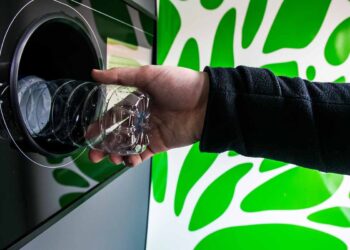
Redemption centers are located throughout California to provide residents with access to container redemption services. According to CalRecycle’s website, there are approximately 2,200 recycling centers statewide, creating the infrastructure that allows residents to redeem their bottles and cans under the California Redemption Value (CRV) system.

The state’s Beverage Container Recycling Fund is responsible for providing recycling centers with processing payments for the material those facilities handle. The payments are meant to make up for the difference between the cost of recovery and the value of the recovered beverage containers.

However, the closure of the rePlanet locations raises questions about the formula the state uses to determine payments to redemption centers.

One issue, Oldfield acknowledged, is that the sums are based on 12-month-old data, meaning the money doesn’t necessarily cover the cost of recycling containers in the current marketplace. “It’s behind the curve,” Oldfield said.

“Typically, when you’ve got fairly small swings in the commodity prices, that’s not a problem. When you have the price dropping 30 or 40 percent in the course of a year, it does become an issue,” Oldfield said.

Rod Rougelot, rePlanet’s president and chief operating officer, told Resource Recycling the company has had to close a total of 300 sites since January of 2015 and is now left with 350.

“The market today is unlike anything we have ever experienced and we need to reform the program to account for times like this,” Rougelot said.

Significant pain

According to Rougelot, the company had done its best to weather the steep drop seen in the prices paid for recyclable material on the open market.

However, Rougelot was expecting the state to respond to current market conditions by increasing its processing payments for containers made with PET, a material that’s been hit particularly hard in recent months in terms of value on the market. Instead, the state decreased its processing payment for PET by about 6.5 percent in its annual update to the fee on Jan. 1.

From Oct. 1 to Dec. 31 of 2015, CalRecycle paid out $177.40 per ton of PET to cover processing costs of the material. Starting Jan. 1, that payment fell to $165.96 per ton.

“Rather than going up as expected, it was reduced and that was a significant pain-point for us,” Rougelot said. “Had CalRecycle stayed out in front of this, those 300 centers we had to close would be open today.”

Susan Collins, the executive director of the Culver City, Calif.-based Container Recycling Institute, said changes need to be made immediately to prevent further recycling center closures.

“CalRecycle should assist by educating the legislators about the nature and scope of the problem and advocating for an immediate solution that protects the rights of Californians to have access to redemption centers where they can receive a refund of their deposit,” Collins said.

CalRecycle’s Oldfield maintained that the department “was working with the industry and stakeholders” and said “there are a variety of ways you could increase revenue” to improve the current program, including raising the deposit fee from a nickel to 6 cents, decreasing the payout to consumers and “eliminating some of the payments from the fund.”

He did, however, note that the state is currently bound by legislation to estimate processing payments based on a 12-month rolling average.

“That’s what the statute tells us to do. And there’s actually a good reason behind that. … The rolling average does smooth things out over time. Yes, it means there are going to be some months where it doesn’t quite cover the cost, but it also means there are going to be some months when it overcompensates.”

Larger funding challenges

Questions have long lingered about the financial footing of the state’s Beverage Container Recycling Fund, which has been running at a deficit for several years.

According to CalRecycle’s latest estimates, the average structural deficit of the fund is now expected to surpass $74 million in both the 2016-2017 and 2017-2018 fiscal years, which would carry significant repercussions.

“Absent any program changes, we’re going to go into what’s called proportional reduction and all payments out of the fund are going to be cut to all participants and that would include the processing payment,” Oldfield said.

He says financial backing for the Fund could be cut by as much as 80 percent as a result of proportional reductions “There is a sense of urgency to take this on in a larger sense than just looking at the processing payment,” he added.

Rougelot from rePlanet said a range of stakeholders need to be at the table and agree to a series of changes to address the solvency of the Beverage Container Recycling Fund.

“There needs to be a near-term focus on solvency of the fund and once that’s solidified, then you can take a longer-range view and engineer the program of the future,” Rougelot said. “This was conceived of back in the mid-1980s and we need to modernize the program.”
Tags: Beverage ContainersCaliforniaContainer DepositsMarkets
TweetShare
Bobby Elliott

Bobby Elliott

Bobby Elliott worked with Resource Recycling, Inc. from 2013 to 2021.

Related Posts

Trafigura signs $1.1b deal for recycled battery metals

byScott Snowden
April 8, 2026

Trafigura entered the agreement to expand access to recycled critical materials, supporting efforts to build more resilient battery supply chains...

Recycled copper output climbs as market shows surplus

byScott Snowden
April 6, 2026

Secondary copper production rose in January, with scrap-driven gains in China helping push global output higher as exchange inventories surged...

With RPET in crisis, focus turns to solutions

With RPET in crisis, focus turns to solutions

byAntoinette Smith
April 2, 2026

Stakeholders from across the RPET value chain share concrete solutions for the short term to help prevent further loss of...

E-commerce packaging market set for steady global growth

E-commerce packaging market set for steady global growth

byScott Snowden
March 26, 2026

The global e-commerce packaging market hit $78.4b in 2025 and is forecast to grow at a 4.8% CAGR through 2031,...

Ball Corp. US recycled aluminum content drops

byAntoinette Smith
March 26, 2026

The aluminum sheet manufacturer and recycler reported a higher percentage of recycled material in its beverage containers in 2025 for...

ag plastics field

Ag industry holds potential for recycling feedstock

byStefanie Valentic
March 24, 2026

With less than 15% of US agricultural plastics currently being recycled, insiders say the gap between what's possible and what's...

Load More
Next Post
Firm tests ‘game-changing’ idea for PET depolymerization

Firm tests 'game-changing' idea for PET depolymerization

More Posts

Wineries help create model for film recycling

Wineries help create model for film recycling

April 7, 2026
With RPET in crisis, focus turns to solutions

With RPET in crisis, focus turns to solutions

April 2, 2026

Trafigura signs $1.1b deal for recycled battery metals

April 8, 2026
End markets, policy key to RPET viability

End markets, policy key to RPET viability

April 8, 2026
PCA closing Richmond plant

PCA closing Richmond plant

April 2, 2026
Oregon’s Recycling Modernization Act faces injunction

Why EPR’s biggest obstacle might not be legislation

April 6, 2026
EPR fees are a market signal. Here’s what they’re telling you.

EPR fees are a market signal. Here’s what they’re telling you.

April 10, 2026

Apparel retailer organization challenges SB 707 textile PRO selection

April 2, 2026
Wolframite ore, the primary ore of tungsten from Altai, Russia

Tungsten scrap export controls draw industry attention

April 9, 2026

Independents complement primary PRO in state EPR

April 6, 2026
Load More

About & Publications

About Us

Staff

Archive

Magazine

Work With Us

Advertise
Jobs
Contact
Terms and Privacy

Newsletter

Get the latest recycling news and analysis delivered to your inbox every week. Stay ahead on industry trends, policy updates, and insights from programs, processors, and innovators.

Subscribe

Welcome Back!

Login to your account below

Forgotten Password?

Retrieve your password

Please enter your username or email address to reset your password.

Log In

Add New Playlist

No Result
View All Result
  • The Latest
  • Analysis
  • Recycling
  • E-Scrap
  • Plastics
  • Policy Now
  • Conferences
    • E-Scrap Conference
    • Plastics Recycling Conference
    • Resource Recycling Conference
    • Textiles Recovery Summit
  • Magazine
  • About Us
  • Advertise
  • Archive
  • Jobs
  • Staff
Subscribe
This website uses cookies. By continuing to use this website you are giving consent to cookies being used. Visit our Privacy and Cookie Policy.