








Resource Recycling
  • The Latest
  • Analysis
    • All
    • Certification Scorecard
    • Industry Announcements
    • Opinion

    Closed Loop Partners acquires Sutter Metals, connecting electronics disposition to metals recovery

    Certification Scorecard — Week of March 30, 2026

    Certification scorecard – Week of March 23, 2026

    Certification Scorecard – Week of March 16, 2026

    Groups identify recovered plastics users in the Northeast

    Bale pricing for recycled plastics diverges

    Why global ITAD is stranded in the Gulf

    Why global ITAD is stranded in the Gulf

    Certification scorecard for the week of March 9, 2026

    Diversion Dynamics: Secondhand exports slow down fast fashion

    Certification scorecard for the week of March 2, 2026

  • Conferences
  • Publications

    Other Topics

    Textiles
    Organics
    Packaging
    Glass
    Brand Owners

    Metals
    Technology
    Research
    Markets
    Grant Watch

    All Topics

Subscribe
No Result
View All Result
Resource Recycling
  • The Latest
  • Analysis
    • All
    • Certification Scorecard
    • Industry Announcements
    • Opinion

    Closed Loop Partners acquires Sutter Metals, connecting electronics disposition to metals recovery

    Certification Scorecard — Week of March 30, 2026

    Certification scorecard – Week of March 23, 2026

    Certification Scorecard – Week of March 16, 2026

    Groups identify recovered plastics users in the Northeast

    Bale pricing for recycled plastics diverges

    Why global ITAD is stranded in the Gulf

    Why global ITAD is stranded in the Gulf

    Certification scorecard for the week of March 9, 2026

    Diversion Dynamics: Secondhand exports slow down fast fashion

    Certification scorecard for the week of March 2, 2026

  • Conferences
  • Publications

    Other Topics

    Textiles
    Organics
    Packaging
    Glass
    Brand Owners

    Metals
    Technology
    Research
    Markets
    Grant Watch

    All Topics

Subscribe
No Result
View All Result
Resource Recycling
No Result
View All Result
Home Plastics

Closed Loop study breaks down chemical recycling terms

Marissa HeffernanbyMarissa Heffernan
September 26, 2023
in Plastics
Encina chemical recycling project moves ahead
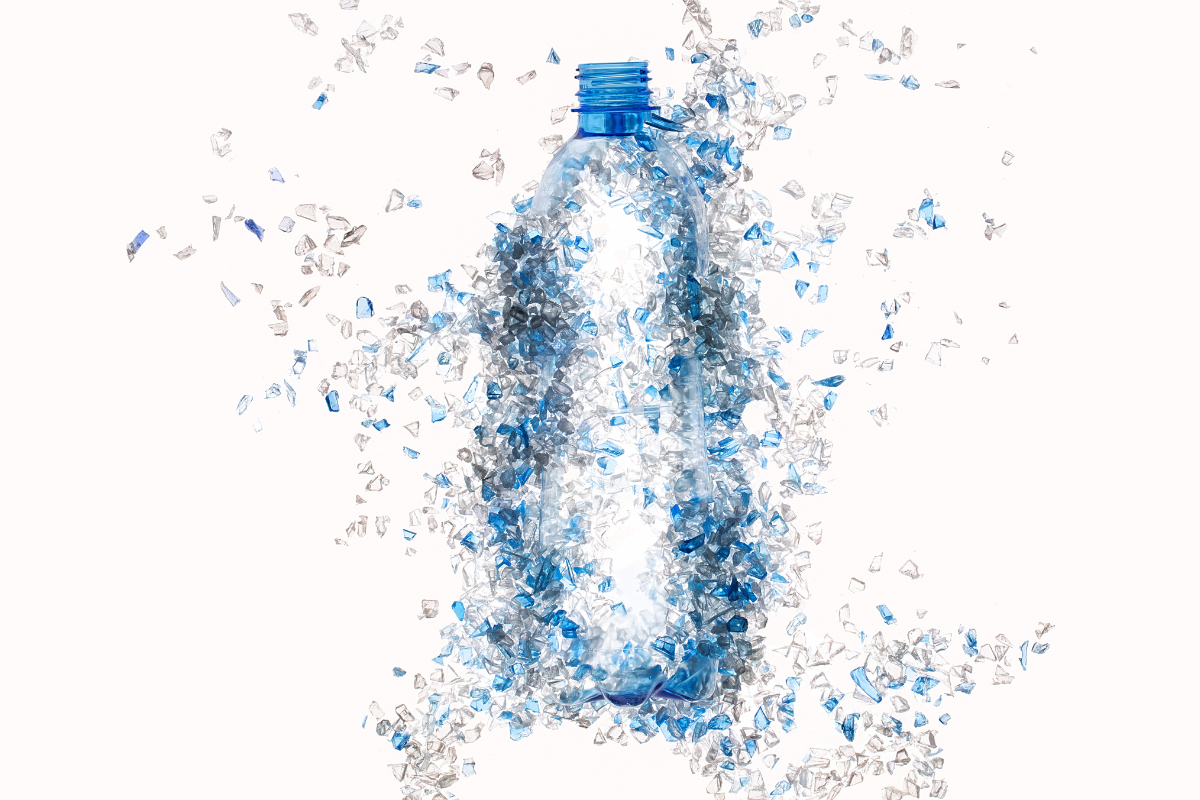
Study authors evaluated three categories of chemical recycling technology and found that the “purification” category yielded the highest PCR return. | Vitte Yevhen/Shutterstock

As with many emerging technologies, chemical recycling goes by a variety of names, including “advanced” and “molecular” recycling. A study from Closed Loop Partners dug into the differences. 

The study, titled “What Is Chemical Recycling, Why Does It Have So Many Different Names, And Why Does It Matter?” is the result of 18 months of study into the environmental impacts and financial viability of several types of chemical recycling technologies, a press release noted, undertaken with the goal of understanding “how and if these diverse technologies can fit into a circular future for plastics.” 

The overarching finding was that chemical recycling technologies can be sorted into three distinct categories: purification, depolymerization and conversion.

“Molecular recycling is a broad umbrella term – also referred to as chemical recycling or advanced recycling – that encompasses dozens of technologies that use solvents, heat, enzymes and even sound waves to purify or break down a wide range of plastic feedstocks to create polymers, monomers, oligomers or hydrocarbon products so that they can re-enter manufacturing supply chains, instead of going to landfill,” the report noted. 

It added that the technologies should only be considered circular when the supply chains produce a final product, which excludes fuels. 

“Molecular recycling is a group of technologies that can complement mechanical recycling and help widen the aperture of plastic waste that we can recycle today,” the report concluded, adding that it is “not a silver bullet but plays an important role in creating a waste-free future for our hardest-to-recycle plastics,” especially non-single-use and non-packaging plastics. 

However, more upstream and downstream solutions are needed, according to the report, including design, reuse and better policies. 

Crunching the numbers

The study evaluated nine technological processes. In terms of total packaging volumes accepted across the United States and Canada, the study found that conversion technologies could accept 82% of all plastic packaging produced – more than mechanical, purification or depolymerization technologies could alone. 

“These types of technologies also can process mixed plastic waste, while purification and depolymerization requires a sorted and single-resin feedstock,” the report added. “Because feedstock can be mixed, conversion technology companies are often paid to take feedstock rather than paying for feedstock.”

However, the researchers noted that when looking at the amount of PCR each category can yield, conversion technologies “have the longest route back to becoming plastic.” 

The study authors estimated that If 1,000 kilograms of plastic feedstock went into each of the three technologies, purification would yield the highest volume of PCR, showing an 88% material processing efficiency. Conversion technologies yielded the lowest amount, showing a 42% processing efficiency. 

“The capacity to move away from virgin plastics requires the recycling sector to be as efficient as possible,” the report stated.  

Through an environmental lens, purification and depolymerization technologies had smaller environmental footprints on average, the report found, taking into account energy use, greenhouse gas emissions and water impacts. 

Looking at the economic viability of the technologies, based on cost and accessibility of feedstocks and the market demand for the products, the study found that of nine technology companies, seven had a positive internal rate of return in the 2021 base case. That’s noteworthy “given that our base case assumes that these technologies are expected to sell their outputs at market commodity prices without a premium,” the study noted. 

The study concluded that the chemical recycling sector is “incredibly nuanced and diverse” and due diligence before investing is critical. 

“The opportunity for consumer brands, policymakers, and investors is to collaborate to develop a vision of success for this sector,” the study stated. 

Tags: Chemical RecyclingIndustry GroupsResearch
TweetShare
Marissa Heffernan

Marissa Heffernan

Marissa Heffernan worked at Resource Recycling from January 2022 through June 2025, first as staff reporter and then as associate editor. Marissa Heffernan started working for Resource Recycling in January 2022 after spending several years as a reporter at a daily newspaper in Southwest Washington. After developing a special focus on recycling policy, they were also the editor of the monthly newsletter Policy Now.

Related Posts

WM rolling out curbside acceptance of PP cups 

APR releases first semiannual Design Guide update

byBrian Clark Howard
April 3, 2026

The Association of Plastic Recyclers (APR) has published the first semiannual APR Design Guide for Plastics Recyclability. Now in its...

With RPET in crisis, focus turns to solutions

With RPET in crisis, focus turns to solutions

byAntoinette Smith
April 2, 2026

Stakeholders from across the RPET value chain share concrete solutions for the short term to help prevent further loss of...

Packaging sector sees shift from AI pilots to wider use

byScott Snowden
April 1, 2026

AI adoption is expanding across packaging operations as costs fall and use cases widen, though concerns around accountability, ROI and...

Women in Circularity: Lisa Puckett

Women in Circularity: Lisa Puckett

byMaryEllen Etienne
March 30, 2026

In this series, we spotlight women moving us toward a circular economy. Today, we meet Lisa Puckett of BayArea Compliance.

Quebec PRO reflects on first year of packaging EPR

byAntoinette Smith
March 30, 2026

The province's all-packaging collection approach has simplified messaging while providing lessons for the PRO as well as for industry.

Report pegs fire losses at $2.5b in US and Canada recycling industry

byScott Snowden
March 27, 2026

A new fire report estimates $2.5b in damage across US and Canadian recycling facilities in 2025, with lithium-ion batteries still...

Load More
Next Post

HDPE toothpaste tube recyclability claim questioned

More Posts

Quebec PRO reflects on first year of packaging EPR

March 30, 2026

ReElement, Mitsubishi partner on rare earth supply chains

March 31, 2026
Belgian and Flemish flags fly against a backdrop of an ocean beach

PureCycle receives €40m EU grant for new plant

March 26, 2026

Report pegs fire losses at $2.5b in US and Canada recycling industry

March 27, 2026
#ESC2025 Speaker Spotlight: Matthew Young

From bootstrap to boom: EVR poised for growth after capital injection

March 26, 2026
URT builds alliance to remake electronics plastics at scale

Less premium smartphone inventory is reaching recyclers

March 30, 2026

PCA closing Richmond plant

April 2, 2026
Waste Connection recycling cart in The Dalles, Oregon

First Oregon community expands curbside recycling with EPR funding

April 1, 2026
Groups identify recovered plastics users in the Northeast

Bale pricing for recycled plastics diverges

March 17, 2026
Unilever shifting focus to flexibles targets

Unilever shifting focus to flexibles targets

March 23, 2026
Load More

About & Publications

About Us

Staff

Archive

Magazine

Work With Us

Advertise
Jobs
Contact
Terms and Privacy

Newsletter

Get the latest recycling news and analysis delivered to your inbox every week. Stay ahead on industry trends, policy updates, and insights from programs, processors, and innovators.

Subscribe

Welcome Back!

Login to your account below

Forgotten Password?

Retrieve your password

Please enter your username or email address to reset your password.

Log In

Add New Playlist

No Result
View All Result
  • The Latest
  • Analysis
  • Recycling
  • E-Scrap
  • Plastics
  • Policy Now
  • Conferences
    • E-Scrap Conference
    • Plastics Recycling Conference
    • Resource Recycling Conference
    • Textiles Recovery Summit
  • Magazine
  • About Us
  • Advertise
  • Archive
  • Jobs
  • Staff
Subscribe
This website uses cookies. By continuing to use this website you are giving consent to cookies being used. Visit our Privacy and Cookie Policy.