





Resource Recycling
  • The Latest
  • Analysis
    • All
    • Certification Scorecard
    • Industry Announcements
    • Opinion

    Closed Loop Partners acquires Sutter Metals, connecting electronics disposition to metals recovery

    Certification Scorecard — Week of March 30, 2026

    Certification scorecard – Week of March 23, 2026

    Certification Scorecard – Week of March 16, 2026

    Groups identify recovered plastics users in the Northeast

    Bale pricing for recycled plastics diverges

    Why global ITAD is stranded in the Gulf

    Why global ITAD is stranded in the Gulf

    Certification scorecard for the week of March 9, 2026

    Diversion Dynamics: Secondhand exports slow down fast fashion

    Certification scorecard for the week of March 2, 2026

  • Conferences
  • Publications

    Other Topics

    Textiles
    Organics
    Packaging
    Glass
    Brand Owners

    Metals
    Technology
    Research
    Markets
    Grant Watch

    All Topics

Subscribe
No Result
View All Result
Resource Recycling
  • The Latest
  • Analysis
    • All
    • Certification Scorecard
    • Industry Announcements
    • Opinion

    Closed Loop Partners acquires Sutter Metals, connecting electronics disposition to metals recovery

    Certification Scorecard — Week of March 30, 2026

    Certification scorecard – Week of March 23, 2026

    Certification Scorecard – Week of March 16, 2026

    Groups identify recovered plastics users in the Northeast

    Bale pricing for recycled plastics diverges

    Why global ITAD is stranded in the Gulf

    Why global ITAD is stranded in the Gulf

    Certification scorecard for the week of March 9, 2026

    Diversion Dynamics: Secondhand exports slow down fast fashion

    Certification scorecard for the week of March 2, 2026

  • Conferences
  • Publications

    Other Topics

    Textiles
    Organics
    Packaging
    Glass
    Brand Owners

    Metals
    Technology
    Research
    Markets
    Grant Watch

    All Topics

Subscribe
No Result
View All Result
Resource Recycling
No Result
View All Result
Home Plastics

Israeli firm converts household waste to plastic composite

Colin StaubbyColin Staub
October 23, 2019
in Plastics
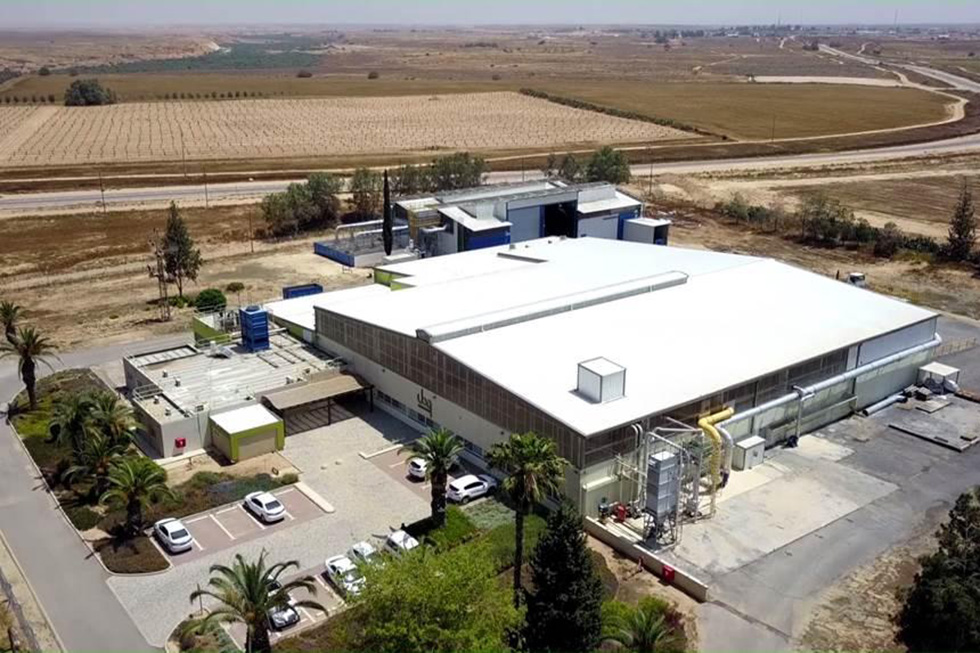
UBQ currently operates in Israel but is eyeing Virginia as a possible location for a large-scale facility. | Courtesy of UBQ Materials

A nascent company that uses the non-recycled waste stream as feedstock is looking to site a processing plant in the U.S.

UBQ Materials, based in Israel, has developed a process to convert municipal solid waste into a composite that is used in place of traditional plastic. The material is sold to companies manufacturing plastic boxes, shopping carts, pallets, pipes, panels and more.

One of the company’s end markets was recently highlighted when UBQ provided 2,000 recycling bins made of its composite material to the Central Virginia Waste Management Authority.

In an interview with Resource Recycling, a leader at UBQ said that after seven years of trials, the company at the beginning of 2019 launched commercial operations and began expanding its team and plant capacity.

UBQ has a goal of starting up the large-scale facility at the end of 2020, and it’s eyeing Virginia as a possible location for the plant.

Outlet for non-recycled materials

UBQ currently operates a commercial facility in Israel, producing and selling the composite material domestically and abroad. That site has a capacity of 5,000 tons per year, according to the company.

The company works to bring together two segments of the non-recycled household waste stream: organic materials (which for UBQ means food waste and paper) and mixed plastics (flexible film, multi-layer products, certain types of rigid containers and more).

UBQ’s process essentially breaks down the two streams of material to their core components, then bonds the streams together to create a composite material.

The organics are broken down into cellulose, fibers, lignins and sugars. “We combine these materials to create a bonding matrix,” said Tato Bigio, co-founder and CEO of UBQ Materials. The plastics are broken down and “melt into the matrix,” becoming one with the organic stream as a new composite material.
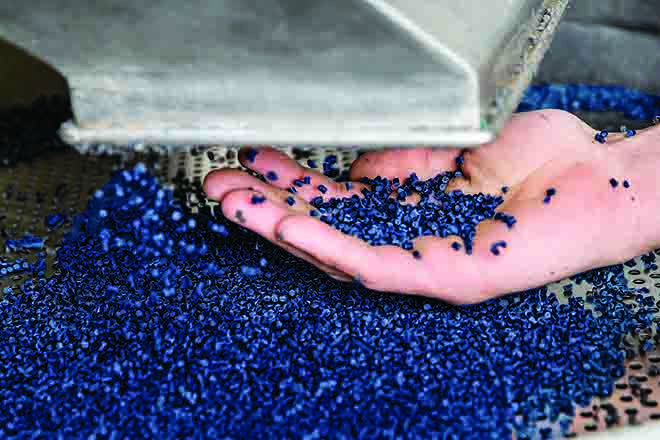
“Just like concrete is a composite made from cement, water and gravel, or fiberglass is made from plastics and glass, ours is also a composite material made from a number of materials that, when you combine together, they become a better material,” Bigio said.

The “breaking down” part of the process uses temperatures below 400 degrees Fahrenheit, Bigio explained, “which is considered a very low temperature to process material.” The traditional plastics industry often operates at higher temperatures, he noted.

The process doesn’t involve any combustion and doesn’t use a lot of water, Bigio added, because the waste stream already contains ample liquid. The process also doesn’t leave any residue – 100% of the feedstock is used in the process, according to Bigio.

Complement to traditional recycling industry

UBQ’s process does not aim to replace source-separated recycling. In fact, the company prefers to handle the disposal stream from communities that have recycling programs in place.

“In places where they separate the waste, it is much easier for UBQ to control the stream,” Bigio said.

Although every community is slightly different, Bigio said waste streams are generally similar across the spectrum and that the company’s process will be able to accommodate small variances.

“When you take the mixed household waste, you will always find a similar composition of between 70 to 80% organics and 20 to 30% plastics,” Bigio explained.

But for recycling programs, UBQ offers a particularly valuable offer: The company will be looking to take contaminated material that is rejected by MRFs, using that stream as the feedstock for its own process. UBQ may charge to take the material, but that fee would be much less than a landfill fee, Bigio said.

“We will improve your business model, while we, UBQ, will treat everything you don’t want; it’s a win-win,” Bigio said. “We are complementing the recycling industry. We are not interfering in any way or shape.”

A version of this story appeared in Resource Recycling on October 15.

 

2020 Plastics Recycling Conference and Trade Show

Tags: Hard-to-Recycle Materials
TweetShare
Colin Staub

Colin Staub

Colin Staub was a reporter and associate editor at Resource Recycling until August 2025.

Related Posts

Maryland PaintCare launch press conference in Annapolis

Maryland’s paint recycling program opens

byBrian Clark Howard
April 2, 2026

The state is the latest to launch a stewardship program with PaintCare.

Rural effort targets vapes as battery fire risk grows

byScott Snowden
March 24, 2026

A Wisconsin firefighter is building a rural vape collection service as discarded devices with lithium-ion batteries continue to raise fire...

EPR expanding beyond packaging into tougher waste streams

EPR expanding beyond packaging into tougher waste streams

byScott Snowden
March 19, 2026

Proposals beyond packaging include boat wrap, hazardous products and oil containers, though infrastructure gaps and unclear producer rules remain, panelists...

EPS foam recycling grants open for applications

byAntoinette Smith
March 11, 2026

The Foodservice Packaging Institute’s Foam Recycling Coalition will award grants of up to $50,000 to expand US recycling access for...

K-Cup recycling comes to Ontario Blue Boxes

K-Cup recycling comes to Ontario Blue Boxes

byKeith Loria
March 2, 2026

Keurig Dr Pepper Canada and recyclers across the country worked together for nearly a decade on redesign, material conversion and...

Texas sues over dumped wind turbine blades

Texas sues over dumped wind turbine blades

byScott Snowden
February 10, 2026

The state attorney general sued Global Fiberglass Solutions over alleged illegal storage and disposal of all turbine blades at two...

Load More
Next Post

The Recycling Partnership quantifies RPET demand gap

More Posts

Quebec PRO reflects on first year of packaging EPR

March 30, 2026

ReElement, Mitsubishi partner on rare earth supply chains

March 31, 2026
Belgian and Flemish flags fly against a backdrop of an ocean beach

PureCycle receives €40m EU grant for new plant

March 26, 2026

PCA closing Richmond plant

April 2, 2026

Report pegs fire losses at $2.5b in US and Canada recycling industry

March 27, 2026
#ESC2025 Speaker Spotlight: Matthew Young

From bootstrap to boom: EVR poised for growth after capital injection

March 26, 2026
URT builds alliance to remake electronics plastics at scale

Less premium smartphone inventory is reaching recyclers

March 30, 2026
Waste Connection recycling cart in The Dalles, Oregon

First Oregon community expands curbside recycling with EPR funding

April 1, 2026
Groups identify recovered plastics users in the Northeast

Bale pricing for recycled plastics diverges

March 17, 2026
With RPET in crisis, focus turns to solutions

With RPET in crisis, focus turns to solutions

April 2, 2026
Load More

About & Publications

About Us

Staff

Archive

Magazine

Work With Us

Advertise
Jobs
Contact
Terms and Privacy

Newsletter

Get the latest recycling news and analysis delivered to your inbox every week. Stay ahead on industry trends, policy updates, and insights from programs, processors, and innovators.

Subscribe

Welcome Back!

Login to your account below

Forgotten Password?

Retrieve your password

Please enter your username or email address to reset your password.

Log In

Add New Playlist

No Result
View All Result
  • The Latest
  • Analysis
  • Recycling
  • E-Scrap
  • Plastics
  • Policy Now
  • Conferences
    • E-Scrap Conference
    • Plastics Recycling Conference
    • Resource Recycling Conference
    • Textiles Recovery Summit
  • Magazine
  • About Us
  • Advertise
  • Archive
  • Jobs
  • Staff
Subscribe
This website uses cookies. By continuing to use this website you are giving consent to cookies being used. Visit our Privacy and Cookie Policy.