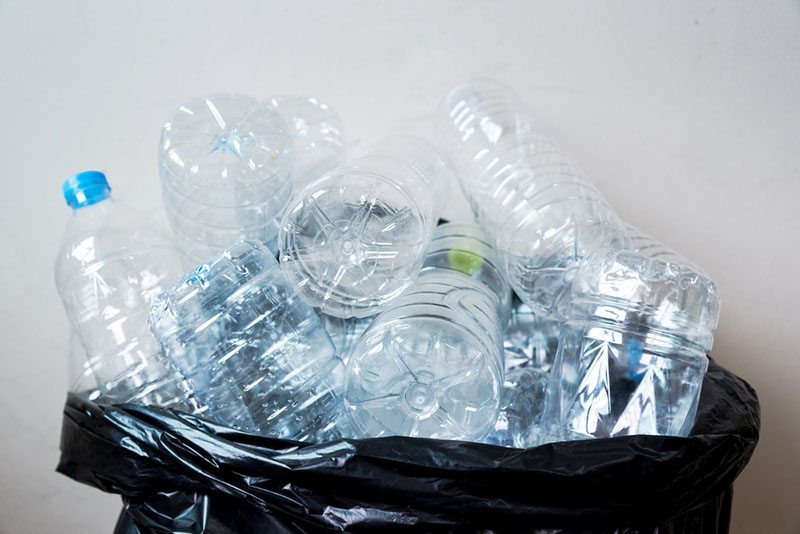



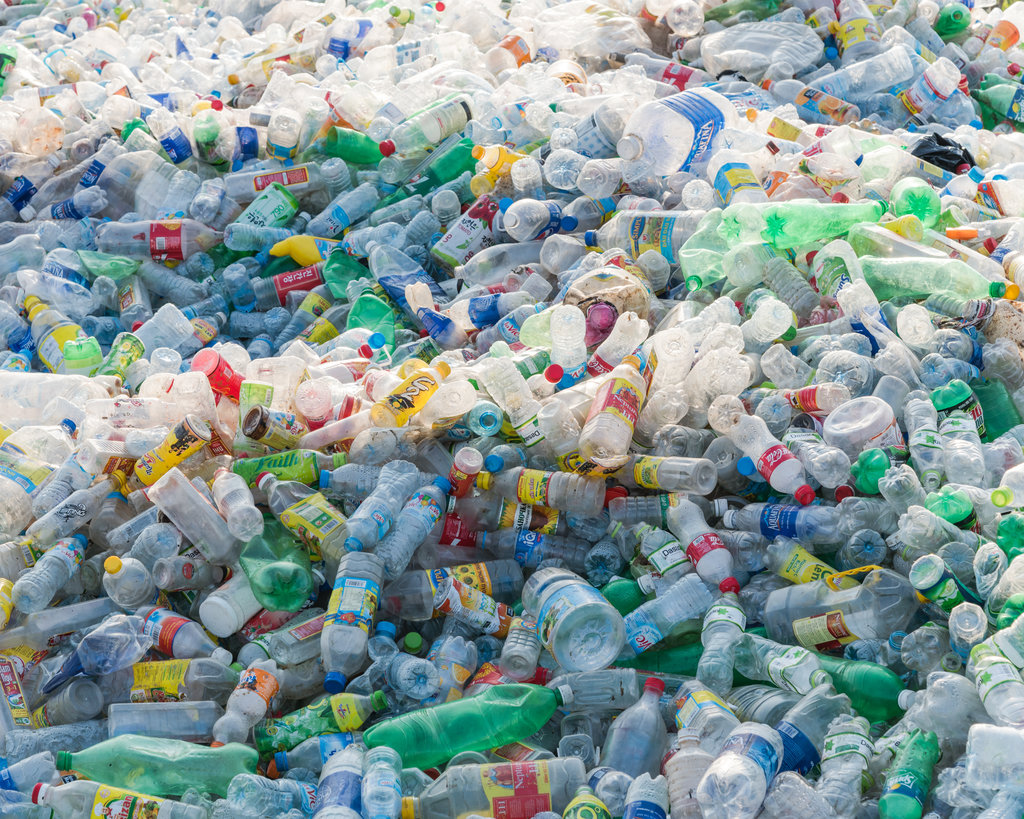
Over the past two years, Coca-Cola has boosted its recycled PET production capabilities by 20 percent, opening facilities and recycling lines in nine different countries. It now uses recycled PET in 24 countries.
But the worldwide beverage giant still failed to meet its 25 percent recycled- and renewable-content goal last year, coming in at 12.4 percent, according to its 2014-15 sustainability report.
A sustainability executive at the Atlanta-based company says Coca-Cola has found it difficult to acquire enough recycled PET to boost recycled content. Challenges also include a drop in oil prices and regulatory restrictions on the use of recycled plastic in food packaging.
“The challenge with recycled content today is it’s tough to get material,” said Bruce Karas, vice president of environment and sustainability at Coca-Cola North America. “So we put recycled content in our PET but it’s challenging to get ahold of enough to really make a difference.”
Karas recently spoke with Plastics Recycling Update about the Atlanta-based company’s packaging sustainability efforts, particularly for PET bottles, which make up 57 percent of the containers it sells globally. In addition to recycled content, he touched on designing for recyclability and bio-derived resins.
Boosting recycled supplies
In the U.S., the availability of large quantities of food-grade recycled PET at prices competitive with virgin PET is “spotty,” Karas said. The availability is best in areas where there is a large city generating significant quantities of recycled material combined with a MRF able to effectively sort it and a nearby converter. In some places, Coca-Cola has even been able to acquire recycled PET at prices equal to or lower than what’s being charged for virgin PET.
“Where I think we lose opportunities are when you have to ship material a long way, and then it drives the price up,” Karas said.
Some recycling advocates note bottle deposit programs are a way of obtaining a higher container recovery rate and cleaner stream, but Karas said deposit systems don’t help build a full recycling infrastructure, which is what Coca-Cola wants to focus on. He said deposit systems also remove high-value commodities from the curbside stream.
“Ultimately, we feel this push to develop some broader infrastructure is going to be very helpful,” he said.
Coca-Cola is a member of the Closed Loop Fund and The Recycling Partnership, industry-funded efforts to boost the volume of recycled material in the U.S. Those are investments in infrastructure aimed at improving recovery of different commodities with the long-term goal of boost recycled plastic supplies and bringing prices down, Karas said.
“I think the holy grail is [having] a closed-loop system where you have a bottle that you use and you take it somewhere and it becomes the next bottle,” Kara said. “I think we’re a long ways away from that. So that’s why we’re investing in the front end on the infrastructure piece with our recovery programs in different places around the country.”
Experimenting with wrap labels
Karas also outlined Coca-Cola’s hopes for moving plastic recycling forward when it comes to full body wrap labels. One example is the “orb bottle,” a tree-ornament-styled plastic beverage container from Coca-Cola sold at Walmart around the holidays in 2013 and 2014.
The products gave Coca-Cola a chance to experiment with a new recycling-friendly label, one that separates easier from a bottle during grinding and floats in a float-sink tank.
Now, Coca-Cola is looking to expand the recycling-friendly label to other PET drink bottles. Challenges include the ability to print on the label and have it look appealing to consumers.
“We’re looking real hard at how we can do some work on things like that to make sure that when you get into this whole (materials recovery facility) world and into the conversion world it’s something that doesn’t reduce efficiencies and the recovery of the commodity,” Karas said. “Those are things that we can start to think about deliberately on the front end. It’s a whole lot easier to do it then than figure it out after you have the problem.”
Producing PET from plants
Another major sustainability push from the company has been its evolution of the PlantBottle, a recyclable PET partially derived from plant sources. The bottle currently uses a PET in which the mono-ethylene glycol is derived from plants, making up to 30 percent of resin to make the bottle. The company has also been able to develop a bio-based purified terephthalic acid which, by weight, makes up the other 70 percent of the resin to make the bottle.
Using both bio-based ingredients, Coca-Cola was able to unveil a 100 percent bio-derived PlantBottle prototype at an industry event in Milan last year.
The PlantBottle was “a long-term investment in looking at how we can actually de-couple our PET resin from oil,” Karas said. Doing so reduces the company’s carbon footprint and insulates it from the oil’s price swings.
“The thought process was, long term, how could we separate the PET from the volatility of the oil markets and competing with everything else that comes from oil?” he said.
In some places, including Denmark, Coca-Cola uses the bio-derived resin and recycled fossil fuel-derived PET in the same bottle.
The trick for developing PlantBottle is scaling up production in a cost-effective way, Karas said, noting that “the scale that we operate on is enormous.” Coca-Cola has invested in technology companies Virent and Gevo to work on the bio-derived PET in the U.S. and Avantium to explore mass manufacturing of polyethylene furanoate (PEF), a bio-derived resin, in the Netherlands.
“It’s sort of a competition to see which one can do the work and still be financially feasible,” he said.
One packaging expert said he believes it is unlikely PEF will supplant PET as Coca-Cola’s resin of choice.
Meanwhile, on the topic of biodegradable plastics, Kara said those materials can’t perform as well as current PET bottles when it comes to protecting a wide range of beverages including soft drinks, juices and teas, he said. He added most consumers mistakenly believe biodegradable containers will compost in a landfill.
Compostable and biodegradable plastics have been controversial because some of them fail to fully degrade and end up as contamination in compost facilities. The U.S. Composting Council drafted model legislation regulating compostability claims on plastic products.
Some packaging stakeholders have also voiced concern that materials with these additives could compromise the plastics recycling stream because the additives’ long-term effects remain unknown.