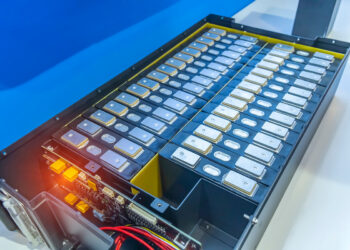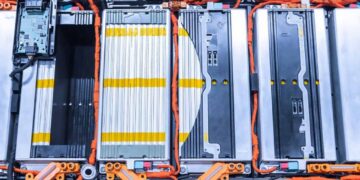










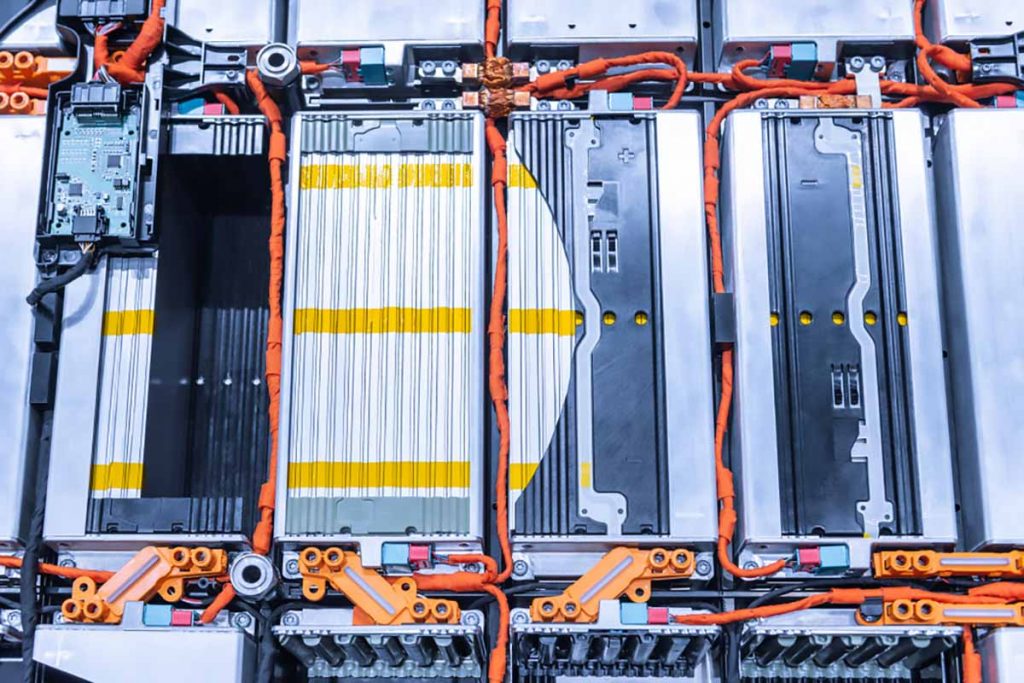
Batteries that are no longer ideal for powering a vehicle still have substantial capacity left.
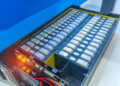
Automobile manufacturer Rivian and battery recycler Redwood Materials are putting EV battery packs to work in a new partnership to integrate spent units into an energy storage reservoir equivalent to the total energy output of the Hoover Dam running continually for two months.
Grid demand is outpacing infrastructure, Redwood CEO JB Straubel said, and the US is sitting on a solution it hasn’t fully tapped.
“The massive amount of domestic battery assets already in the US market represents a strategic energy resource,” he said, adding that the Rivian deal demonstrates how retired EV packs can add real grid capacity without waiting years for new infrastructure to come online.
As part of the newly forged partnership, California-based Rivian will provide EV battery packs to Redwood, which will implement them into stored energy to be used on-site at Rivian’s plant in Normal, Illinois.
The Carson City, Nevada-based EV battery recycler touts the system as “rapidly scalable” with “significant” cost opportunities. The approach enables faster, more flexible deployment of energy capacity directly at high-demand sites like manufacturing facilities, Redwood stated.
“EVs represent a massive, distributed and highly competitive energy resource,” said Rivian founder and CEO RJ Scaringe. “As energy needs grow, our grid needs to be flexible, secure, and affordable. Our partnership with Redwood enables us to utilize our vehicles’ batteries beyond the life of a vehicle and contribute to grid health and American competitiveness.”
‘Shaping the future of energy resilience’
For the US, the partnership signals a bigger development in battery recycling and energy storage as the nation starts to build out full battery lifecycle infrastructure. The stationary storage of EV batteries extracts more value before the materials are reclaimed.
The Rivian deal is the latest move in Redwood’s deliberate pivot to expand beyond recycling and refining into grid-scale storage. It launched its Redwood Energy division in June 2025, and backed it with a $350 million capital raise the following October.
Redwood’s recent venture fits alongside a memorandum of understanding signed with General Motors in July 2025 to explore repurposing GM’s retired EV batteries for grid-scale storage.
“The market for grid-scale batteries and backup power isn’t just expanding, it’s becoming essential infrastructure,” said Kurt Kelty, vice president of batteries, propulsion and sustainability at GM, in a statement. “Electricity demand is climbing, and it’s only going to accelerate.”
The US needs energy storage solutions that can be deployed rapidly, are cost efficient and made domestically, he added, concluding that “we’re not just making better cars – we’re shaping the future of energy resilience.”
To capture and balance the growth in peak electricity demand expected, the US must deploy the infrastructure for massive amounts of energy storage. By 2030, over 600GWh of storage will be needed to meet growing demand, stabilize peaks and power technology innovations, according to Redwood estimates.