
Resource Recycling
  • The Latest
  • Analysis
    • All
    • Certification Scorecard
    • Industry Announcements
    • Opinion
    From claims to custody: PCR procurement grows up

    From claims to custody: PCR procurement grows up

    What the NAND flash crunch means for remarketing, refurbishment and residual values

    Telamon acquires ITAD consultancy Retire-IT

    Certification Scorecard — Week of July 6, 2026

    Tech giant pens detailed ‘plastic-free packaging’ guide

    What Google’s latest report means for ITAD

    Unpacking the Starbucks cup data

    Unpacking the Starbucks cup data

    Amazon cutting out more flexible packaging

    Amazon’s AWS hardware reuse is measured

  • Conferences
    • Resource Recycling Conference
    • Plastics Recycling Conference
    • E-Scrap: The Longevity Conference
    • Textiles Recovery Summit
  • Publications
    • E-Scrap News
    • Plastics Recycling Update
    • Policy Now
    • Resource Recycling
    • Other Topics
      • All Topics
      • Brand Owners
      • Critical Minerals
      • Glass
      • Grant Watch / RFPs
      • Markets
      • Organics
      • Packaging
      • Research
      • Technology
      • Textiles
Subscribe
No Result
View All Result
Resource Recycling
  • The Latest
  • Analysis
    • All
    • Certification Scorecard
    • Industry Announcements
    • Opinion
    From claims to custody: PCR procurement grows up

    From claims to custody: PCR procurement grows up

    What the NAND flash crunch means for remarketing, refurbishment and residual values

    Telamon acquires ITAD consultancy Retire-IT

    Certification Scorecard — Week of July 6, 2026

    Tech giant pens detailed ‘plastic-free packaging’ guide

    What Google’s latest report means for ITAD

    Unpacking the Starbucks cup data

    Unpacking the Starbucks cup data

    Amazon cutting out more flexible packaging

    Amazon’s AWS hardware reuse is measured

  • Conferences
    • Resource Recycling Conference
    • Plastics Recycling Conference
    • E-Scrap: The Longevity Conference
    • Textiles Recovery Summit
  • Publications
    • E-Scrap News
    • Plastics Recycling Update
    • Policy Now
    • Resource Recycling
    • Other Topics
      • All Topics
      • Brand Owners
      • Critical Minerals
      • Glass
      • Grant Watch / RFPs
      • Markets
      • Organics
      • Packaging
      • Research
      • Technology
      • Textiles
Subscribe
No Result
View All Result
Resource Recycling
No Result
View All Result
Home E-Scrap

How a tech giant approaches diversity in workforce

byJared Paben
July 9, 2020
in E-Scrap
Ellen Jackowski

Ellen Jackowski

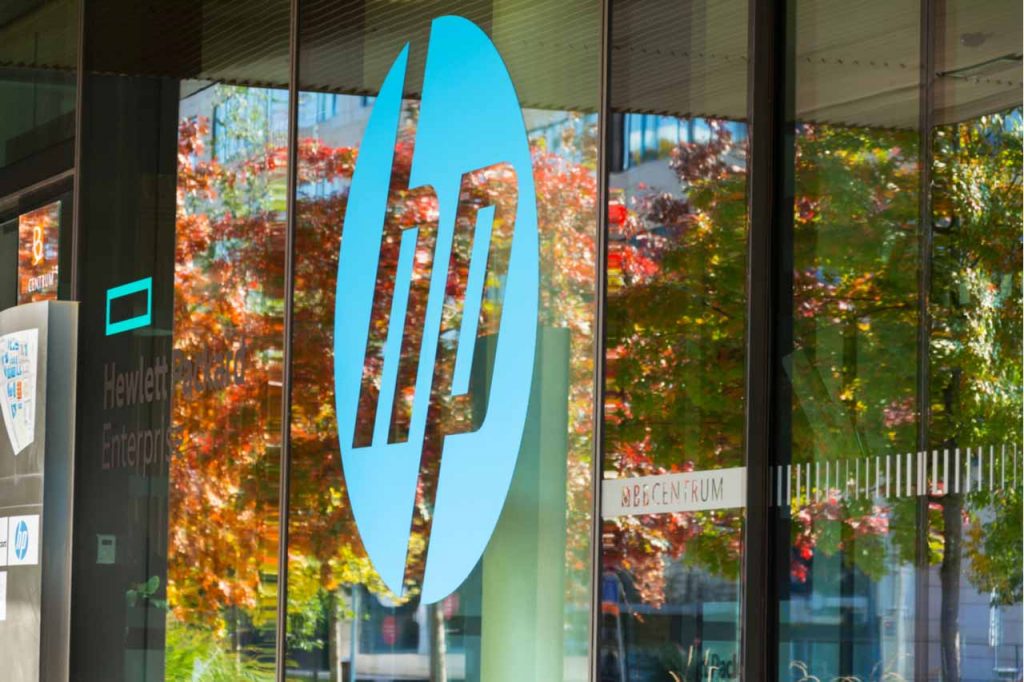
HP logo on building window.
In the U.S., 65% of HP employees identify as white. | josefkubes/Shutterstock

In the aftermath of Geoge Floyd’s killing, a number of large companies have issued statements opposing racism. HP’s CEO also issued a goal: Double the number of Black and African American executives by 2025.

For nearly two decades, the Palo Alto, Calif.-headquartered tech giant, which is a major stakeholder in North American electronics recycling, has tracked the racial diversity of its employees. And it was intentional when it created what it considers the most diverse board of directors among large technology companies.

In a recent interview, Ellen Jackowski, chief sustainability and social impact officer at HP, reflected on the company’s diversity and inclusion efforts, many of which were noted in the company’s 2019 Sustainable Impact Report, released June 24.

Ellen Jackowski

Jackowski said HP needs to do much more in the area of diversity and inclusion. For example, HP’s U.S. workforce is just under 4% Black and African American, she said. Nationally, Black and African American individuals account for 12.3% of all workers, according to the U.S. Bureau of Labor Statistics.

“It’s clear that we’re not making enough progress in Black and African American hiring,” said Jackowski. “Our current numbers are not acceptable, and we’re taking action to improve.”

Moving toward a more diverse workforce

HP’s 2019 Sustainable Impact Report noted that last year the company, through its global network of recycling vendors, recycled over 259 million pounds of electronic hardware and 32 million pounds of ink and toner cartridges.

But since 2002, the company’s sustainability report has included more than just environmental impact; it has also reported on the diversity of its workforce. HP sees people as interconnected with the environment and community, Jackowski said. For example, she said climate change – and now COVID-19 – particularly impact communities of color.

“With these unprecedented global challenges, these recent events continue to underscore the deep inequalities that remain in our society that we need to take more aggressive action against,” she said.

The company’s 2019 sustainability report notes that 63% of HP’s U.S. hires last year were from underrepresented groups, up from 57% the year before. “Underrepresented” includes women, minorities, veterans and people with disabilities. Of those hires, 40% were minorities, up from 32% in 2018. And, globally, 40% of hires were women, up from 32% the year before, she said.

But at 3.8%, the percentage of HP’s U.S. employees who are Black or African American is low. According to the 2019 sustainability report, 4.8% of new U.S. hires last year were Black or African American people.

In the U.S., 65% of HP employees identify as white.

Continuing to strengthen partnership with groups focused on the Black and African American community, as well as ensuring HP brings an intentional focus to job recruiting efforts, will be important, Jackowski said.

An example of a partnership is HP’s ongoing work with the National HBCU Business Deans Roundtable, through which HP participates in the Historically Black Colleges and Universities (HBCU) Business Challenge. Through the competition, college and university students pitch business ideas to HP, and they’re encouraged to apply for internships.

According to a March 2020 press release announcing the winners of the third challenge, HP has hired seven interns from the top teams over the past two years. Since the program started in 2017, out of 44 participants (17 of whom were repeat participants) HP offered full-time jobs to five.

Half a decade ago, when HP split into two companies, HP Inc. and HP Enterprise, HP Inc. intentionally worked to create a diverse board of directors, Jackowski explained. According to the 2019 sustainable impact report, 42% of the board is women, 58% are minorities in the U.S., and 33% are under-represented minorities.

“HP has the most diverse board of directors of any U.S. tech companies, so our leadership in this space clearly starts from the top,” she said.

The 2019 Sustainable Impact Report announced a goal, driven by CEO Enrique Lores, to double the number of Black and African American executives in the next five years. According to the report, HP had 314 executives globally in 2019. The report does not identify those executives’ races.

Encouraging supplier diversity

HP also works to support diversity and inclusion with its purchasing power.

HP’s recently released sustainability report states the company’s Supplier Diversity program spent $123 million with minority- and women-owned businesses. Jackowski said the program also encourages suppliers to take action to increase their diversity.

She referenced an example where HP sought out a supplier that supports low-income and minority populations. The company’s core recycling partner, Sims Lifecycle Services, subcontracts with Los Angeles e-scrap processor Homeboy Electronics Recycling. Homeboy, which disassembles printers and recovers the plastic for use in HP products, employs people who face barriers to work, including those with criminal records.

When asked for advice on how recycling companies can ensure minority representation in their organizations, Jackowski said the effort has to be intentional.

“Everyone is in a position to create change,” she said. “You might not realize in the recycling industry the opportunity that you have to create your own diversity and inclusion goal and progress for your company and industry, but we need action everywhere across all industries and all sectors. And it needs to start with the individual.”

 

Tags: Manufacturers
TweetShare
Jared Paben

Jared Paben

Related Posts

Arkansas steel mill to expand, double output

byPaul Lane
June 26, 2026

Hybar raised more than $1 billion to build a second facility next to its existing plant.

Novelis posts steady Q2 amid tariffs, fire recovery

Tariff updates unlikely to impact recyclers

byPaul Lane
June 18, 2026

Revisions under Section 232 would lower the tariffs on certain materials through 2027.

Scrap copper for recycling

Seed funding bolsters build of new copper facility

byPaul Lane
June 11, 2026

A funding injection will help Red Metals Inc. get its streamlined refining and manufacturing operation open in South Carolina.

Earnings results point to active IT hardware lifecycles

Earnings results point to active IT hardware lifecycles

byDavid Daoud
November 6, 2025

Earnings season is in full swing and the latest results from Microsoft, Apple and Amazon show that the global technology...

LG collection volume increased notably in 2024

LG collection volume increased notably in 2024

byAntoinette Smith
July 17, 2025

South Korea-based heavyweight LG Electronics saw mixed results in its 2024 sustainability report, but continued to make progress toward 2030...

Apple, rare earth firm to process end-of-life device magnets

Apple, rare earth firm to process end-of-life device magnets

byColin Staub
July 17, 2025

Domestic rare earth company MP Materials and major OEM Apple this week announced a collaboration that will have Apple invest...

Load More
Next Post

Coalition to fund equipment enabling PP sortation

More Posts

Oregon’s Recycling Modernization Act faces injunction

Oregon’s EPR program posts first-year results

July 6, 2026
Two recycled-content bills gain approval in California

California agriculture seeks SB 54 repeal

July 7, 2026
Unpacking the Starbucks cup data

Unpacking the Starbucks cup data

July 8, 2026
In Our Opinion: Coalitions: The EPR Differentiator

Inside NAW’s constitutional case against packaging EPR

July 6, 2026
Tech giant pens detailed ‘plastic-free packaging’ guide

What Google’s latest report means for ITAD

July 8, 2026
EPR fees are a market signal. Here’s what they’re telling you.

Building the infrastructure behind EPR

July 6, 2026
SB 54 draft rules generate debate on rates, review

California increases PET market payments

July 7, 2026
MP Materials breaks ground on rare earth magnet campus in North Texas

ERI confirms ITAD shift toward minerals

July 3, 2026
ITAD firm wins spot for NASA purchasing

ITAD firm wins spot for NASA purchasing

July 6, 2026
Auto Draft

Digital product passports offer gateway into secondary market

July 7, 2026
Load More

About & Publications

About Us

Staff

Archive

Magazine

Work With Us

Advertise
Jobs
Contact
Terms and Privacy

Newsletter

Get the latest recycling news and analysis delivered to your inbox every week. Stay ahead on industry trends, policy updates, and insights from programs, processors, and innovators.

Subscribe

Welcome Back!

Login to your account below

Forgotten Password?

Retrieve your password

Please enter your username or email address to reset your password.

Log In

Add New Playlist

No Result
View All Result
  • The Latest
  • Analysis
  • Recycling
  • E-Scrap
  • Plastics
  • Policy Now
  • Conferences
    • E-Scrap Conference
    • Plastics Recycling Conference
    • Resource Recycling Conference
    • Textiles Recovery Summit
  • Magazine
  • About Us
  • Advertise
  • Archive
  • Jobs
  • Staff
Subscribe
This website uses cookies. By continuing to use this website you are giving consent to cookies being used. Visit our Privacy and Cookie Policy.