








This story originally appeared in the March 2017 issue of E-Scrap News. Subscribe today for access to all print content.
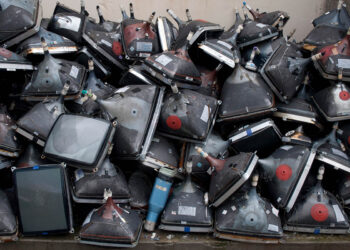
Has the industry made real progress on the CRT issue? It’s tough to say. Certainly, dialogue has been plentiful, stakeholders have pushed for adjustments in state programs, and technologies to more cost-effectively handle glass have been proposed – and in a few cases, actually implemented.
But by and large, the same CRT barriers that thwarted industry players a half decade ago are still in place, and CRT stockpiles continue to pop up.
To help processors and others re-center themselves amid the ongoing discussion, E-Scrap News elicited perspectives from three distinct stakeholders: a trade association leader, a representative from a processor that works closely with lead smelters, and a European executive whose company uses CRT glass in tile manufacturing.

In their op-eds, these individuals focus specifically on final disposition options for CRT glass. All the outlets discussed are actively taking in CRT material and helping to relieve the e-scrap industry of the ongoing stockpiling problem. But all the options also carry questions in terms of pricing, capacity and environmental impacts.
These perspective won’t immediately solve the industry’s CRT dilemmas. But they do help provide clarity on how markets are developing. Such insight is key to moving ahead, even if such progress happens slowly and with great debate.
Robin Wiener, ISRI
[post-content id=1866 show_title=true]
Tom Bolon, Novotec Recycling
[post-content id=3875 show_title=true ]
J.J. Santos, Camacho Recycling
[post-content id=3896 show_title=true]