




Resource Recycling
  • The Latest
  • Analysis
    • All
    • Certification Scorecard
    • Industry Announcements
    • Opinion
    Closeup of a printed circuitboard

    Can modular metals recovery challenge the smelter model?

    Intel sign outside of company building.

    What Intel’s blockbuster quarter means for ITAD

    Feds to develop repairable computer donation program

    The whitebox blind spot in PC recycling

    Analysis: circular design still elusive in laptops

    PC shipments grew in Q1, but questions remain

    The independent ITAD at a crossroads

    The independent ITAD at a crossroads

    Certification Scorecard — Week of April 20, 2026

    Apple Watch on product box.

    Wearables are coming and ITAD isn’t ready

    Certification Scorecard — Week of April 13, 2026

    EV Battery Pack - Sergii Chernov-Shutterstock

    Redwood, Rivian deal fuels US infrastructure plans

  • Conferences
  • Publications

    Other Topics

    Textiles
    Organics
    Packaging
    Glass
    Brand Owners

    Metals
    Technology
    Research
    Markets
    Grant Watch

    All Topics

Subscribe
No Result
View All Result
Resource Recycling
  • The Latest
  • Analysis
    • All
    • Certification Scorecard
    • Industry Announcements
    • Opinion
    Closeup of a printed circuitboard

    Can modular metals recovery challenge the smelter model?

    Intel sign outside of company building.

    What Intel’s blockbuster quarter means for ITAD

    Feds to develop repairable computer donation program

    The whitebox blind spot in PC recycling

    Analysis: circular design still elusive in laptops

    PC shipments grew in Q1, but questions remain

    The independent ITAD at a crossroads

    The independent ITAD at a crossroads

    Certification Scorecard — Week of April 20, 2026

    Apple Watch on product box.

    Wearables are coming and ITAD isn’t ready

    Certification Scorecard — Week of April 13, 2026

    EV Battery Pack - Sergii Chernov-Shutterstock

    Redwood, Rivian deal fuels US infrastructure plans

  • Conferences
  • Publications

    Other Topics

    Textiles
    Organics
    Packaging
    Glass
    Brand Owners

    Metals
    Technology
    Research
    Markets
    Grant Watch

    All Topics

Subscribe
No Result
View All Result
Resource Recycling
No Result
View All Result
Home Recycling

Women in Circularity: Connie Lilley

byMaryEllen Etienne
April 28, 2026
in Recycling
Women in Circularity: Connie Lilley

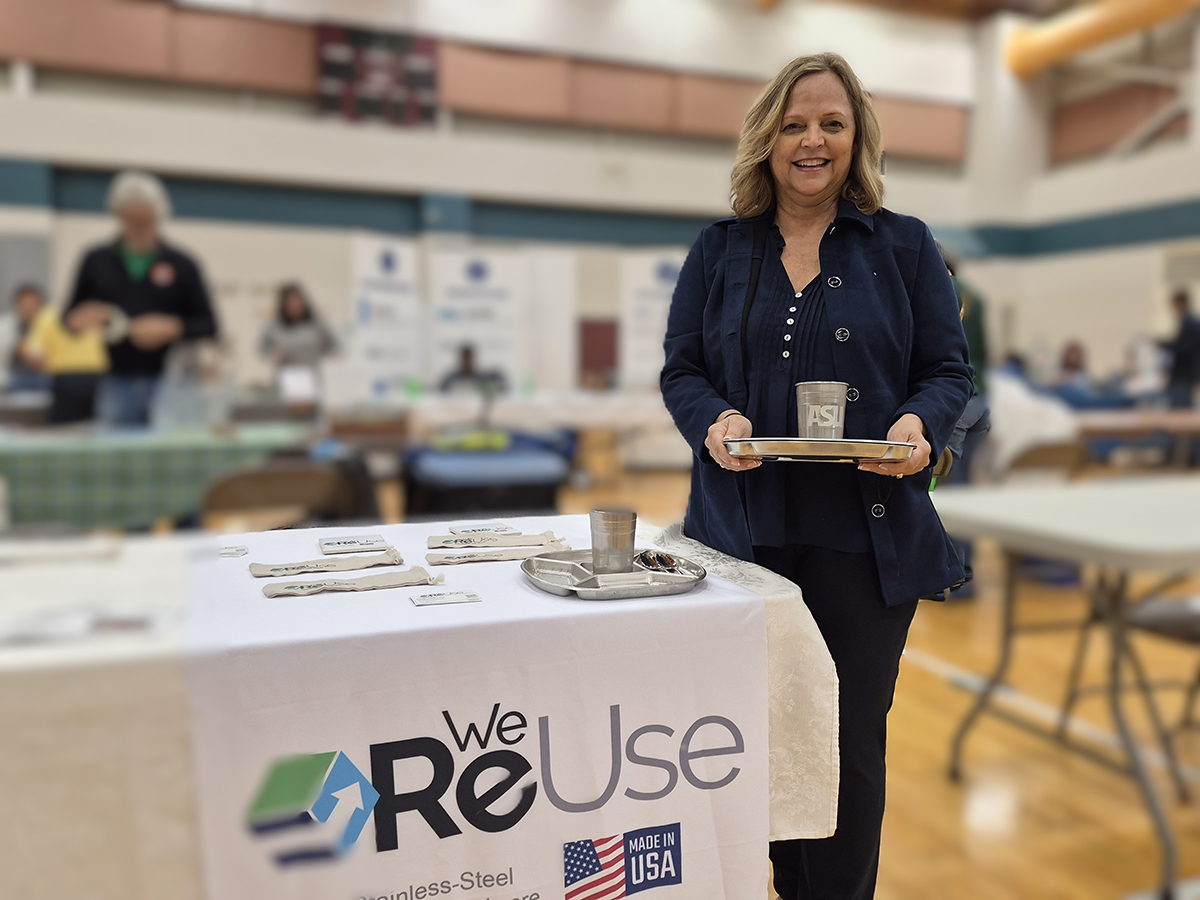
Courtesy of Connie Lilley

A warm welcome back to “Women in Circularity”, where we shine a light on women moving us toward a circular economy. This month, I was pleased to connect with an innovative sustainability leader: Connie Lilley. Connie is the Michigan Territory Director of We ReUse, a veteran‑ and woman‑owned company that designs, sources and distributes stainless‑steel foodware that is manufactured in the United States. With more than two decades of experience in high‑performance buildings, energy efficiency and corporate sustainability, Connie brings systems‑level thinking to the reuse movement. She helps organizations transition from waste‑intensive food-service models to practical, scalable solutions that reduce emissions, landfill and operating costs. 

What motivated your transition from high‑performance buildings to co‑founding a reuse company like We ReUse?

While working within the built environment, it wasn’t hard to see the amount of waste organizations create. Since I am passionate about environmental stewardship, helping organizations in Michigan reduce waste seemed like a great fit. Over time, I began to see clear parallels between high‑performance buildings and food‑service operations—both rely on systems thinking, lifecycle cost analysis and behavior change to drive meaningful impact.

The reuse industry allowed me to apply those principles beyond buildings and into everyday operational decisions that people engage with multiple times a day. At We ReUse, I’ve helped organizations reduce upstream waste, lower operating costs and visibly live their sustainability commitments in ways that are practical, scalable and community-focused.

What skill has proven most essential in helping your clients successfully move from single‑use foodware to durable, reuse systems?

Passion drives my work, but what matters most is meeting people where they are. Each of us is at a different stage in our environmental journey and recognizing that creates space for meaningful learning and positive change.

My understanding of the circular economy, and its importance, has been a key motivator in my career. I have spent many years educating students about environmental issues, including the growing scale of our landfills. When I discovered the impact and potential of reuse, pursuing work in this field became a natural choice.

I am also personally committed to reducing exposure to harmful forever chemicals. Having seen people close to me affected by cancer, this issue is especially meaningful. What I have learned about the risks associated with plastics has only strengthened my commitment to advocating for safer, more sustainable alternatives.

Is there a recent partnership that best illustrates the environmental and operational impact We ReUse is achieving?

That would be our partnership with the State of Michigan, Environment, Great Lakes and Energy, which is so important to us. They helped us get started with a Circular Economy Grant, and we are very grateful for their partnership. This collaboration helped validate reuse as both an environmental and operational strategy.

The partnership demonstrated that reuse solutions can succeed at scale and within public‑sector institutions, not just niche settings. It also highlighted the critical role state‑level leadership plays in advancing circular economy practices that reduce waste, support domestic manufacturing and accelerate innovation.

What circular economy trend—across food service, manufacturing or the built environment—do you see having the greatest potential to accelerate reuse adoption?

Education is essential. Reusable foodware isn’t just an environmental choice—it’s a financial and public‑health one. By helping people understand the real health risks of eating off plastic and the long‑term benefits of reuse, we empower people to make decisions that protect both their well-being and the planet. We share several of these transition stories on our website.

As education grows, we’re also seeing increased momentum around durable, domestically manufactured products designed for long life and recovery. When clear data, real‑world examples and systems‑level thinking come together, reuse becomes easier to justify and easier to implement—shifting it from an ideal to a smart, accessible investment.

What resource would you recommend for those looking to better understand the climate, water and waste benefits of reuse systems?

Upstream Solutions offers really good supporting evidence on why reuse is so important. They do an excellent job translating complex research into clear, actionable insights. Their work helps organizations understand the full lifecycle impacts of single‑use products compared to reuse systems. Having access to credible, data‑driven resources is essential for circular economy leaders who want to make informed decisions that drive meaningful, long‑term change. 

Tags: Industry GroupsWomen in Circularity
TweetShare
MaryEllen Etienne

MaryEllen Etienne

MaryEllen Etienne is the creator of Women in Circularity. Etienne is a director of market development for the U.S. Green Building Council, a board member for the National Recycling Coalition, a co-founder of Donify USA and a co-developer of TRUE. She has over 20 years of experience in sustainability and is a champion of the circular economy. View all of the Women in Circularity profiles at womenincircularity.com.

Related Posts

EPR fees are a market signal. Here’s what they’re telling you.

Oregon DEQ flags 250 producers for RMA noncompliance

byStefanie Valentic
April 21, 2026

Oregon DEQ released its first quarterly producer status list under the Recycling Modernization Act on April 9, flagging 250 companies...

Recycling Partnership CEO stepping down

byStefanie Valentic
April 15, 2026

Outgoing CEO Keefe Harrison will remain until August with the organization she built from the ground up.

NERC launches hub to promote PCR demand 

byAntoinette Smith
April 15, 2026

The Northeast Recycling Council's PCR Material Demand Hub offers resources for government procurement, material- and product-specific resources, and certification and...

Reverse Logistics Network launches to support industry

byPaul Lane
April 14, 2026

The reverse logistics community has a new organization to give companies in that sector a place to connect.

Colorado regulators suggest mid-range EPR scenario

Why collaboration on plastic waste still matters

byCrystal Bayliss
April 13, 2026

Six years ago, the U.S. Plastics Pact launched at a moment of rising concern about plastic waste and growing momentum...

Industrial sources drive rise in PVC recycling

byAntoinette Smith
April 13, 2026

Volumes of post-industrial PVC recycled in 2024 rose by 10% from 2019 levels, while post-consumer sources fell and missed a...

Load More
Next Post
Closeup of a printed circuitboard

Can modular metals recovery challenge the smelter model?

More Posts

Birch Plastics gets FDA green-light for post-industrial PP

LyondellBasell upgrade to PreZero assets on hold

April 23, 2026
The independent ITAD at a crossroads

The independent ITAD at a crossroads

April 22, 2026
EPR fees are a market signal. Here’s what they’re telling you.

Oregon DEQ flags 250 producers for RMA noncompliance

April 21, 2026

What Netflix’s ‘Plastic Detox’ gets wrong – and right

April 23, 2026

Google pilots reuse kits to extend device life

April 21, 2026
What is EPR and why it matters

What is EPR and why it matters

April 22, 2026
Earth Day

Happy Earth Day. Here’s how to celebrate

April 22, 2026
Growth challenges drive M&A for packaging

Growth challenges drive M&A for packaging

April 20, 2026
Prescription drug bottles

National Prescription Drug Take Back Day is Saturday

April 24, 2026
EPR fees are a market signal. Here’s what they’re telling you.

EPR fees are a market signal. Here’s what they’re telling you.

April 10, 2026
Load More

About & Publications

About Us

Staff

Archive

Magazine

Work With Us

Advertise
Jobs
Contact
Terms and Privacy

Newsletter

Get the latest recycling news and analysis delivered to your inbox every week. Stay ahead on industry trends, policy updates, and insights from programs, processors, and innovators.

Subscribe

Welcome Back!

Login to your account below

Forgotten Password?

Retrieve your password

Please enter your username or email address to reset your password.

Log In

Add New Playlist

No Result
View All Result
  • The Latest
  • Analysis
  • Recycling
  • E-Scrap
  • Plastics
  • Policy Now
  • Conferences
    • E-Scrap Conference
    • Plastics Recycling Conference
    • Resource Recycling Conference
    • Textiles Recovery Summit
  • Magazine
  • About Us
  • Advertise
  • Archive
  • Jobs
  • Staff
Subscribe
This website uses cookies. By continuing to use this website you are giving consent to cookies being used. Visit our Privacy and Cookie Policy.