




Australia’s battery materials recovery industry already contributes more than A$2 billion (US $1.41 billion) to the national economy and could expand sharply as lithium-ion batteries reach the end of their useful life in growing numbers across the energy and transportation sectors.
A new industry profile commissioned by the Australian Association for the Battery Recycling Industry (ABRI) and prepared by Positive Economics Advisory estimates the sector currently contributes $2.1 billion to the Australian economy and supports 19,450 jobs. According to the report, the industry could grow to $6.9 billion and support more than 34,600 jobs by 2050 as battery use expands across manufacturing equipment, electric vehicles and stationary energy storage systems.
The report was presented March 12 at Parliament House in Canberra during an industry showcase hosted by the association that brought together parliamentarians, policy advisers and representatives from across the battery supply chain.
Simon Linge, chair of the ABRI and chief executive officer of the Australian-based recycling company Livium, said the study is intended to help policymakers and other stakeholders better understand the scale and direction of Australia’s battery materials recovery sector.
Linge said the study forms part of the association’s effort to reshape policy discussions by highlighting the economic scale of the battery recycling industry. He added that battery recycling has historically been viewed primarily through an environmental lens but is increasingly being discussed in terms of materials supply and industrial capability.
“This is not actually an ESG [environmental, social and governance] story. It is an element of the story,” Linge said. “It’s actually also about metals recovery and critical minerals recovery.”
Rising battery volumes
The report describes battery recycling as a form of “urban mining,” referring to the recovery of materials such as lithium, nickel and cobalt from batteries that have reached the end of their service life. Those materials can be returned to supply chains and used in battery manufacturing and other industrial applications.
Linge said the rapid expansion of electrified technologies will drive a steep rise in end-of-life lithium battery volumes over the coming decades. He estimated that roughly 5,000 metric tons of large format lithium-ion batteries reach end of life in Australia each year today. That figure could grow substantially as electric vehicles and large-scale energy storage systems become more common.
“By 2035 that’s 100,000 tons,” Linge said, adding, “By 2040 it’s 500,000 tons.”
Those volumes represent both a waste management challenge and a potential supply of recoverable materials that could reenter battery manufacturing supply chains.
The report also points to Australia’s long established lead battery recycling system as an example of how effective collection and recovery infrastructure can be developed when policy frameworks and industry systems are in place.
“About 95% of lead acid batteries in Australia are captured for recycling,” Linge said.
Lithium-ion batteries are expected to eventually surpass lead batteries in total volumes as electrification expands, making the development of collection and processing systems increasingly important.
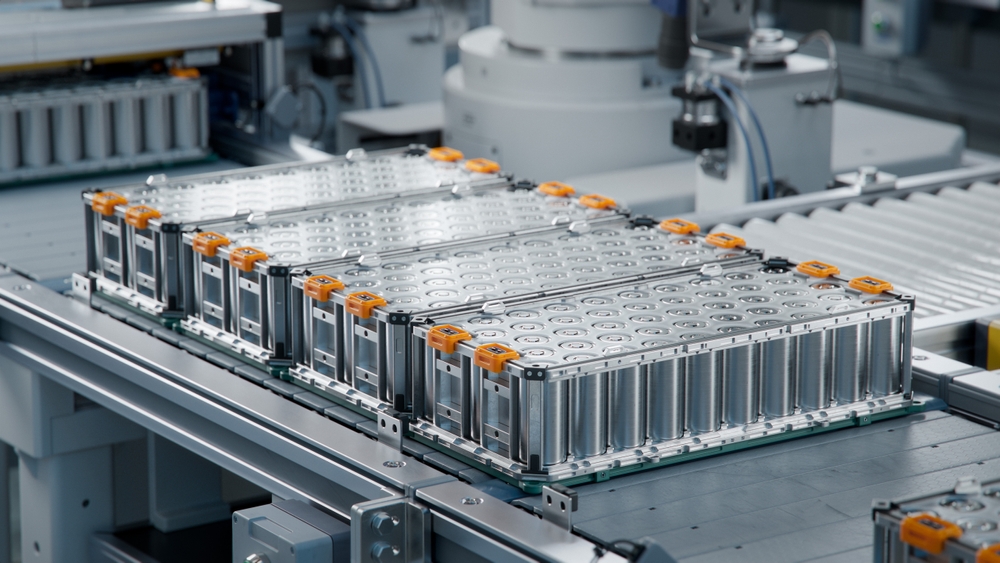
At present much of Australia’s lithium battery recycling industry focuses on pre-processing, the stage where batteries are dismantled and materials such as steel, copper and aluminum are separated before the remaining cathode and anode materials are concentrated into a product known as black mass. That material typically undergoes further processing overseas because Australia does not yet have sufficient volumes to support large-scale domestic refining.
“We don’t have enough scale in Australia to justify then going to the next step of processing that black mass,” Linge said. He added the industry expects that capability could emerge within the next decade as battery volumes increase and smaller scale processing technologies develop.
“We are firmly of the view that within the next 10 years we will be able to build that capability in Australia,” he said.
Industry calls for policy framework
Linge said the report is intended to help inform policy discussions about how Australia should manage the rising flow of end-of-life batteries while supporting the development of domestic recycling infrastructure.
The ABRI is urging governments to consider measures such as extended producer responsibility (EPR), which would require companies that place batteries on the market to take responsibility for their collection and recycling.
“What we’re asking for is the right policy settings,” Linge said. Without effective collection systems and regulatory frameworks, batteries could be discarded in landfills, stored indefinitely or exported outside formal recycling channels, he said.
“If we don’t have feedstock, if we don’t have those batteries, then you don’t have a chance of an industry standing up,” Linge noted.