




This article originally appeared in the Summer 2019 issue of E-Scrap News. Subscribe today for access to all print content.
Each January, approximately 200,000 people from around the globe attend the Consumer Electronics Show (CES) in Las Vegas. The show highlights the latest from the electronics industry: millimeter-thick televisions, smart-home devices, the newest cars, drones of all kinds, and much more.
Representatives from the Institute of Scrap Recycling Industries regularly attend the event. By seeing what’s shaping the new electronics stream today, we can better understand what will be prominent in the end-of-life electronics and repair streams of tomorrow.
After taking in the innovation on display at the 2019 CES, one developing trend came through loud and clear: The Internet of Things (IoT) is spreading fast, and that means a variety of complex data management issues will soon be confronting electronics recyclers and ITAD companies.
Started with the smartphone
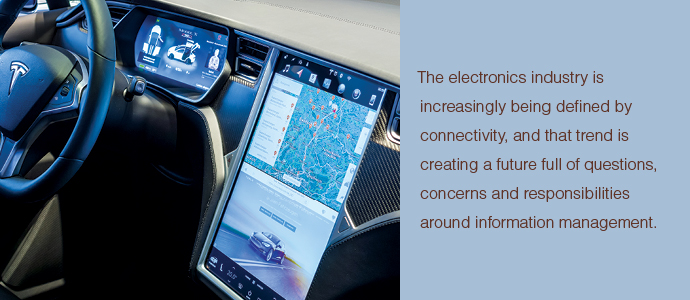
Connectivity has been the theme at CES for the past several years, with a consumer’s smartphone, car and appliances now able to be integrated into the digital world, allowing previously unimaginable services to become commonplace.
Since Apple introduced its iPhone just 12 years ago, mobile technology has transformed how people shop, live, commute and communicate. For instance, a consumer can monitor their house through a smartphone 24 hours a day, with the user able to remotely turn out lights, adjust the thermostat, and speak to people at the front door.
We now expect digital interaction across all products in our lives. Most car manufacturers, for instance, offer apps that have the capacity to provide traffic alerts and redirect the driver, and to also inform the driver of nearby shopping and food locations – even order your coffee or lunch while you wait in traffic.
However, with all these wonderful possibilities come unintended consequences, most notably the fact that technology, marketing and retail companies have the capability to collect vast amounts of data on a user and wield this to influence the individual’s future purchasing decisions or other plans.
Most readers of this publication are by now well aware that IoT devices collect, store and transmit enormous amounts of information, some of which may be quite personal and sensitive. We might not all understand, however, just how much data is being collected and used.
Each time you go online, whether it be on social media or through a search engine, that information is stored and used to develop a user profile, which becomes more detailed the more you use the internet. All this data is stored on your smartphone and the various servers that support social media sites and marketing departments of retailers.
Furthermore, the many electronic devices you possess store valuable information, including passwords, credit and debit card numbers, and authentication. And it is basically impossible to erase it all completely.
Here again, the data complexities extend beyond just our computers and phones.
Cars today track driving patterns and locations. Insurance companies in some cases use this information to calculate your risk level and what they’ll charge. Other actors can maliciously use it to track one’s whereabouts, noting, for instance, if an individual is headed to client meetings or other private meetings. Investigators, meanwhile, can use the data tracked in autos to determine fault in an accident.
Your car also collects personal and possibly highly confidential information from your smartphone, including calendars, contacts, notes, documents, emails and texts. Other devices such as your digital assistant are often connected to your smartphone (and ultimately your car or refrigerator) and have access to this information as well.
Most people either don’t understand or recognize this fact. Let’s take a pharmaceutical salesperson who uses a leased car to visit doctors and hospitals. All their contacts, emails, calendars and notes are in a smartphone that is now connected to their car. This connection enables the smartphone to alert the salesperson to their next meeting, give them the best directions avoiding traffic, find and pay for parking, give them the latest information on the customer, and even notify the customer about the status of the meeting, including the salesperson’s time of arrival based on the car’s GPS coordinates.
All this is wonderful and makes appointments and orders easier for both the salesperson and the doctors. However, the data itself is swirling around between the car, the smartphone, a laptop computer and a multitude of servers. Accordingly, it is vital that all this information is removed from these devices, including the car, before these devices are exchanged for new ones. With car leases and smartphone ownership typically lasting about 18 to 24 months, this data destruction should become a routine and mandatory event for not just pharmaceutical salespeople but for anyone with a connected car and a smartphone.
Meanwhile, the emerging wearable electronics segment, which includes smart watches and similar devices, represents another area of concern in terms of sensitive data.
These devices monitor and collect lots of medical and health information and connect with other electronic devices. This data could be used to further market exercise or medical monitoring equipment. However, the data could be used by insurance companies to raise premiums or even deny certain insurance. It also can be used to track whether or not you are exercising per a doctor’s orders. Clearly, the security of this information is paramount.
Where electronics recycling fits in
For the recycler, the data realities of today’s fast-evolving electronics landscape pose both challenges and opportunities.
Data privacy, data security and data destruction have become major public policy issues, with millions of people each year experiencing identity theft, data breaches, hacking and misuse of their information. Recyclers who encounter data in the vehicles and appliances they receive are now in the new frontier of the data destruction business.
Recyclers are already being contacted about securing important data in cars from insurance companies and trial lawyers. However, recyclers must also accept many new responsibilities that come when handling end-of-life material, and these responsibilities will continue to evolve, especially as users begin to recognize the inherent dangers of having so much personal and sensitive data potentially exposed.
When you hear about legislation to constrain Silicon Valley titans such as Facebook and Google, keep in mind that these measures could very easily reach into the operations of recyclers tasked with properly handling and destroying data from the more than 23 billion connected IoT devices that were installed globally in 2018 (that number comes from market research company Statista).
For example, all your Facebook posts aren’t just on Facebook’s servers. They also live on the smartphone, router, television, digital assistant or laptop. And it will be up to individuals, corporations, and recycling/ITAD firms to make sure that data is properly managed when electronic assets are retired.
This is an area that several organizations are exploring in hopes of developing best practices and industry standards. For example, the R2 standard from SERI is addressing the protection of data and providing guidelines for the screening of employees and the segregation of devices from various customers to ensure the devices and their data are fully protected.
E-scrap industry’s time to respond
This new world of electronics provides enormous opportunities to help people lead more productive and informed lives. However, with all these advancements and conveniences we have come to enjoy and utilize, there are certainly many downsides. This is an exciting time to witness the recycling industry continue to respond and grow as a result of these new technologies.
William “Billy” Johnson is the chief lobbyist at the Institute for Scrap Recycling Industries, Inc. (ISRI) in Washington, D.C. He works closely with ISRI members to formulate and advance proactive recycling policy strategies for a variety of issues, such as electronics recycling, trade promotion, transportation and recycling equipment tax policies. He can be contacted at bjohnson@isri.org.