





Resource Recycling
  • The Latest
  • Analysis
    • All
    • Certification Scorecard
    • Industry Announcements
    • Opinion
    Server resale values surge in AI-driven markets

    Certification scorecard for the week of Feb. 2, 2026

    Auditors warn EU may fall short on critical metals

    Auditors warn EU may fall short on critical metals

    Industry announcements for January 2026

    Industry announcements for February 2026

    ICYMI: Top 5 recycling stories from January 2026

    Certification scorecard for week of Jan. 26, 2026

    New entrepreneurs bring renewed energy to e-cycling

    Europe pulls ahead on ITAD now while US growth remains slower

    Recyclers are facing unprecedented changes

    Leveraging materials testing for procurement efficiency

    Server resale values surge in AI-driven markets

    Certification scorecard for week of Jan. 19, 2026

  • Conferences
  • Publications

    Other Topics

    Textiles
    Organics
    Packaging
    Glass
    Brand Owners

    Metals
    Technology
    Research
    Markets
    Grant Watch

    All Topics

Subscribe
No Result
View All Result
Resource Recycling
  • The Latest
  • Analysis
    • All
    • Certification Scorecard
    • Industry Announcements
    • Opinion
    Server resale values surge in AI-driven markets

    Certification scorecard for the week of Feb. 2, 2026

    Auditors warn EU may fall short on critical metals

    Auditors warn EU may fall short on critical metals

    Industry announcements for January 2026

    Industry announcements for February 2026

    ICYMI: Top 5 recycling stories from January 2026

    Certification scorecard for week of Jan. 26, 2026

    New entrepreneurs bring renewed energy to e-cycling

    Europe pulls ahead on ITAD now while US growth remains slower

    Recyclers are facing unprecedented changes

    Leveraging materials testing for procurement efficiency

    Server resale values surge in AI-driven markets

    Certification scorecard for week of Jan. 19, 2026

  • Conferences
  • Publications

    Other Topics

    Textiles
    Organics
    Packaging
    Glass
    Brand Owners

    Metals
    Technology
    Research
    Markets
    Grant Watch

    All Topics

Subscribe
No Result
View All Result
Resource Recycling
No Result
View All Result
Home Recycling

EPA spotlights gaps in recycling data, spending

Marissa HeffernanbyMarissa Heffernan
January 23, 2025
in Recycling
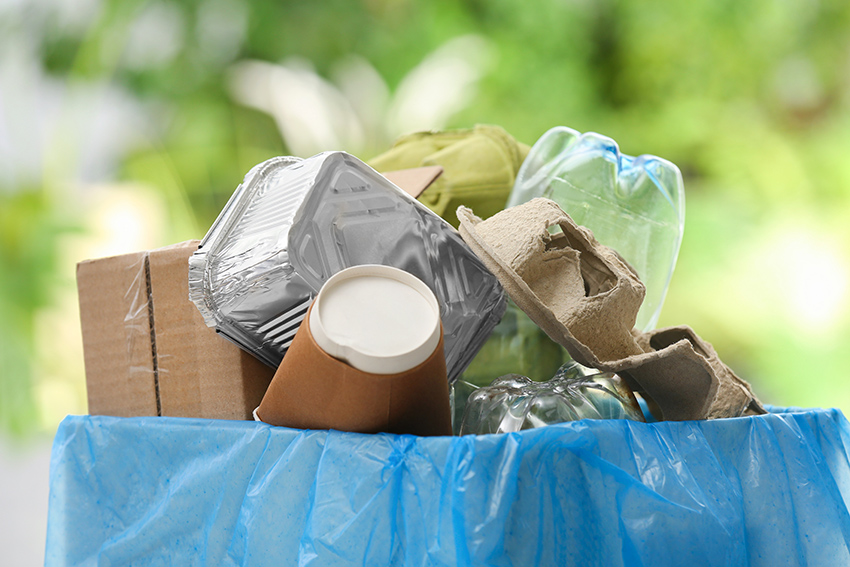
The U.S. EPA surveyed agencies in all 50 states, the District of Columbia and 11 U.S. territories in its latest report, the Recycling Needs Survey and Assessment. | New Africa/Shutterstock

A pair of reports from the U.S. EPA shines a light on just how fragmented data collection in the recycling industry is and the investment that would be needed to shore it up.

The Recycling Needs Survey and Assessment and the Assessment of the U.S. Recycling System: Financial Estimates to Modernize Material Recovery Infrastructure are products of a 2021 directive from Congress for the EPA to collect data on residential recycling and estimate the financial investments needed to modernize the U.S. recycling system. 

The EPA released an Recycling Infrastructure Assessment report in 2024, as well as its strategy against plastic pollution. The two latest reports dig into the data that states and territories are already collecting on recycling and how much it would cost to improve recycling of municipal packaging materials and composting. 

Infrastructure investments 

The U.S. would need $36 billion to $43 billion to improve curbside collection, drop-off programs and processing infrastructure by 2030, the agency found. This infrastructure includes MRFs, packaging material specific recycling facilities, and facilities for composting, anaerobic digestion and livestock manure processing.

The investment could bring more than 82 million tons of packaging and organic material into the system per year, a 91% increase in recovery over current levels, the report said – which would boost the nationwide recycling rate from its current 32% to 61%. The EPA previously set a national recycling goal of 50%. 

Of the four systems the report analyzed – curbside collection, separate curbside glass collection, drop-off and deposit return systems – the most money would need to go into improving curbside collection, at between $19.9 billion and $21.5 billion. Glass separation would cost about $2.9 billion to improve, while the report suggests spending $100 million on DRS and $1.9 billion to $3.4 billion on drop-off. 

The report also explores spending by combined recycling collection categories and organics improvement costs, which range from $14.7 billion to $15.5 billion. The biggest organics investment would be in centralized composting, at $8.7 billion to $9.4 billion. 

Data collection 

For the needs assessment, Congress directed the EPA to compile data on the number of community curbside and drop-off programs, the total amount of residential packaging materials collected through deposit programs, the amount and types of residential materials collected overall, the number of citizens with access to recycling services on par with access to disposal and inbound contamination and capture rates. It also requested data on single-use plastics and aluminum. 

“This report serves as an opportunity to gain a deeper understanding of the current state of recycling data as well as the recycling needs across the U.S. as we move towards a circular economy,” the EPA stated in its needs survey and assessment. 

The Recycling Partnership advocated for the creation of the report and in a statement called it “an important first step for Congress in strengthening the U.S. recycling system, helping to identify and prioritize investments and improvements to capture the full economic value of recycling.” The group also called for Congress to pass legislation that includes a recycling infrastructure investment tax credit. 

“This monumental data from EPA lays the framework for needed national investments, and we look forward to working with Congress and other key partners to continue to unlock the economic and environmental benefits of recycling and a circular economy,” said Kate Davenport, TRP chief policy officer. 

An online survey was sent to relevant agencies in all 50 states, the District of Columbia and 11 U.S. territories. All 50 states, D.C., and the majority of the territories submitted responses, a 95% response rate. Funding was made available through the Bipartisan Infrastructure Law. 

Of the 59 states and territories that responded, the report noted that 48% don’t collect data on the number of community curbside recycling programs they have and 37% don’t collect data on the number of drop-off programs. Collection mechanisms ranged from voluntary surveys to direct communication with local governments. 

As far as deposit return programs, only 20% of the respondents had a DRS system in place. Of that 20%, 4% did not collect any data on it. 

Looking at the volume of materials collected, 54% didn’t collect data on the total amount of residential materials collected through curbside programs annually and 36% didn’t collect data on the types of materials accepted by each recycling program. 

The majority of respondents also didn’t collect data on the number of citizens with access to recycling services on par with access to waste disposal (64%), inbound contamination rates (85%), capture rates (85%), the types of single‐use plastics currently in commerce (88%), the rates at which single‐use plastics are recycled (80%) and rates at which aluminum cans are recycled (61%).

Of the 12 states that did collect data on the rates at which single‐use plastics are recycled, six broke down the data by plastic type. 

The survey also asked about best guesses for tonnages captured and recycled by program duration and overall access and recycling rate estimates. Only about half of the respondents measure recycling rate at the state or territory level, and of them, the mean rate was 32%. 

When asked to provide a best estimate of the overall recycling rate, 44 of the 50 survey takers responded, providing rates that ranged from 1% in the Virgin Islands to 80% in Palau. The average estimate was 29%. 

Finally, in terms of access, survey respondents provided a mean estimated level of community access to curbside recycling programs of 44% and a mean estimated level of community access to drop-off recycling of 62%. 

The report also noted that the materials most commonly accepted by the majority of state and territory recycling programs are paper products, high density polyethylene, PET and aluminum.

“Overall, the results of the Recycling Needs Survey and Assessment highlight the need to enhance recycling data collection infrastructure nationally,” the needs assessment concluded. “Encouraging standardization of metrics and promoting a regular data collection and reporting schedule for the states, territories and EPA is needed to facilitate tracking of progress with respect to access and recovery rates.”

The EPA suggested using Solid Waste Infrastructure for Recycling, or SWIFR, grant funds for data collection and continuing to develop an Information Collection Request system to help address the gaps shown by the report.


 

Tags: CollectionDataLocal Programs
TweetShare
Marissa Heffernan

Marissa Heffernan

Marissa Heffernan worked at Resource Recycling from January 2022 through June 2025, first as staff reporter and then as associate editor. Marissa Heffernan started working for Resource Recycling in January 2022 after spending several years as a reporter at a daily newspaper in Southwest Washington. After developing a special focus on recycling policy, they were also the editor of the monthly newsletter Policy Now.

Related Posts

WM: Upgrades temporarily slow tons recovered

WM sees ‘notable growth’ despite low recycling commodity prices

byStefanie Valentic
January 30, 2026

WM has battled headwinds from low recycling commodity prices with strategic automation and facility upgrades, the company told investors in...

Recyclers are facing unprecedented changes

byClosed Loop Center for the Circular Economy & Resource Recycling Systems
January 27, 2026

Using input from MRFs across the US, Closed Loop Partners developed a guide to help provide best practices to improve...

IT security driving plans, reshaping budgets

IT security driving plans, reshaping budgets

byScott Snowden
January 23, 2026

Sage’s 2026 benchmarking report finds data security dominating ITAD decisions as laptop cycles shorten, server resale values surge and more...

Server resale values surge in AI-driven markets

Server resale values surge in AI-driven markets

byDavid Daoud
January 22, 2026

Server resale values jumped sharply in 2025 as AI infrastructure demand tightened supply, reshaping secondary IT markets and boosting returns...

Houston, MRF operator sign chemical recycling MOU

CompuCycle CEO: Transparency drives electronics diversion

byStefanie Valentic
January 16, 2026

As Houston's role as a major port city raises concerns about electronics being exported overseas for processing, CompuCycle CEO Kelly...

Greyparrot positions waste intel as key to effective EPR

Greyparrot positions waste intel as key to effective EPR

byAntoinette Smith
January 9, 2026

Company co-founder Rish Mitra says data collected from a growing number of MRFs globally can help fine-tune emerging EPR policy...

Load More
Next Post

Outlook for OCC demand, recycling hinges on economics

More Posts

International Paper creates two new, separate entities

January 29, 2026

Eastman looks to recycling plant to drive growth

February 2, 2026
Stakeholders respond to California recyclability report

CalRecycle opens SB 54 draft for comments

February 2, 2026
Chinese processing group details goals for US visit

AMP lays out vision of next-generation, AI-driven MRFs

July 24, 2024
Emerging state EPR shows trend toward harmonization

Emerging state EPR shows trend toward harmonization

January 29, 2026
New entrepreneurs bring renewed energy to e-cycling

Europe pulls ahead on ITAD now while US growth remains slower

January 28, 2026
Agilyx leaves US chem recycling, Houston sorting center

Agilyx leaves US chem recycling, Houston sorting center

February 4, 2026
WM: Upgrades temporarily slow tons recovered

WM sees ‘notable growth’ despite low recycling commodity prices

January 30, 2026

Recyclers are facing unprecedented changes

January 27, 2026
CalRecycle withdraws proposed regs for SB 54

CalRecycle withdraws proposed regs for SB 54

January 12, 2026
Load More

About & Publications

About Us

Staff

Archive

Magazine

Work With Us

Advertise
Jobs
Contact
Terms and Privacy

Newsletter

Get the latest recycling news and analysis delivered to your inbox every week. Stay ahead on industry trends, policy updates, and insights from programs, processors, and innovators.

Subscribe

Welcome Back!

Login to your account below

Forgotten Password?

Retrieve your password

Please enter your username or email address to reset your password.

Log In

Add New Playlist

No Result
View All Result
  • The Latest
  • Analysis
  • Recycling
  • E-Scrap
  • Plastics
  • Policy Now
  • Conferences
    • E-Scrap Conference
    • Plastics Recycling Conference
    • Resource Recycling Conference
    • Textiles Recovery Summit
  • Magazine
  • About Us
  • Advertise
  • Archive
  • Jobs
  • Staff
Subscribe
This website uses cookies. By continuing to use this website you are giving consent to cookies being used. Visit our Privacy and Cookie Policy.