

Resource Recycling
  • The Latest
  • Analysis
    • All
    • Certification Scorecard
    • Industry Announcements
    • Opinion

    Certification scorecard – Week of March 23, 2026

    Certification Scorecard – Week of March 16, 2026

    Groups identify recovered plastics users in the Northeast

    Bale pricing for recycled plastics diverges

    Why global ITAD is stranded in the Gulf

    Why global ITAD is stranded in the Gulf

    Certification scorecard for the week of March 9, 2026

    Diversion Dynamics: Secondhand exports slow down fast fashion

    Certification scorecard for the week of March 2, 2026

    Industry announcements for January 2026

    Industry Announcements for March 2026

    HP receives ocean plastics certification

    HP Inc. earnings point to memory inflation challenge

  • Conferences
  • Publications

    Other Topics

    Textiles
    Organics
    Packaging
    Glass
    Brand Owners

    Metals
    Technology
    Research
    Markets
    Grant Watch

    All Topics

Subscribe
No Result
View All Result
Resource Recycling
  • The Latest
  • Analysis
    • All
    • Certification Scorecard
    • Industry Announcements
    • Opinion

    Certification scorecard – Week of March 23, 2026

    Certification Scorecard – Week of March 16, 2026

    Groups identify recovered plastics users in the Northeast

    Bale pricing for recycled plastics diverges

    Why global ITAD is stranded in the Gulf

    Why global ITAD is stranded in the Gulf

    Certification scorecard for the week of March 9, 2026

    Diversion Dynamics: Secondhand exports slow down fast fashion

    Certification scorecard for the week of March 2, 2026

    Industry announcements for January 2026

    Industry Announcements for March 2026

    HP receives ocean plastics certification

    HP Inc. earnings point to memory inflation challenge

  • Conferences
  • Publications

    Other Topics

    Textiles
    Organics
    Packaging
    Glass
    Brand Owners

    Metals
    Technology
    Research
    Markets
    Grant Watch

    All Topics

Subscribe
No Result
View All Result
Resource Recycling
No Result
View All Result
Home Recycling

Transitioning small communities to EPR

Marissa HeffernanbyMarissa Heffernan
May 3, 2023
in Recycling
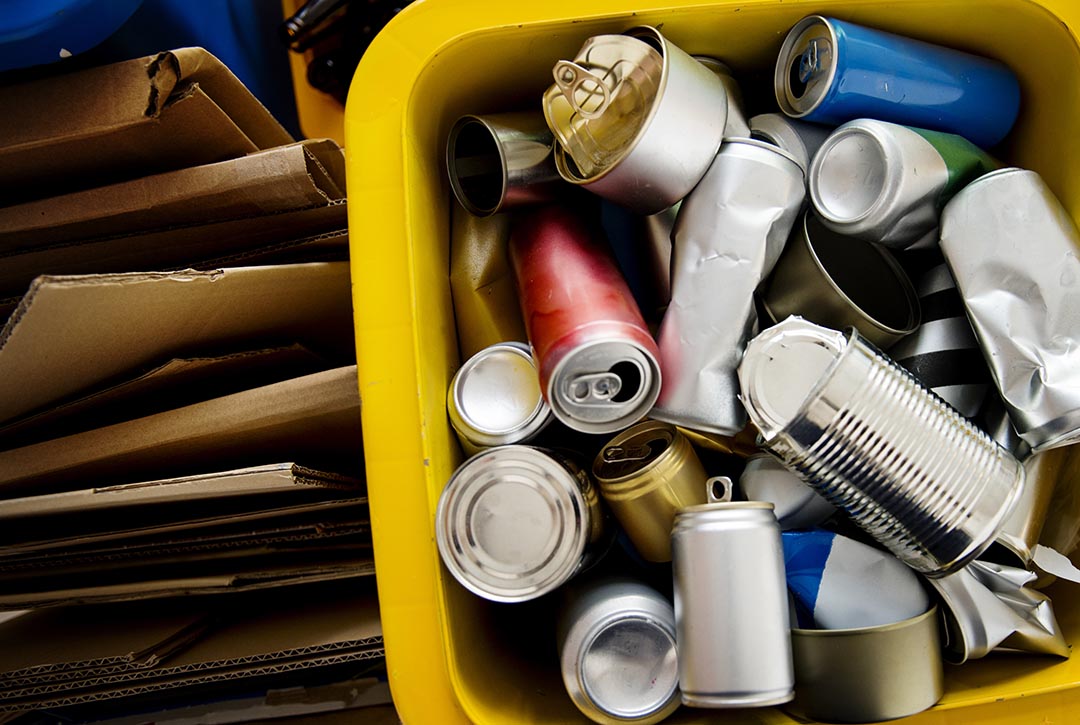
Speakers from across Canada faced a variety of EPR-related challenges, but all agreed on one thing: Good EPR implementation requires strict cost management. | Rawpixel.com/Shutterstock

Representatives from five small Canadian municipalities shared the challenges and benefits of extended producer responsibility, advising anyone in a similar situation to be very familiar with costs and contamination. 

The panelists spoke during “Alberta’s EPR Transition – Advice from Small Municipalities Across Canada,” an April 24 webinar hosted by the Recycling Council of Alberta. About 150 people attended to hear lessons learned from the extended producer responsibility (EPR) regulations implemented in Alberta on Nov. 30, 2022. 

Moderated by Leah Seabrook of Strathcona County, Alberta, speakers were Ben Van Nostrand of Columbia Shuswap Regional District, British Columbia, Laura Zapotichny of the Regional District of Fraser-Fort George, British Columbia, John Watson of Dysart and surrounding areas in Saskatchewan, Laura Barrett of Simcoe County, Ontario and Melissa Kovacs Reid of Dufferin County, Ontario. 

Challenges of density 

Serving smaller towns and communities efficiently, especially rural ones, is one of the challenges of EPR, Van Nostrand said. 

He said prior to the packaging and stewardship program coming into place, Columbia Shuswap Regional District operated 18 single-stream recycling depots and had “extremely high levels of contamination.” 

“It was extremely expensive to operate,” he added, costing about 1.3 million Canadian dollars (about $960,000) annually to manage 1,500 tons. 

Zapotichny echoed that sentiment, noting the Regional District of Fraser-Fort George has a low population density and decided to continue running its own drop-off program independently from Recycle BC, one of the producer responsibility organizations (PROs) operating in Canada. 

“When it was first presented to us, we were concerned about the capital investments needed to join the program, the fines and the true cost of the program,” she said, adding that “many of our rural communities did not qualify under the program for curbside.” 

While there are risks inherent to meeting EPR requirements, and the district is left dealing with market fluctuations, Zapotichny said maintaining control was a huge benefit. 

“We continue to monitor both our program and theirs and make decisions that are best for our residents,” she said. 

Barrett explained that Simcoe County is mostly rural, with some urban pockets and a seasonal population. The recycling program consists mainly of curbside collection with a few depots for drop-off. 

“Our experience with EPR has been good but also very challenging as well,” she said, noting that what seems to work best during the transition period is when there’s competition among the PROs. 

When there’s less competition, municipalities have less negotiating power and tend to get lower compensation, Barrett said. For example, hazardous waste has been a difficult stream to transition due to low competition, whereas tires and other programs were easier “and we feel we are adequately compensated there,” she said. 

Now, the county is faced with a choice: keep running their hazardous waste drop-off centers supplemented with tax dollars, since program costs are not fully covered under the current EPR system, or end the program.

Controlling costs

Kovacs Reid said Dufferin County also decided to opt out of letting the PRO run county programs, which are fully single-stream with no depots. The decision was based on contamination reduction requirements and costs. 

She said the PRO offered the county compensation at a 2020 level of costs and “that would not have been enough.” 

However, the county is still working with PRO Circular Materials on education campaigns and Circular Materials is running a blue box collection system in the county. 

Van Nostrand said his area has seen a huge cost savings and reduction in contamination, though Recycle BC is not fully funding all the costs for Columbia Shuswap Regional District, either. The PRO covers the cost of hauling and sorting. 

The district has been able to create jobs staffing the depots in rural areas and partnered with other stewardship programs to offer pathways for more materials, he said. 

“It was the right move,” Van Nostrand said, adding that “it’s been extremely successful and I would recommend it,” though he continues to push for full funding.  

Sharing advice 

The tips panelists gave to attendees who are also facing EPR transitions had a common theme: Know your program inside and out before entering a contract with a PRO. 

John Watson said Dysart, along with a coalition of several surrounding municipalities, will transition its services on July 1. He said in the area, 55 communities were depot-only just like Dysart, so they have banded together.  

“I recommend that other small communities build that network up,” he said, noting that his coalition used to meet once per week. 

He also recommended knowing exactly how much the recycling program costs, from staffing all the way to how much propane is used to heat the landfill office. 

“This is a marathon, not a sprint, so brace yourself,” he said, adding that things are still “changing week by week.” 

Keep a close eye on your contracts in preparation to transition to PRO-run EPR, Kovacs Reid said, and make sure you have extension terms to get to the transition date or build in termination or transfer clauses. 

Zapotichny said clear guiding principles for decision-makers are key, because “EPR is complex, it is not easy to understand and not easy to explain to residents.” 

She also recommended being prepared to continually advocate for rural areas to get the proper funding and full cost recovery. 

Barrett recommended knowing all the nuances of the regulations and running “all the scenarios of what might happen and how it might all connect.” 

She also advocated for a detailed breakdown of recycling costs and warned that “PROs are very last minute.” 

“Really know the costs, not just hard contract costs but staff time, buildings, trucks, equipment,” she said. “Whatever you use, you want to show it to the PRO.” 

Working closely with other municipalities is key, she emphasized, because “it’s better to go to the ministry with a united front than to go individually.” 

 

Tags: CanadaEPRPolicy Now
TweetShare
Marissa Heffernan

Marissa Heffernan

Marissa Heffernan worked at Resource Recycling from January 2022 through June 2025, first as staff reporter and then as associate editor. Marissa Heffernan started working for Resource Recycling in January 2022 after spending several years as a reporter at a daily newspaper in Southwest Washington. After developing a special focus on recycling policy, they were also the editor of the monthly newsletter Policy Now.

Related Posts

Quebec PRO reflects on first year of packaging EPR

byAntoinette Smith
March 30, 2026

The province's all-packaging collection approach has simplified messaging while providing lessons for the PRO as well as for industry.

ag plastics field

Ag industry holds potential for recycling feedstock

byStefanie Valentic
March 24, 2026

With less than 15% of US agricultural plastics currently being recycled, insiders say the gap between what's possible and what's...

Traceability tools add recycled material trust

Industry coalition seeks injunction against California’s SB 343

byStefanie Valentic
March 19, 2026

A coalition of packaging producers, farmers, restaurants and grocers has filed a class action lawsuit seeking to block enforcement of...

EPR expanding beyond packaging into tougher waste streams

EPR expanding beyond packaging into tougher waste streams

byScott Snowden
March 19, 2026

Proposals beyond packaging include boat wrap, hazardous products and oil containers, though infrastructure gaps and unclear producer rules remain, panelists...

Minnesota EPR program advances in budget bill

AF&PA seeks injunction on Oregon EPR, defends paper recycling

byStefanie Valentic
March 17, 2026

AF&PA has filed for a temporary injunction on Oregon's Recycling Modernization Act, arguing the EPR law threatens an already high-performing...

Oregon state capitol building with state flag and blue sky.

Oregon opens comment on updated REM plan

byStefanie Valentic
March 16, 2026

The revised responsible end market plan from Circular Action Alliance aims to accelerate EPR implementation with a nationally scalable end-market...

Load More
Next Post

Panelists: Bottle bills, EPR can coexist

More Posts

Mexican Coke bottler to invest $1bn in ops this year

Mexican Coke bottler to invest $1bn in ops this year

March 25, 2026
Unilever shifting focus to flexibles targets

Unilever shifting focus to flexibles targets

March 23, 2026
Envela reports stronger Q3 ITAD revenues

Top 5 reasons for the rise of US e-scrap recycling

March 23, 2026

AMP raises $91 million to push AMP ONE ahead

December 10, 2024

Quebec PRO reflects on first year of packaging EPR

March 30, 2026
Closeup of Trex composite flooring installed in a restaurant.

Trex gears up for new plastic board plant

March 24, 2026
L-R: Koichiro Nishimura, CEO of ERI Japan and Manager, ITOCHU; John Shegerian, Chairman & CEO of ERI; and Daisuke Inoue, Deputy General Manager, ITOCHU, celebrate the announcement of ERI Japan.

ERI enters Japan through joint venture with Itochu

March 24, 2026
Groups identify recovered plastics users in the Northeast

Bale pricing for recycled plastics diverges

March 17, 2026
#ESC2025 Speaker Spotlight: Matthew Young

From bootstrap to boom: EVR poised for growth after capital injection

March 26, 2026
Auto Draft

Ball Corp. US recycled aluminum content drops

March 26, 2026
Load More

About & Publications

About Us

Staff

Archive

Magazine

Work With Us

Advertise
Jobs
Contact
Terms and Privacy

Newsletter

Get the latest recycling news and analysis delivered to your inbox every week. Stay ahead on industry trends, policy updates, and insights from programs, processors, and innovators.

Subscribe

Welcome Back!

Login to your account below

Forgotten Password?

Retrieve your password

Please enter your username or email address to reset your password.

Log In

Add New Playlist

No Result
View All Result
  • The Latest
  • Analysis
  • Recycling
  • E-Scrap
  • Plastics
  • Policy Now
  • Conferences
    • E-Scrap Conference
    • Plastics Recycling Conference
    • Resource Recycling Conference
    • Textiles Recovery Summit
  • Magazine
  • About Us
  • Advertise
  • Archive
  • Jobs
  • Staff
Subscribe
This website uses cookies. By continuing to use this website you are giving consent to cookies being used. Visit our Privacy and Cookie Policy.