














Editor’s note: This article is the first installment in a three-part series on evolving safety threats facing waste and recycling industry workers.
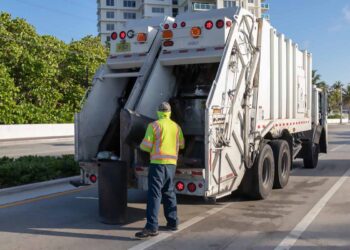
The most recent data from the US Bureau of Labor Statistics (BLS) show injury rates in waste-related occupations are above average, mirroring historical information.
About five injuries were reported for every 100 workers in solid waste collection; that number stood at 2.8 for landfill workers and 5.8 for employees in material recovery facilities. The injury rate in all private-industry occupations stood at 2.3.
The most recently available worker fatality statistics only reinforce the job’s relative danger. For every 100,000 full-time refuse and recyclable materials collectors, the BLS recorded 41.4 fatal injuries in 2023, making it the fourth-deadliest occupation in the nation.
“While year-to-year figures fluctuate, the overall trend reinforces the need for continued focus on hazard recognition, training and operational controls,” said Kristyn Oldendorf, senior director of public policy and communications for the Solid Waste Association of North America (SWANA), an industry professional association. “Many serious incidents stem from preventable behaviors or working conditions.”
Cause and effect
Statistics generally don’t segregate waste disposal from recycling, so precise data differentiating the two sectors are scant.
Regardless, jobs in waste disposal aren’t for everyone, and incidents can happen in ways people may never consider. A Type 1 diabetic may dispose of an uncapped insulin needle that pokes through a garbage bag. A worker’s two decades of heavy lifting may force their back to give out. A battery hiding in a pile of trash may explode in a compressor. A careless driver could crash into the truck of a fleet’s safest driver.
The latter hints at a particular point of contention, according to Michael E. Hoffman, president and CEO of the National Waste and Recycling Association (NWRA).
“From members, we hear two things at the same time,” he said. “One, a deep commitment to getting every employee home safe, and two, real frustration with hazards the workforce doesn’t control – distracted drivers, pedestrians and cyclists around collection vehicles, and batteries improperly placed in trash carts and recycling bins.”
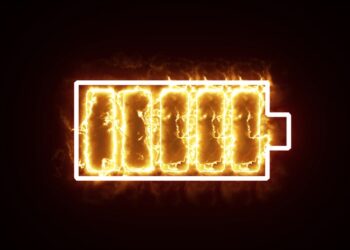
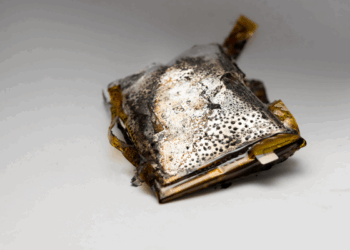
Lithium-ion batteries, the rechargeable batteries used in many portable electronics and electric cars, pose increasingly frequent hazards due to the growing reliance upon them and because they act like fireworks when improperly handled.
“Batteries are probably the biggest challenge” to safety, said Mike Marino, safety director at the Recycled Materials Association (ReMA). “Our material recovery facilities (MRF) members don’t want them, and the public doesn’t know what to do with them.”
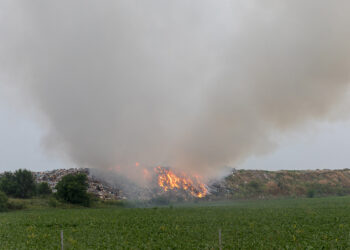
Hoffman noted there is a fire-related incident every day in every state within the waste and recycling infrastructure. One study from fire-detection equipment supplier Fire Rover found a 20% increase in reported fires at US and Canadian MRFs from 2023 to 2024.
“Battery-related incidents can happen anywhere in the MRF process, Hoffman said. “The risk once fully engaged is thermal runaway, which means the fire is at several thousand degrees. Batteries can be crushed, punctured or otherwise damaged at many points throughout the waste and recycling processes, including collection/compaction, unloading, sorting, baling, stacking, crushing and densification – all of which can physically damage a battery and increase risk of a fire.”
Extinguishing fire risks
These dangers are among the reasons the NWRA joined with SWANA and the Recycled Materials Association (ReMA) this past December to issue a joint “Guide for Developing Lithium-Ion Battery Management Practices at Material Recovery Facilities.” The publication outlines training considerations, storage and handling procedures, customer messaging and emergency response planning.
“Most MRFs, if not all, are experiencing fires. In many cases, the cause is unknown, but there is substantial evidence that most fires are caused by batteries,” explained Marino.“Any fire is a huge safety issue, so it’s important to develop comprehensive emergency action plans and provide good training.”
Training is the focus of a new initiative SWANA has entered into with K. Scott Griffith of SG Collaborative Solutions. His Collaborative Just Culture® Program, which has reduced fatal aviation accidents by 95%, has been adapted to waste collection. It focuses on risk mitigation and reporting before potential incidents become problematic.
“We’ve been successful in getting people to report risk rather than just adverse events,” Griffith said in a recent webinar introducing his program to SWANA members. “When you’re starting to see more of the risk and you put a process in place to prevent it, science shows that you reduce injuries and fatalities.”
Getting commuters to do likewise would make the roads safer for collection workers, Marino said.
“We need more public messaging and laws around recycling and waste pickup safety on roadways. There are many move-over laws for emergency services, towing and recovery, and highway workers,” he said, noting the absence of such regulations for waste collection.
More regulation inside facilities can also help, Marino said.
“The industry must continue working to develop ways to keep workers and others away from active areas where material-moving equipment is operating. Creating safe walkways and workspaces can help prevent workers from being struck by moving machinery,” he said. “Companies should also perform hazard assessments and develop plans that protect their workers. These efforts would include specific PPE policies and procedures, as well as OSHA basics programs such as machine guarding, hazard communication and lockout/tagout.”