






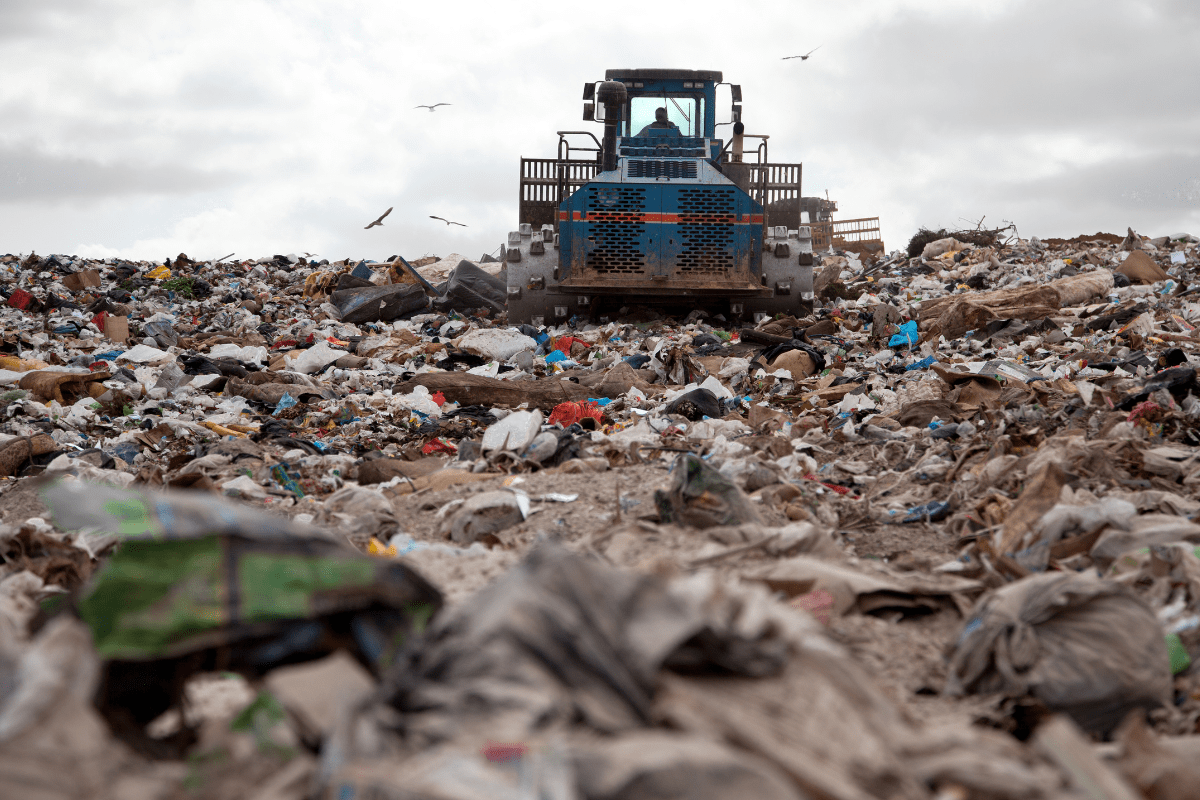
Virginians can have their say about the next generation of waste disposal in the commonwealth before final action is taken next year.
The Virginia Department of Environmental Quality (DEQ) is accepting public comments on a draft of its new statewide Solid Waste Management Plan (SWMP) through Dec. 19. The plan represents the first update to the commonwealth’s original plan, which was adopted nearly half a century ago. The goal will be to conserve resources and reduce greenhouse gas emissions while supporting job creation, driving investment and strengthening regional economies.
“Virginia’s 1979 SWMP was visionary for its time but reflected the realities of an early regulatory landscape that focused on emerging rules, available technologies and a reactive approach to waste management,” said DEQ spokesperson Irina Calos.
The original plan established early resource recovery practices and aligned waste management practices statewide. The department has taken additional steps since then to support the environment, including advanced recycling efforts, waste reduction and circular economy initiatives.
This update will codify and align various initiatives while bringing them under a unified umbrella.
“The new SWMP is a comprehensive framework that aims to define the commonwealth’s policies, goals and objectives for resource recovery and solid waste management over the next 20 years,” Calos said. “It provides strategic direction for how Virginia could manage waste materials more efficiently, reduce waste, and build a more resilient and sustainable solid waste management system for future generations.”
Among the plan’s recommendations:
● Develop an extended producer responsibility (EPR) program for packaging and paper products
● Increase data-gathering efforts, including tonnage reporting for recycling facilities, waste composition studies every 5-10 years and waste-per-capita tracking
● Increase minimum recycling requirements for local governments from 15%-25% to 20%-35%
● Adjust annual fees for nonhazardous waste management facilities to account for inflation
● Support local planning efforts to improve infrastructure capacity based on population and waste composition
● Encourage demolition permits that require proper debris tracking and disposal
● Ban yard waste in landfills
● Find funding for grants technical assistance and incentives for circular economy efforts
● Expand composting collection and processing infrastructure
● Implement strategies to decrease the presence of PFAS and other contaminants
● Evaluate evolving markets for hard-to-recycle products like solar panels and pharmaceuticals
● Support local government with education initiatives
Many of these suggestions account for gaps that have been created over the years since the initial SWMP was enacted. For example, the commonwealth has no statewide waste composition data and only limited rural information. Facilities such as material processors and organics recovery facilities don’t have to report tonnage because they don’t need permits (current law only requires permitted facilities to keep track), while landfills and waste-to-energy plants are already operating near capacity in high-growth regions such as northern Virginia, which is home to more than one-third of the commonwealth’s total population.
And Virginia operates product-specific EPR programs, for computers and mercury thermostats for example, but they are limited in scope and place burdens on local governments. The plan would update them to strengthen provisions and relieve governments of some of the burden.
“Virginia seems to modernize its solid waste management system by integrating the waste management hierarchy, circular economy principles, innovative technologies and considerations for equity, resilience and climate impacts,” Calos said.
Calos acknowledged more money will be needed to fund a final plan, but the cost and how to pay for it haven’t been determined. Those are among the details to be worked out by DEQ before it presents a final plan to the Virginia Waste Management Board for approval sometime in 2026.
“Continued collaboration, adaptive management and sustained investment will be critical to ensure that Virginia achieves its long-term vision for a circular and sustainable materials economy,” the report said.
Virginia’s recycling rate has remained steadily around 44% since at least 2019; the most recent figure for 2023 showed residents recycled 42.5% of the 8.54 million tons of waste they generated.