










Three US companies will receive six-figure awards from Miami-Dade County to expand organic waste diversion following a recent municipal challenge.
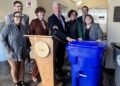
The Miami-Dade Innovation Authority (MDIA) announced the $100,000 awards in November as part of its Public Innovation Challenge. Selected companies can use the award to help fund pilot sustainability initiatives that serve the public while also verifying their viability in wider use.
Winners include:
- Clean Earth Innovations, a Fort Lauderdale, Florida, company that focuses on biochar development and carbon diversion
- Fertile Earth Worm Farm of Homestead, Florida, which creates compost from organic waste
- Scrapp Inc. of New Hampshire, a tech company that helps companies identify waste patterns and communities divert recyclables from landfill
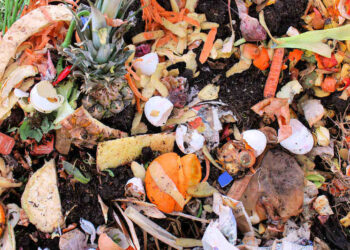
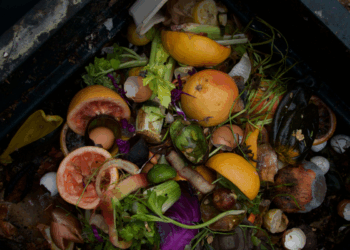
The goal is to divert materials from landfills and county leaders estimate about 37% of Miami-Dade County’s 5 million tons of waste are recycled per year, with around half that total being organic.
“We’re running out of space in our landfills and the time to act is now,” Miami-Dade County Mayor Daniella Levine Cava said. “Every innovative step we take helps protect our planet, reduce waste and create a cleaner, more sustainable future.”
The Miami project is one of a handful of early-stage efforts in the works for Clean Earth. In South Florida, the company plans to use a pyrolysis machine to convert yard waste into biochar, which can then be used to improve nutrient uptake and water retention in soil.
“We’re really addicted to innovation done in a sustainable way,” chairman and CEO Harold Gubnitsky said. “We think we can make a real impact for communities, the environment, by revaluing waste streams. This is our way to contribute to the way we think the future should be.”
In the near future, residents will still feel the impact of a fire that destroyed the Miami-Dade County waste-to-energy facility in 2023, according to Dr. Lanette Sobel, who founded Fertile Earth after seeing how much organic waste hotels generate as a hospitality sustainability consultant. That fire forced more waste into landfills and Sobel hopes to take more organic material from the waste stream and convert it into food for either people, animals or the soil.
“The thing that really opened my eyes is when I learned how landfills worked,” she said. “Food really has no business being in a landfill. It’s the only moisture in the landfill. It creates methane emissions. Little by little, we’ve been realizing just how impactful food is.”
Scrapp co-founder and CEO Evan Gwynne Davies hopes his company’s app can have an impact. During the pilot period, the county will test all of its features, including barcode scanning to determine proper disposal method, AI searches, drop-off location maps and usability in multiple languages.
“One of the biggest barriers that we find to adopting the circular economy is education. Statistically, nine out of 10 of us don’t know what the circular economy means and it goes far beyond just reducing and recycling waste,” Davies said. “The way that we see we can have the biggest impact on the public scene is by providing educational, accurate and scalable tools that the general public can engage with at any time to make going zero waste as easy as possible.”
Gubnitsky agreed the education component of the challenge may be the most impactful. While his part in the process would take advantage of existing waste-collection methods as opposed to creating new ones, more education on the sorting of waste and the general importance of properly disposing of materials would help.
“Every municipality isn’t ready for this,” he said. “Miami-Dade has an authority for this, that helps facilitate threading that needle between succeeding from the business side and navigating government processes.”
Among those processes is the county’s zero waste master plan, which calls for a 40% reduction in landfilled waste. Composting and otherwise reusing organic materials will go a long way toward meeting that goal, according to Leigh-Ann Buchanan, president and CEO of the MDIA.
“Through the pilots of these winning solutions, we’re demonstrating that innovation and technology can be at the forefront of optimizing efficiencies in waste diversion,” she said.
The companies see their work in Miami as a way to benefit the community and the planet while proving their respective products and processes are ready for wider use.
“We’re trying to make sure that the pilots and the current projects we have, including Miami-Dade, are a great success,” Davies said. “Once those are complete, we’re looking at building out those case studies to then look at how we can penetrate the wider market, and introducing other businesses into our platform that don’t necessarily understand the value that their waste can have.”