






If I described to you a consumer product system that spurred green design, established a take-back channel, increased recycling, and was all paid for by the producers of products, would you call that extended producer responsibility?
More than two decades ago, Thomas Lindhqvist, a Swedish professor of Environmental Economics, coined the term extended producer responsibility, or EPR. The goals of EPR were twofold: first, to address the growing problem of excessive waste, and second, to stimulate environmentally conscious product design and supply chain management. At the time, Lindhqvist defined EPR as an environmental strategy that makes producers responsible for the entire life cycle of their products, especially takeback, recycling and final disposal.
Success with bottles and cans
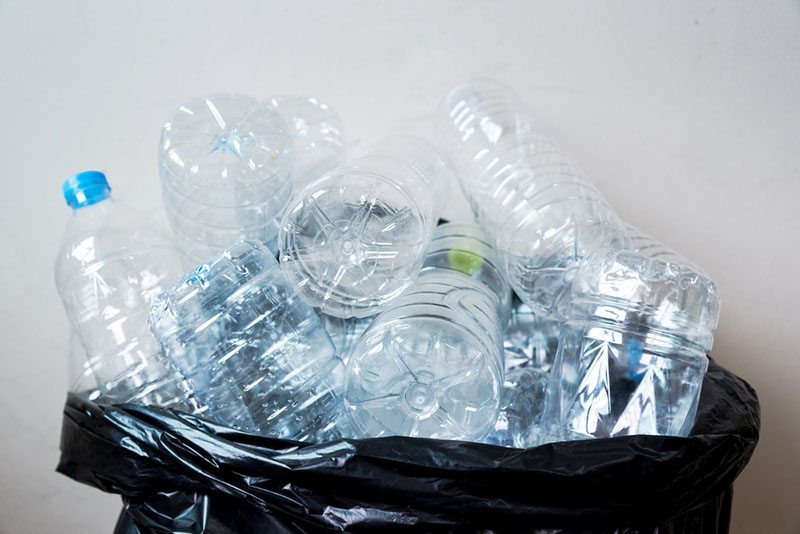
Deposit return programs for single-use beverage packaging in Sweden, Finland, Germany, Estonia, Lithuania and Norway demonstrate the kind of outcomes that Lindhqvist envisioned. The same is true in North America, with successful, producer-run, deposit return systems in Quebec, Oregon and Michigan, to name a few. In all of these examples, the beverage industry has the fiduciary and managerial obligation, as well as the power to drive costs out of the system.
What’s more is that deposit return programs, unlike other EPR options for beverage packaging, can provide a consistent source of clean secondary resin for use in new bottles, which can significantly decrease a container’s carbon footprint and provide manufacturers with sufficient source material to meet recycled content goals.
So deposit return is an exemplary model of EPR, right?
Apparently not, according to some. In 2014, the European Commission published a guidance manual on EPR. The first table in the report presented an overview of existing EPR systems in the 28 EU member states in 2013 for packaging and other household items, but it excluded Europe’s successful deposit return programs. Despite defining EPR as “any system or scheme set up by one or several producers to implement the EPR principle,” the report was silent on deposit return programs, except to state that the strategy is an “other policy instrument.”
The Product Stewardship Institute (PSI), in the U.S, also excludes deposit return systems from its map of U.S. EPR programs. The group has nevertheless commented on the subject, stating “there is … debate over whether bottle bills are a form of EPR: some believe they are, while others view them as a precursor-policy to EPR.” What exactly does that mean?
A ‘purist’ point of view
I’ve heard it argued that because the obligation usually falls on the shoulders of distributors and wholesalers, deposit return is not EPR. This reflects a “purist” belief that if EPR does not hold producers directly responsible for end-of-life management, there is no mechanism to influence the green design of the product. While this might make sense on the surface, experience has shown that companies downstream in the supply chain, such as retailers and distributors, do have the power to effect design change.
Walmart, the world’s largest retailer and distributor, has its own Packaging Scorecard, which is a perfect example of the ability of a downstream entity to effect change upstream through the power of procurement. Introduced in 2006, the Scorecard – which grades suppliers’ product packaging on its environmental friendliness – was designed to facilitate an overall reduction in the company’s packaging across its global supply chain.
Coca-Cola offers another example that illustrates how distributors actually have more control and responsibility for end-of-life management than manufacturers. In Coca-Cola’s case, the manufacturer is only making syrup; all handling and selection of packaging materials is done by the distributors. Similarly, for alcohol in the U.S., the manufacturers are forbidden by law from handling or distributing their products. Packaging selections are made by distributors.
Deposit return systems can also have positive impacts on product design, where a centralized operator (operating on behalf of distributors or producers) can access clean resin and redirect it to bottle manufacturers. In Germany, for example, 80 percent of PET collected through the deposit return program is used in bottle-to-bottle applications. In Norway, as a result of the high quantity of material being collected, a new PET preprocessor is being built that will propel the very real possibility of 80 percent recycled-content for producers of beverage PET in the country.
Some entities making the connection
Lindhqvist, the father of EPR, actually classified deposit return systems as EPR. He devoted an entire chapter of his doctoral dissertation published in 2000, to examining the high collection rates of container deposit laws. It could even be argued that if not for deposit return, Lindhqvist might never have developed a definition for EPR at all.
But Lindhqvist isn’t the only one to classify deposits as a form of EPR. The Organization for Economic Cooperation and Development (OECD) this year updated its Guidance Manual on EPR and makes reference to deposit return systems on 21 separate pages. The group notes that “EPR can be voluntary or mandated by law, and … can be implemented through a variety of instruments, such as product take-back requirements or economic and market-based instruments (e.g. deposit-refund systems or advance disposal fees), or a combination of these.” The National Recycling Coalition (NRC) adopted the OECD definition of EPR. classifying deposit return as policy tool for EPR.
These facts are not lost on members of the European Parliament and Council. Early indications based on draft proposed amendments to the existing waste framework directive, from both branches of government, have renewed the call for deposit return systems to help increase circularity performance and reduce littering – going further than the Commission did in its Circular Economy proposal from December 2015.
Issues around competition and offering producers some choice when it comes to compliance with EPR schemes are also important parts of this discussion. If companies want to be able to choose the best possible method to meet their EPR obligations and achieve high recycling rates for their packaging, agencies which purport to work toward circular economy ideals need to acknowledge that deposit return can be the most cost effective EPR option.
Deposit return systems achieve high performance, have lower costs when based on performance and promote the transition towards a circular economy. Given these benefits and the often poor performance of municipal collection programs, more and more beverage companies are considering it to be the best solution to manage their empty containers in a circular way and to tackle the growing problems of land-based and marine litter.
Clarissa Morawski is based in Barcelona and serves as the managing director of the Reloop Platform, which brings together industry, government, and non-governmental organizations in Europe to form a network for advances in policy that create enabling system conditions for circularity across the European economy. Clarissa is also principal of Canada-based CM Consulting Inc.